
Idea 1
Trauma, Identity, and the Making of Violence
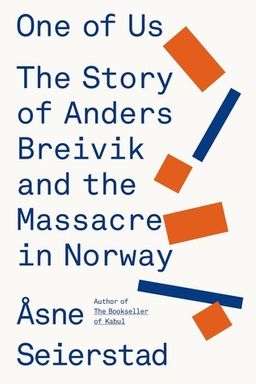
How does a society produce both civic courage and violent extremism from the same cultural soil? In One of Us, Åsne Seierstad offers one of the most intimate portraits of the 2011 Norway terror attacks, tracing Anders Behring Breivik’s psychological formation alongside the ordinary lives of young people he would later murder. Through family histories, missed institutional signals, identity quests, political rejection, radicalization, and aftermath, the book argues that the roots of such violence lie not just in ideology but in deep fractures of belonging.
Seierstad intertwines two life arcs: Breivik’s rise from neglected child to extremist, and Bano Rashid’s journey from refugee child to young activist on Utøya. You move back and forth between private trauma and public action, watching how similar social pressures—alienation, need for recognition, and institutional failure—produce radically different outcomes. The book becomes both biography and civic mirror: it asks what Norway’s systems missed, what communities absorbed, and what psychological needs made cruelty seem purposeful.
Family Foundations and Institutional Failures
The first half explores Breivik’s childhood within a volatile household. His mother, Wenche, haunted by her own trauma and shame, oscillates between affection and rejection. His father, Jens, absent and procedural, leaves emotional gaps that breed confusion. You see a chain of neglected interventions: child-welfare warnings, psychiatric reports, court delays—all concluding that nothing was urgent enough. That bureaucratic hesitation becomes a silent co-author of his pathology. (Note: Seierstad draws on social service archives, showing that early institutional paralysis has long-term consequences for public safety.)
The Search for Identity and Status
As adolescence arrives, Breivik’s need for validation shifts to culture. You trace his path from graffiti crews at Egertorget to failed entrepreneurship and political ambition. Each sphere offers entry into a hierarchy where recognition must be earned—until rejection breeds grievance. His cosmetic surgery, sales slogans, and obsession with appearance reveal an internal war between humiliation and self-mythologizing. These habits—status-seeking through display and control—later resurface in his ideological self-casting as a “knight” and defender of Europe.
Radicalization and the Digital Battlefield
The pivot to online worlds marks Breivik’s full immersion into ideological extremism. World of Warcraft gives him command structures and measurable rank—a substitute for family or social order. Forums like Gates of Vienna and document.no later translate this mastery into political grievance narratives. The ideological texts he absorbs—Fjordman, Bat Ye’or, Spencer—function as fuel for both identity and justification. Seierstad stresses how technology normalizes echo chambers: anonymity amplifies conviction, and algorithmic approval mimics belonging. When Breivik compiles his manifesto 2083, he fuses gaming discipline, entrepreneurial self-promotion, and ideological dogma into one comprehensive project of violent self-legitimization.
Contrast: Refugees and Civic Belonging
Against Breivik’s isolation stands Bano Rashid and her Kurdish family, emigrants from Erbil who rebuild their lives in Nesodden. You watch them struggle with prejudice but respond through civic engagement—writing op-eds, joining youth politics, and fighting for school equality. Bano’s activism shows another outcome of exclusion: transformation into empathy and participation. Seierstad’s juxtaposition frames two models of identity formation—one defensive, one connective—and challenges you to ask which conditions nurture democratic belonging.
Operation and Aftermath: From Ideology to Action, from Horror to Healing
The later chapters move from manifesto to physical execution: the Oslo bomb and Utøya shooting. Seierstad reconstructs Breivik’s farm laboratory, chemical trials, and obsession with uniforms and Norse symbols, showing how performance and technique merge into lethal choreography. The subsequent state response—police delays, missed alerts—exposes systemic vulnerability. But the book’s true emotional weight arrives after violence: survivors hiding under rock shelves, parents in waiting rooms, funerals transforming into national rituals. The trial confronts psychiatry with ideology, and the post-2012 period grapples with memory politics—how to reclaim Utøya without erasing grief.
Central Insight
Seierstad’s synthesis suggests that violence grows where identity collapses and empathy fails—in systems, families, and societies. You learn that atrocity is rarely sudden; it is the cumulative result of neglect, humiliation, and ideological validation. The contrasting lives of Breivik and Rashid remind you that inclusion and moral courage arise from the same soil that can also breed resentment, depending on what attention or neglect the community provides.
By the end, One of Us leaves you not with closure but accountability. It demands vigilance: that institutions listen early, that societies protect the dignity of outsiders, and that memory become more than ceremony. You carry away an unsettling truth—that beneath every national tragedy lies a long story of small missed chances to heal before harm.