
Idea 1
A Call to Restore Unity and Common Sense in America
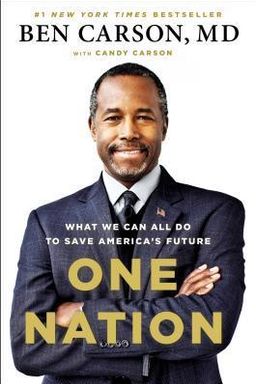
What holds a nation together when political division, moral confusion, and economic uncertainty threaten to pull it apart? In One Nation, Dr. Ben Carson—a world-renowned neurosurgeon turned public thinker—argues that America’s survival depends on rediscovering its moral compass, strengthening its civic values, and reviving the common sense and godly wisdom that guided its founding.
Carson contends that the increasing hostility between ideological camps—fueled by political correctness, elitism, ignorance of history, and moral relativism—has crippled our ability to solve national problems. His core claim is simple but profound: unity and individual responsibility, not government control, will save America’s future. To achieve this, he urges Americans to speak courageously, educate themselves, and model civility even in disagreement.
From Prayer Breakfast to National Conversation
The book opens with Carson recounting his controversial 2013 speech at the National Prayer Breakfast, delivered just feet away from President Barack Obama. Far from partisan rhetoric, Carson’s message was a plea for moral clarity and rational debate. He denounced political correctness for stifling honest discussion, compared blind partisanship to slavery of thought, and illustrated, with humor and humility, how freedom of expression and education lifted him from poverty. That moment—captured on video and viewed by millions—became the catalyst for One Nation.
Diagnosing America’s Decline
Carson divides the book’s argument into three major parts. The first traces causes of disunity: political correctness that silences truth, elitism that breeds arrogance, and widespread ignorance about our history and Constitution. He shows how bigotry—of race, religion, or ideology—feeds resentment and how bitter political infighting ensures that nobody wins. These chapters read like a diagnosis from a physician observing a moral illness in the body politic. America, he warns, is suffocating under hypersensitivity and partisan manipulation, unable to use reason or compassion to solve real issues such as education failure, national debt, or moral decay.
Prescriptions for Healing
Part two offers solutions: courageously resisting manipulation, practicing respectful disagreement, mastering compromise, and becoming well-informed citizens capable of critical thought. Carson guides readers to push back against media bullies and ideological enforcers—not with anger, but with calm and reason. He illustrates this through stories from his medical career, where standing firm against institutional arrogance saved lives. His proposed reforms, from a fair proportional tax system to health savings accounts for all citizens, combine fiscal prudence with individual empowerment. These pages reflect his lifelong belief that wisdom must guide knowledge—the same principle that helped him succeed as a surgeon and now defines his political philosophy.
Reclaiming Who We Are
The final section shifts from practical reform to identity. Carson invites readers to rediscover who Americans are meant to be—a moral, courageous, God-honoring people who care for their brothers and sisters. He frames patriotism not as a political stance but as an act of stewardship toward future generations. Through stories of his mother’s faith, his patients’ perseverance, and his own near-fatal car accident, he reminds readers that life is fleeting, and courage—personal and national—is the only path to renewal.
Why This Vision Matters Today
Carson’s message resonates because it transcends traditional political boundaries. He calls for humility from elites, responsibility from individuals, and compassion from communities. In essence, the book is less a manifesto and more a mirror—forcing readers to confront how far the nation has drifted from the principles that once made it exceptional. His references to Alexis de Tocqueville’s astonishment at America’s moral vigor (in the 1830s) and to the founding fathers’ fears of government overreach underline the urgency of his appeal.
“Godliness exalts a nation, but sin is a disgrace to any people.” —Proverbs 14:34
Carson uses this biblical truth to argue that morality and civic virtue are not relics—they are the foundation stones that must be rebuilt, one family and one individual at a time.
Ultimately, One Nation challenges you to ask: What kind of future do you want to leave your children? Through faith, knowledge, and common sense, Carson believes America can rise again—not by government decree but by moral awakening. His book is a call to conscience, reminding every reader that change begins with courage, civility, and a renewed sense of personal responsibility.