
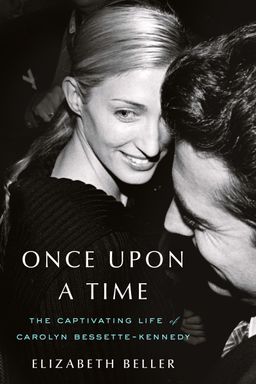
Once Upon A Time cover

Once Upon A Time

by Elizabeth Beller

Carolyn Bessette-Kennedy’s rise to fame and untimely death in a plane crash with her sister, Lauren, and husband, John F. Kennedy Jr.

Fame, Narrative, and Human Cost

How do public narratives turn living people into fixed symbols? In Elizabeth Beller’s deeply reported portrait of Carolyn Bessette-Kennedy, the book argues that 1990s tabloid culture wasn’t mere scenery—it was an active machine that captured private moments, attached ready-made stories, and amplified them until they hardened into canonical “truth.” Beller contends that if you follow Carolyn’s life—from a warm, working-class upbringing to real influence at Calvin Klein, from tender courtship with John F. Kennedy Jr. to mounting paparazzi siege—you see how spectacle eclipses substance and how gendered scripts assign blame, erase empathy, and distort memory.

Beller’s claim has two intertwined parts. First, media incentives favored provocation and pain, so photographs and clips that showed distress fetched the highest price. Second, those incentives met a cultural moment primed to misread ambitious, private women as cold or controlling. The result is a steady narrative inversion: the traits that made Carolyn effective and kind in private became vices on the public stage. To understand her—and to see our own media reflexes clearly—you have to trace the pipeline that turns a gesture into a headline, a rumor into a reputation.

The 1990s Media Ecosystem You Inherit

Beller situates you in a pre-smartphone, 24-hour tabloid boom where paparazzi chase, cash bounties, and syndicated TV shows (like Day & Date) create a market for conflict. You watch the Washington Square Park fight—private pain captured, sold, and rebroadcast for five days—become an origin myth for a caricatured Carolyn. You see wedding secrecy at Cumberland Island punctured by a leaked AP tip, and a honeymoon in Istanbul stalked by photographers bribing travel agents for itineraries. Each intrusion ratchets up the price—and the pressure.

(Note: The book explicitly invites a comparison to Princess Diana’s media persecution—another case where grief and glamour combined to fuel a lucrative industry of intrusion.)

Who Carolyn Was Before the Camera

The portrait begins far from the flash. Raised in Hartsdale and White Plains with Italian-American roots (grandparents Carl and Jennie Messina), Carolyn grows up inside a practical ethic: work hard, notice who’s left out, and do the right thing. Her mother Ann’s moral code and her stepfather Dr. Richard Freeman’s steadiness ground her; her biological father’s absence leaves a thread of caution. Teachers remember a buoyant laugh, braided-hair afternoons, and hospitality toward marginal peers. At Boston University she majors in education and tutors kids, then pragmatically shifts into fashion, where she leverages warmth, taste, and execution at Calvin Klein.

Inside Calvin Klein, Carolyn isn’t a mannequin; she’s a builder. She moves from VIP sales to PR, helps stage runway shows, and champions talent (notably Kate Moss, whose rise reframes 1990s beauty). Colleagues mimic her minimalism, and Zack Carr sketches her silhouette. Her style—Yohji Yamamoto, restrained palettes—communicates clarity and restraint long before it becomes a defensive uniform. This professional life matters because tabloids later recode her discernment as vanity and her privacy as aloofness.

Narrative Inversion in Action

Beller shows you how stories flip. John’s protective instincts appear as temper when filmed; Carolyn’s insistence on boundaries is branded as controlling. An anonymous letter handed to John at El Teddy’s seeds the notion that she’s manipulative; a spat on a park bench, sold for cash, is framed to make her the aggressor. Even a bottle of antidepressants washed ashore becomes a punch line, not a medical reality deserving discretion. These flips sit in a wider backlash against 1990s feminism (think Anita Hill, Marcia Clark, Monica Lewinsky), where women who decline the decorative role are painted as villains.

Marriage as Refuge—and Amplifier

When Carolyn and John fall in love, the book tracks tenderness and triage. She steadies him through Jackie’s illness and death; he shields her from cameras. They craft boundaries—nicknames, private rituals, and a secret island wedding with Indian Head penny tokens for security. Yet the marriage also becomes an amplifier: paparazzi harassment escalates; George magazine’s business drama (rifts with Michael Berman, pressure from Hachette’s David Pecker) spills into their home; rumor economies pry at trust. Therapy helps, but systemic forces keep refilling the stress bucket.

Why It Matters to You Now

If you live online, you inhabit a perfected version of this system. Platforms reward outrage; virality flattens nuance. Beller’s case study gives you a diagnostic: look for the pipeline—capture, caption, amplification—and ask who benefits when empathy is recoded as scheming. It also gives you practices: slow your judgment, honor context, and separate a person’s private care from their public caricature.

Key Idea

Beller’s central move is restorative: she rebuilds Carolyn from the fragments tabloids left behind—family, work, love, and loss—to show the human being spectators were trained not to see.

By the final chapters—John’s flying as escape from airports and cameras, a chain of ordinary delays on July 16, 1999, and a public mourning turned media spectacle—you grasp the book’s full scale. It isn’t only a biography. It’s a map of how a culture manufactures stories, how those stories govern lives, and how choosing to see whole people is an act of moral repair. (In So You’ve Been Publicly Shamed, Jon Ronson charts reputational pile-ons in the social era; Beller offers their pre-digital prototype—and the cost paid by one woman.)


Tabloids and Narrative Inversion

Beller dissects a repeatable formula: capture a volatile image, attach a sensational caption, and repeat through tabloids to mainstream outlets until the frame becomes fact. You see this with the Washington Square Park tape sold to Day & Date, a honeymoon trailed across Istanbul and Ephesus, and a single bowed-head taxi shot that becomes a metonym for Carolyn’s alleged fragility. The press doesn’t just report; it scripts—and profits.

The inversion sits at the technique’s core. In private, anger at harassment is protective; in public, it’s painted as instability. John’s exasperation at camera mobs gets recoded as hot-headedness; Carolyn’s boundary-setting with strangers becomes “coldness.” Even neutral objects are weaponized: nail polish turns into vanity; a prescription bottle turns into scandal. The machine privileges spectacle over truth because spectacle sells.

Flashpoints and Their Frames

Consider the anonymous El Teddy’s letter. Handed to John, it accuses Carolyn of manipulation. He throws it down, but the seed is planted: outsiders policing her legitimacy in the Kennedy world. Then the park altercation: filmed without context, edited to imply Carolyn as aggressor, and broadcast for days. The effect is cumulative: each incident adds a coat of paint to a caricature that distances audiences from the person behind it.

(Note: Scholars of media effects describe this as cumulative framing—no single story defines a subject, but repetition does. See also Shanto Iyengar’s work on framing and priming.)

Gendered Scripts at Work

The late-1990s backlash against feminism sets the stage. Women who challenge the passive, decorative role are slotted into “ice queen” or “harpy” tropes. Beller threads this through contemporary cases—Anita Hill’s vilification, Marcia Clark’s courtroom scrutiny, Monica Lewinsky’s humiliation—to show a cultural script that recodes female agency as threat. Carolyn becomes its canvas: empathy is recast as scheming; privacy as elitism; silence as guilt.

From Curiosity to Commodification

Media appetite escalates once money changes hands. The park tape fetches big dollars; paparazzi bribe for itineraries; a cousin’s casual comment to the AP compromises a secret wedding. Once a market exists for pain, producers actively provoke it. Photographers taunt, crowd, and “wait out” targets to capture tears or rage because those frames command premiums. The press becomes participant, not observer.

How Repetition Becomes “Reality”

Beller tracks the amplification ladder: a tabloid plants a take, TV breathes life into it, and broadsheets echo the framing as consensus. Friends’ testimonies—Dana Gallo, Carole Radziwill, MJ Bettenhausen—rarely pierce the noise. Even refutations (for example, debunking Michael Bergin’s substance rumors) can’t match the reach of lurid headlines. Once a simplified role is assigned, evidence confirming complexity gets ignored or mocked.

Key Idea

Narrative inversion is a structural bias, not an occasional error. It rewards interpretations that make private virtues look like public vices, especially in women.

What You Can Do Differently

When you consume a viral clip or a charged headline, map the pipeline. Ask: who captured this, why now, who profits, and what context is missing? Look for the pattern Beller reveals: moments of vulnerability dressed up as pathology. Practice the pause—defer judgments, seek primary accounts, and weigh character witnesses with proximity (friends like Hamilton South or Sasha Chermayeff carry more weight than anonymous sources). Your skepticism becomes an ethical stance against the inversion economy.


Family Roots, Work, Selfhood

To understand Carolyn’s choices, Beller takes you home first. The Messina-Bessette lineage—Sicilian immigrant grit, artisan craft (Jennie Messina sewing samples for Vera Neumann), and blue-collar pride—imprints a practical ethic: show up, notice the overlooked, keep your promises. Ann Bessette raises three daughters largely alone after divorcing William Bessette, instilling independence and a blunt moral code. Dr. Richard Freeman’s arrival in 1977 adds stability and love in Greenwich, while William’s intermittent presence leaves Carolyn wary of unreliable men.

Teachers at Juniper Hill and Richard J. Bailey remember a bright, outgoing girl who braided classmates’ hair and read avidly; at Greenwich High and St. Mary’s, she resists cliques and centers relationships over status. She works early and often—babysitting, retail summers at Caldor—and at Boston University she majors in education, tutoring and student-teaching in under-resourced schools. Compassion isn’t a pose; it’s daily practice.

The Pivot to Fashion, Without the Vanity

After BU, a job at the Calvin Klein boutique in Chestnut Hill becomes a portal to New York. She leverages warmth, taste, and competence to enter VIP sales (Personals) and PR, where substance matters more than dazzle. With clients like Diane Sawyer and Sharon Stone, her superpower isn’t flattery; it’s discernment—the ability to read needs, say no with grace, and connect the right talent to the moment.

(Note: Beller’s emphasis on “operational empathy”—noticing, intervening, sustaining care—mirrors what organizational psychologists call emotional labor, often undervalued but essential to team performance.)

Empathy as Operating System

Friends describe Carolyn as a super empath. She sits vigil with Dana Gallo through the loss of both parents. She brings levity and practical help to Anthony Radziwill during illness. She cherishes toddlers in BU daycares and later mentors younger colleagues at Calvin Klein (Monicka HanssenTéele, Michelle Kessler). This sensitivity later becomes double-edged: it deepens loyalty, but it also registers slights acutely in a hostile press environment.

Culture Clash: Public Myths vs. Working-Class Truths

Tabloids later assume Carolyn is a privileged WASP groomed for glamour. Beller demolishes that with family detail—Jennie’s workshop table, Carl’s foreman jobs, Ann’s relentless teaching shifts. What looks like minimalism is partly frugality and craft admiration. What looks like aloofness is boundary-setting learned from a mother who measured people by dependability, not flash.

Formation Predicts Later Choices

When Carolyn shuns performative celebrity, prefers behind-the-scenes roles, and fiercely protects family honor, you see echoes of that early formation. Her disdain for gossip and her insistence on controlling access to her private world become predictable, not puzzling. So does her reluctance to be used as a sales prop for George: she wants usefulness, not display.

Key Idea

Beller reframes Carolyn as the product of a working-class ethic—craft, loyalty, and care—not as an emblem of idle chic. That reframing helps you see through later caricatures.

What You Can Borrow

If your life straddles public and private worlds, let roots set rules. Define what you will not trade (family honor, time with loved ones, ethical boundaries at work). Build an inner circle long before a crisis. And treat empathy as a practice, not a posture—bring meals, hold hands, do the unglamorous labor that turns affection into trust. Those are the habits that kept Carolyn beloved among friends even as headlines raged.


Calvin Klein and Cultural Sway

Beller insists you read Carolyn’s fashion years as real, consequential work. At Calvin Klein she advances from VIP sales to PR and show production, where she pairs taste with execution. She manages editor pulls for titles like Glamour, plots runway sequencing, and produces large-scale events (AIDS Project Los Angeles with 350 models). She reads rooms, disarms celebrity clients, and helps translate aesthetics into commerce.

Her influence shows in two visible ways. First, internally: colleagues mimic her low-effort minimalism—no-makeup challenges, midis with Chucks—because her choices feel grounded, not faddish. Zack Carr sketches her silhouette; Abdul Kareem Egyptian Musk Oil becomes an unofficial team scent. Second, externally: she helps champion Kate Moss when Calvin hesitates, arguing for a corrective to 1980s excess. That call reshapes the decade’s beauty norms and fuels a brand renaissance.

Style as Language—and Later, as Shield

Style communicates values. For Carolyn, Yohji Yamamoto’s drape and neutrality read as self-possession and quiet strength. Later, as paparazzi intensify, the palette doubles as armor (Yohji himself describes his clothes this way). What Vogue hails as a “Cult of Carolyn” is both tribute and trap—recognition that invites trivialization, as if taste precludes depth.

(Note: Public women often get this double bind; influence via style becomes permission for media to dismiss other competencies. Beller documents the bind with precision.)

Crossing into George: Transferable Skills

When John launches George, Carolyn quietly leverages fashion-world relationships to secure ads and warm up investors. She reads creative pitches, offers counsel on feature mix, and steadies staff morale. Yet line-drawing matters: Hachette’s David Pecker wants the couple as advertiser bait; Carolyn resists becoming a prop. The same competence that makes her valuable also makes her wary of being consumed by the brand of someone she loves.

Leaving the Work She Loved

Harassment at Calvin’s office and outside their apartment escalates to the point that staying becomes untenable. Her 1996 resignation is not a retreat into idleness but a forced recalibration under siege. Tabloids then twist the absence—“What does she do all day?”—ignoring that her old life was made impossible by the attention the tabloids themselves created.

Searching for Next Chapters

Freed from a job she never wanted to leave, Carolyn explores a master’s in psychology, considers documentary collaboration with Carole Radziwill, and keeps mentoring Calvin alumni. The pattern holds: a bias toward usefulness, not celebrity. But every public move risks tabloid mining, so she delays. Identity grief sets in—the quiet ache you may recognize when a vocation that once anchored you dissolves.

Key Idea

Carolyn’s fashion career isn’t an accessory to fame; it is the foundation of her competence and taste. Losing it to paparazzi pressure removes a stabilizing pillar just when public scrutiny peaks.

What You Can Apply

Treat style as intentional communication—make it align with how you want to work and live. Guard professional identity against roles that consume without replenishing. If public demands threaten your craft, clarify boundaries early: what access you grant, what events you attend, and when “no” protects the work you value most.


Love Under Siege

Beller’s account of John and Carolyn refuses melodrama; it offers a living relationship working through attraction, history, and relentless external pressure. They meet during a 1992 Calvin Klein fitting, magnetism immediate but not uncritical. Early on, John pursues; Carolyn guards. Daryl Hannah’s presence complicates starts and stops. Jackie’s illness and death mark a pivot—John leans into Carolyn’s steadiness; she becomes partner and counsel, including on George.

They cultivate refuge: nicknames like “Mouse” and “Catty Cat,” rituals at Hyannis Port, a secret engagement, and a small, intentional Cumberland Island ceremony engineered for privacy (pennies as tokens, tightly controlled logistics). The wedding’s grace under secrecy expresses their shared values: intimacy over spectacle, chosen family over performance.

Asymmetry in Navigating Fame

John is practiced with attention; he can banter with photographers and pick his spots. Carolyn isn’t; the same crowd feels like an assault. This asymmetry creates friction. He wants to “fix” the pain—fly, work, confront—while she needs quiet, control, and safety. Their different thresholds often collide in public: the hood-of-the-car shielding, the Bubby’s dog incident, the park fight. Neither is villain; the context is punishing.

Protection as Balm and Burden

John protects physically and bureaucratically (clashes with publisher Michael Berman; shielding her from taunts). Carolyn protects socially and emotionally—filtering access, shaping guest lists, consoling George staff, and stabilizing family rituals. Yet protection itself becomes heavy; when one person must always be shield or filter, intimacy can strain under the load.

Therapy and Behavioral Truces

By spring 1999 they begin counseling. Concrete changes emerge: lunch dates reserved for connection, clearer communication, and shared attention to mental health (antidepressants become part of care). Therapy helps them name patterns—like conflict spikes after paparazzi provocation or George crises—and design counter-moves. Still, the machine outside the door keeps humming; no private practice can rewrite an industry’s incentives.

Moments That Hold and Break

Beller balances rupture with tenderness. You hear about late-night laughter at parties; John reading speeches in the car for Carolyn’s ear; mutual caretaking at the NIH while tending to Anthony Radziwill. You also see fights over obligations—like attending Rory Kennedy’s wedding—that carry symbolic weight inside a famous family. Reconciliation is recurrent, but so is fatigue.

Key Idea

This marriage isn’t a tabloid morality tale; it’s triage in real time. Love survives many storms, but systems—media, business, family expectations—can keep manufacturing new ones faster than two people can repair.

What You Can Learn for Your Relationships

Name asymmetries early—exposure tolerance, conflict style, coping strategies—and make explicit trades: when to engage, when to withdraw, who handles which fronts. Build rituals that replenish, not just protect: standing dates, no-phone windows, shared projects with intrinsic meaning. And when “the outside” refuses to relent, consider structural support (security, PR boundaries) as acts of love rather than vanity.


George, Rumors, and Tragedy

George magazine is both aspiration and accelerant. John wants a platform where politics meets pop culture, but the business model wobbles. Publisher Michael Berman clashes with him dramatically (a tussle over a TV-deal folder, a torn cuff, staff intervening). Hachette’s David Pecker courts advertisers through John’s shine, pushing ad dinners and cross-promotion that feel extractive. The tension—mission vs. money—bleeds into home life, eroding free time and fraying patience.

For Carolyn, George is a paradox. She can help—leveraging fashion contacts for ad sales, reading creative, keeping morale steady—but risks being used as a prop. She draws lines. Meanwhile, rumors proliferate: salon spats (Brad Johns), memoir marketings (Michael Bergin), and betrayals (a friend reading John’s journal) seed stories of pills, affairs, and cocaine. Close friends—Carole Radziwill, MJ Bettenhausen, Sasha Chermayeff—reject the claims, but the rumor mill isolates regardless.

Rumor as Social Weapon

Beller details how whispers scale: anonymous tabloids publish; TV echoes; acquaintances doubt. Trust collapses not only at the edges but within the circle. Carolyn reacts by shrinking her world—no solo commercial flights, fewer public outings, indoor socializing with a small, vetted group (Hamilton South, Radziwills). Therapy in 1997 and antidepressants add a scaffold, but stigma turns care into scandal fodder.

Flying as Escape—and Risk

John’s answer to airports and cameras is the cockpit. He trains in Buckeyes, buys a Cessna 182Q, then a Piper Saratoga. Family members worry—Caroline Kennedy, Ted Kennedy, and Caroline Bouvier see risk sharpened by family history and John’s distractibility. Still, flying promises control in a life of ambushes. The compromise becomes habit: private skies instead of public terminals.

July 16, 1999: A Fragile Chain

The final day unfolds in granular decisions. Traffic delays departure. At 7:53 p.m., John checks ASOS—eight miles visibility. Takeoff is 8:38 p.m., just after sunset (8:26), with dusk closing (8:58). No formal flight plan is filed. The plan: drop Lauren at Martha’s Vineyard, continue to Hyannis Port. When they don’t arrive, calls escalate to the Coast Guard; debris appears; search turns to recovery. The tragedy feels less like one catastrophic error and more like the intersection of weather, timing, obligations, and the human need to show up for family (Rory Kennedy’s wedding).

Public Mourning, Again as Spectacle

After the crash, the same press that fed on conflict devours grief. Cameras mass at Hyannis Port and North Moore Street; tributes and conspiracy theories proliferate. The family navigates vigil, identification, private services, and a burial at sea while crowds watch. It’s a final inversion: intimacy in sorrow converted to public theater.

Key Idea

George’s instability, rumor economies, and aviation-as-escape form an architecture of pressure around two people trying to build a life. None alone explains the end; together they set the stage for tragedy.

Lessons You Can Carry

Creative ventures need robust, values-aligned capital or the mission will be traded for ad dinners. Guard journals and confidences as if they are currency—they are. Treat mental-health care as ordinary maintenance, not scandal-in-waiting. And when you seek escape from structural stress, check whether the escape adds new fragilities; build redundancies (co-pilots, flight plans, weather buffers) the way you’d add guardrails to any high-stakes decision.

Dig Deeper

Get personalized prompts to apply these lessons to your life and deepen your understanding.

Go Deeper

Get the Full Experience

Download Insight Books for AI-powered reflections, quizzes, and more.