
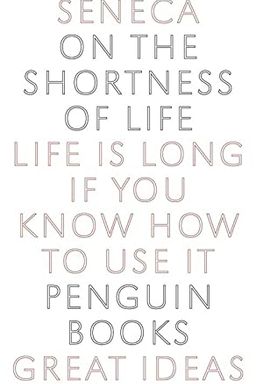
On the Shortness of Life cover

On the Shortness of Life

by Seneca

Seneca''s ''On the Shortness of Life'' is a timeless exploration of how to live a meaningful life. By avoiding trivial pursuits and valuing inner satisfaction, readers learn to harness wisdom from great thinkers, balance work and leisure, and cultivate true fulfillment.

Living Fully: Seneca’s Art of Time, Virtue, and Tranquility

Have you ever felt that life races by so quickly that you barely experience it? In On the Shortness of Life: The Stoic Classic, Lucius Annaeus Seneca—one of Rome’s most revered philosophers—asks why we squander our most precious resource: time. Seneca argues that we humans aren’t given short lives; rather, we make them short through distraction, busyness, and misplaced ambition. His focus isn’t on time management but on life management: how to live deliberately and joyfully by directing our energy toward reflection, virtue, and the pursuit of wisdom.

Across the three major essays in this volume—On the Shortness of Life, On the Happy Life, and On Peace of Mind—Seneca builds a philosophy of inner freedom. He proposes that self-knowledge and deliberate attention to the present can free us from false values and societal illusions. What he offers isn’t escape from the world but mastery within it. Embedded in these essays are profound lessons about time, happiness, and serenity that still speak to anyone trying to balance work, purpose, and peace in an overstimulated world.

Time as the True Wealth

In the opening essay, Seneca reveals a shocking truth: people guard their money fiercely but give their time away carelessly. He writes of men who ‘distribute their life among others’—devoting themselves to ambition, luxury, or public duties without ever living for themselves. We imagine that life is short because years fly by, but for Seneca, life feels brief only because we waste it on trivial pursuits. Time, not possessions, is the one resource you can never recover once spent. To live fully is to reclaim your attention from the endless swirl of duties, gossip, and desires.

Seneca’s antidote is to become a philosopher—not necessarily by profession, but by attitude. A philosopher, in his view, lives consciously, continually reflecting on what truly matters. He urges that we must ‘belong to ourselves’ rather than to the whims of others. This resonant idea connects to modern thinkers like Thoreau in Walden or Viktor Frankl in Man’s Search for Meaning: both insist that a life of purpose is a life awakened to reality, not driven by external validation.

Virtue Over Pleasure: The Path to Joy

In On the Happy Life, Seneca develops a vision of happiness grounded in moral integrity rather than luxury or leisure. Living well means living ‘in accordance with Nature,’ guided by reason. Happiness isn’t found in chasing pleasure or achievement but in aligning your thoughts and actions with virtue. The Stoic’s joy comes not from the world’s approval but from a steady, rational mind that knows how to greet fortune and misfortune alike. Seneca acknowledges that while even wise people falter, the pursuit of virtue itself is the reward—it leads to inner cheerfulness untouched by external chaos.

This section also shows Seneca grappling with hypocrisy: his wealth and position in Nero’s court drew criticism, and he responds that richness is acceptable if it’s used ethically and without attachment. Wealth, he explains, may provide opportunities for generosity and moral action—but must never become one’s master. Like Aristotle’s teaching on the ‘golden mean,’ Seneca advocates moderation: enjoy prosperity, but hold it lightly.

The Calm Mind Amid Chaos

Finally, in On Peace of Mind, Seneca turns to the question every overwhelmed person asks: how can I be calm when life feels uncontrollable? His dialogue with his friend Serenus presents serenity not as withdrawal but as balance—a harmony between action and contemplation. True peace, or euthymia, arises when you accept human nature, manage your desires, and perform your duties without being dominated by them. To be tranquil is to adapt while staying true to your values, accepting adversity as belonging to the natural course of life. You are free the moment you stop fighting fate and start living in accord with it.

Throughout, Seneca models what modern psychology calls cognitive resilience: the ability to interpret events rationally so that external shocks lose their power to disturb you. He advises cultivating inner defenses that allow you to smile at fortune’s twists. His serenity is active, not passive—a hard-earned equanimity accessible only through discipline and reflection.

Why Seneca Still Matters

These essays are not abstract lectures but survival guides written in the midst of imperial intrigue. Seneca lived amid luxury and danger, advised Nero, endured exile, and finally died by forced suicide. That he maintained such composure amid turbulence makes his philosophy compelling. He reminds us that peace is not the absence of trouble but the ability to stand firm within it. His thought echoes in modern works from Ryan Holiday’s The Obstacle Is the Way to Alain de Botton’s The Consolations of Philosophy: when we learn to live intentionally, time expands, and serenity becomes strength.

Ultimately, Seneca challenges you to treat wisdom as the ultimate luxury. Time, happiness, and tranquility—all flow from living virtuously and mindfully. His call is timeless: stop being ‘busy,’ start being alive. Life is long enough—if you truly live it.


Mastering Time: Seneca’s Cure for Busyness

Seneca’s famous essay On the Shortness of Life begins with a rebuke: life isn’t short, but we make it short. Time, he insists, is squandered not because we have too little but because we misuse what we have. He uses vivid examples—Roman senators enslaved by duties, merchants obsessed with profit, and aristocrats lost in luxury—to illustrate how busyness devours meaning. We live as though immortality awaits us tomorrow and thus never truly enter the present.

The Waste of Distraction

Seneca compares people’s care for property and money to their neglect of time. You’ll protect your estate but give away your days—to trivial conversations, unworthy causes, or endless digital scrolling in modern terms. He writes that people die before they begin to live because they postpone reflection until the end of life. The wise, by contrast, seize their hours intentionally, shaping each as if it were their entire existence.

Belonging to Yourself

Freedom for Seneca begins when you stop being owned by others’ expectations. His line, “You will find no one willing to give away their money, yet everyone divides their life with others,” still strikes home. Your calendar often belongs to everyone except you. Seneca defines owning your time as reclaiming solitude and self-reflection—what modern writers like Cal Newport call ‘deep work.’ To philosophize is to refuse mere reaction and instead shape your days around what nurtures the soul.

Leisure and Reflection

True leisure is not laziness. Seneca distinguishes between superficial recreation and philosophical rest. People who waste their free moments on trivia or pleasure have not escaped busyness—they’ve just changed its costume. Real leisure involves contemplation, study, and communion with the wisdom of past ages. He praises philosophers as the only people who ‘annex every century to their own,’ living beyond their era through understanding.

The Eternal Present

A central insight is that memory and reflection redeem time. The past, explained Seneca, becomes part of you as wisdom; the future is uncertain, so the present is all you truly possess. He turns time into spiritual abundance—an idea later echoed by Boethius and Montaigne. Life lengthens in proportion to how consciously you live it. In the end, to master time is not to control minutes but to fill each with meaning. For Seneca, that’s what makes mortality bearable and life magnificent.


The Stoic Way to Happiness

In On the Happy Life, Seneca resolves one of philosophy’s greatest questions: what does it mean to live happily? Against Rome’s culture of excess and power, he presents a model of joy rooted in reason and virtue. To live happily, he argues, is to live according to Nature—to let reason guide desire, not desire rule reason. This mindset transforms happiness from a fleeting pleasure into a permanent state of freedom.

Reason as the Compass

Seneca’s ‘Nature’ is not forests and rivers but the natural order of the human mind. A happy life obeys its rational design, moderating emotion and ambition. He describes the happy person as “free, upright, undaunted, and steadfast.” Such people find cheerfulness in everything because their contentment depends only on virtue. Their peace is not accidental but chosen—anchored in principle, not pleasure.

Virtue vs. Pleasure

Seneca contrasts two masters—Virtue and Pleasure—and insists you can serve only one. Pleasure is fickle and enslaving; virtue is immortal and liberating. He criticizes luxury-lovers like Apicius, whose endless banquets brought misery disguised as ecstasy. Pleasure dies as soon as it's tasted, whereas virtue grows stronger with time. Happiness comes not from indulgence but from self-command—the strength to enjoy prosperity without being possessed by it.

Wealth and Integrity

Addressing critics of his wealth, Seneca insists that riches are not inherently evil. The key is detachment: “My riches belong to me; you belong to your riches.” He holds that wealth is only desirable when honourably acquired and honourably used. Money can enable generosity, education, and civic virtue—but should never define worth. This balance echoes Socrates’ simplicity and Marcus Aurelius’s advice to “receive wealth without arrogance, and let it go without grief.”

Seneca thus reframes happiness as inner abundance—a state achieved not by what you own, but by what you master within yourself.


Inner Calm: Building Peace of Mind

When Seneca’s friend Serenus confides that he feels restless and conflicted, Seneca offers one of antiquity’s most practical remedies for anxiety. On Peace of Mind defines tranquility (euthymia) as a steady, undisturbed mind that loves its own condition. You may not control events, but you can control your judgments about them. For Seneca, peace of mind is not escape—it’s disciplined presence within chaos.

Understanding Inner Turmoil

Seneca begins by comparing mental distress to lingering illness: even after recovery, the patient still fears relapse. We are not at war, he says, but seasick—caught between ideals and desires. The cure is confidence: believing you are on the right path despite life’s noise. Fickleness and envy are symptoms of a mind dependent on external things. The first step toward tranquility is self-sufficiency—finding delight within yourself rather than others’ praise or possessions.

Balancing Action and Withdrawal

Seneca advises staying active in the world but tempering ambition. A person should serve society while keeping a private refuge for the soul. Leisure, he insists, is not idleness but philosophical work—time used for reflection and humanity’s improvement. Even in oppressive conditions like Nero’s Rome, he reminds Serenus of Socrates, who remained free in spirit under tyranny.

Facing Fortune Fearlessly

Tranquility depends on accepting fate. Seneca teaches that everything transient—wealth, office, power—is a loan from Fortune; be ready to return it gratefully. To fear death or loss is absurd when Nature owns both our beginning and end. Peace comes when you regard adversity as expected, not exceptional. “A person cannot live well if they do not know how to die well,” he writes—a precursor to modern Stoic mindfulness and acceptance therapy.

Practicing Mental Restoration

Seneca, surprisingly, recommends regular recreation. Work and reflection must be balanced with rest, walks, and even wine. He admired Cato’s lighthearted drinking and Scipio’s dancing, seeing leisure as fuel for virtue. Like today’s psychologists, he knew recovery strengthens resilience. True peace, therefore, isn’t cold detachment but joyful composure—the art of caring deeply without losing yourself.


Living According to Nature

Seneca’s recurring guiding principle—living in accordance with Nature—anchors all three essays. To live naturally means aligning with rational order, accepting change, and practicing moderation. It rejects the chaos of desire and imitation of others. In this vision, human reason mirrors cosmic reason; peace arises when our inner logic harmonizes with the universe’s.

Rejecting the Herd

Seneca warns against following the crowd’s mistaken values. Like Montaigne centuries later, he observes that people imitate others' errors, mistaking popularity for truth. In happiness, the majority votes for misery. You must abandon herd-thinking and reflect alone to discern what truly makes life good.

Embracing Fate’s Law

Nature’s law includes loss, change, and death. To fight them is futile; to accept them is liberation. Seneca calls resistance to fate “folly and ignorance.” The wise obey God—or Nature—as soldiers obey a just commander. Submission here is strength because it yields serenity. This is Stoic determinism not as fatalism but freedom from resentment.

The Divine Within

Living naturally means recognizing divinity in reason itself. Virtue is the spark of the divine that survives death. When you act rationally and justly, you participate in cosmic order. Seneca thus transforms morality into spirituality: by obeying nature’s reason, you align with the gods themselves.


Philosophy as Liberation

For Seneca, philosophy is not luxury but liberation—a way to reclaim ownership of life. He writes that “the day a person decides to become a philosopher, that day they are liberated.” Philosophy, in his sense, is practical wisdom: learning to live well, die well, and think clearly amid confusion. It’s both therapy and rebellion against a world that rewards noise over thought.

From Busyness to Being

Seneca contrasts the philosopher with Rome’s careerists who chase consulships and fame. They give away years to ambition, seeking one year ‘named after them.’ The philosopher, conversely, gains eternity by connecting with truth and history through study. Reading Socrates or Zeno lets one annex “every century” to one’s own lifetime—a metaphor for timeless reflection.

Learning How to Die

Because death is inevitable, philosophy’s greatest lesson is how to meet it calmly. As he wrote his letters and essays, Seneca faced mortality firsthand—ultimately dying by his own hand under Nero’s orders. His composed death embodies Stoic courage in practice. Like Epictetus’s discipline and Marcus Aurelius’s meditations, Seneca’s philosophy teaches that freedom begins when fear of death ends.

The Intellectual Legacy

Seneca’s influence spans centuries—from Renaissance humanists to modern cognitive psychology. His insistence on reflection as liberation anticipates mindfulness and existential therapy. Every time you pause to examine your priorities instead of reacting, you practice Seneca’s art of living. Philosophy is not retreat—it’s the reclaiming of your own mind from the world’s chaos.

Dig Deeper

Get personalized prompts to apply these lessons to your life and deepen your understanding.

Go Deeper

Get the Full Experience

Download Insight Books for AI-powered reflections, quizzes, and more.