
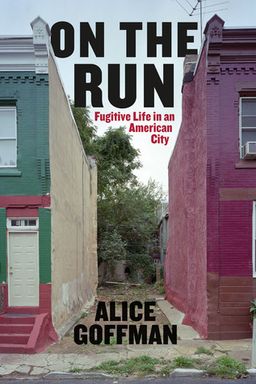
On the Run cover

On the Run

by Alice Goffman

Alice Goffman''s ''On the Run'' delivers a raw, unfiltered look at life in a crime-ridden Philadelphia neighborhood, revealing the systemic forces that perpetuate a cycle of criminalization and societal exclusion. Goffman''s in-depth ethnographic research unveils the stark realities and resilience of those living ''on the run,'' offering profound insights into urban America''s hidden struggles.

Life on the Run: How Punishment Reorders Urban Life

What does it mean to live your life in a community where the police, the courts, and the prison system are omnipresent? In On the Run, sociologist Alice Goffman delivers an unflinching look at one Philadelphia neighborhood she calls 6th Street, where mass imprisonment, surveillance, and police presence shape nearly every detail of daily life. Her core argument is both empirical and moral: the U.S. carceral state has not only removed millions from poor Black neighborhoods—it has also remade social relationships, identities, and moral codes among those who remain.

Goffman argues that mass incarceration is not a collection of individual tragedies but a collective condition. As the nation’s prison population exploded—from fewer than 400,000 inmates in 1970 to more than 2 million by the early 2000s—the system’s tentacles reached deep into poor, segregated communities. For the residents of 6th Street, the result isn’t just the risk of being arrested; it is the transformation of neighborhood life into a daily choreography of avoidance, calculation, and adaptation.

A New Carceral Order

In this new order, being legally “clean” or “dirty” defines how you move, who you visit, and what you fear. The War on Drugs, zero-tolerance policing, and expansive probation systems created what Goffman calls a “fugitive community”—a place where men and women live in constant negotiation with the law. Everyday acts—attending a hospital, applying for jobs, visiting children—become fraught with risk. Helicopters circle overhead, stop-and-frisk encounters occur several times each week, and databases now allow officers to cross-check identities instantly. The neighborhood becomes not just policed but colonized by enforcement logic.

From Legal Identity to Social Identity

You quickly learn that one’s social identity—your honor, trustworthiness, and safety—depends on legal status. To be called “clean” means you can pass through a police stop without fear; to be “dirty” means your name might trigger a warrant. These distinctions influence every social decision: girlfriends decide whether to allow a partner inside, mothers choose whether to hide sons from police, and neighbors decide whom to trust. Folk categories like “rider” (loyal ally) or “snitch” (betrayer) dictate respect and livelihoods, reshaping ethics along carceral lines.

Learning to Run, Hide, and Adapt

Once you live under these conditions, you acquire an entire skill set for survival—running from unmarked cars, recognizing undercover officers, and developing networks of safe houses. These are not signs of pathology, Goffman insists, but of adaptation to an environment where the state is a daily hunter. Avoidance stretches far beyond the streets: people skip medical care, skip funerals, or seek false IDs to survive. The art of running becomes a community’s improvisational technology to preserve dignity and life.

Family, Gender, and Intimate Pressure

Perhaps the most wrenching effect appears inside homes. Police rarely operate alone—they enlist mothers, girlfriends, and grandmothers as enforcers, using threats of eviction or custody loss to coerce cooperation. Women on 6th Street face agonizing moral choices: to protect their men and risk their homes or to talk to police and risk social exile. The line between care and betrayal blurs, producing neighborhood narratives where loyalty itself becomes suspect.

Survival and Creativity Under Constraint

Still, 6th Street residents do not simply endure the system—they innovate within it. Jail time can serve as sanctuary from street violence; bail money doubles as a savings account; warrants become excuses or bargaining tools. Informal economies flourish—people forge IDs, sell clean urine for drug tests, or bribe officials for night passes. These actions reveal both moral compromise and remarkable agency: residents repurpose state mechanisms to regain fragments of autonomy in a world designed to curtail it.

Honor, Violence, and the Moral Economies of Punishment

Even punishment becomes social currency. Court dates and prison visits stand in for graduations and weddings, with attendance signifying loyalty and moral rank. Violence—like Chuck’s murder and the retaliations that follow—arises from this same moral economy, where honor must be performed lest one be erased socially. The carceral state thus produces both fear and a counterculture of toughness, obligation, and spectacle.

The Larger Insight

Ultimately, Goffman asks you to reconsider how punishment redefines citizenship. For those on 6th Street, legal supervision structures every choice; the state governs through fear and dependency rather than rights and services. Yet amid this machinery, people forge bonds, markets, and ethics that make life livable. It’s a paradoxical world—one where human creativity thrives inside control, where survival is both resistance and resignation. This is not simply a study of poor Black life but a mirror held to American democracy: how far the reach of punishment now extends, and how profoundly it shapes what it means to be free.


Mass Imprisonment and the Policed Everyday

The U.S. incarceration boom is not an abstraction—it is experienced block by block, household by household. On 6th Street, nearly every young man has a history with the law, and police presence saturates public space. Goffman’s data reveal a neighborhood under siege: in the first year and a half of her fieldwork she witnessed fifty‑plus raids, helicopters overhead, and frequent use of force. What looks from the outside like law enforcement looks from within like occupation.

Hyper‑policing as daily governance

Broken-windows strategies, CompStat metrics, and Warrant Units ensure that there are no minor encounters; a chance stop can expose unpaid fines, probation violations, or missed court dates. These micro‑policies—curfews, stop points, municipal cameras—translate national “tough on crime” laws into daily supervision. You come to see policing not as an emergency response, but as an administrative routine that dictates movement, sleep patterns, and even love lives.

Communities of fugitives

Because warrants accumulate for small infractions—unpaid tickets, missed appointments—the majority of young men end up “wanted.” The community becomes a population of partial fugitives, adjusting every decision—where to sleep, whether to drive, whether to attend a birth or funeral—to avoid contact with police. The result is both physical confinement and psychological flight, the normalization of being “on the run.”


Legal Status and the Moral Map of the Street

On 6th Street, legality becomes an axis of identity. People sort one another into categories that translate legal risk into moral meaning. These are not bureaucratic designations but organic ones: “clean,” “dirty,” “hot,” “rider,” “snitch.” Each signals not only one’s relationship to the police but one’s trustworthiness and value.

How the labels work

Being clean means you can drive, rent, or attend hospitals without risking arrest. Being dirty means you carry warrants or parole restrictions. “Hot” designates heightened surveillance zones rather than people. The system of talk—who is hot, who can be trusted—serves as a folk database replacing unreliable formal ones. It is how residents triage danger.

The entanglement of law and morality

These categories acquire moral weight because loyalty and survival are intertwined. Refusing to shelter a man with a warrant could seem prudent or cowardly; informing the police could seem practical or treacherous. Over time, the community’s ethical compass orbits around proximity to the law, turning legality itself into a kind of moral identity badge. What begins as risk management evolves into a social morality of criminalization.


Hide, Run, and Outsmart the System

Avoidance becomes an art form. To live under surveillance, you cultivate habits that keep you just beyond reach. You memorize schedules, identify unmarked cars, and practice physical drills that look like games but prepare you for escape. Goffman records over a hundred run‑and‑hide incidents across eighteen months—evidence that flight is institutionalized behavior, not impulsive panic.

Collective evasion

Flight never happens alone. Mothers, girlfriends, and elderly neighbors act as lookouts, providing hiding places in basements or backrooms. Homes become informal sanctuaries—Miss Toya’s dressing room, Miss Linda’s closet. These sites embody neighborhood solidarity even as they risk criminal liability, turning care into a subversive act.

Institutional avoidance

Evasion also involves avoiding institutions entirely. People skip hospitals despite serious injury, refuse to call ambulances, or borrow identities. Entire street economies appear around invisibility: sellers forge IDs, heal wounds, or offer temporary safe rooms. The neighborhood creates non‑state alternatives to basic state functions, an underground shadow of public life.

You see how running, hiding, and avoiding are not reckless defiance but rational adaptations. Each flight rehearses moral choices—helping a friend risks your apartment, not helping risks your soul. The “art of running” thus becomes both survival tactic and ethical performance.


Love, Loyalty, and State Coercion

Family and romantic relationships are the front lines of policing. When officers cannot find a man, they knock on doors of women—wives, mothers, girlfriends—and leverage emotional ties to compel cooperation. They use threats of eviction, custody loss, or arrest to turn private spaces into investigative zones. Intimacy becomes a political arena.

Women under pressure

A majority of women Goffman interviewed reported being pressured to share information about a partner’s location. Police threats are pragmatic: pressing child‑support warrants, highlighting unpaid utility bills, or dangling plea bargains. Women alternate between silence and cooperation, between presenting as loyal “riders” and being cast as “snitches.”

Moral consequences

The social price for cooperating is exile; the cost of resistance is danger. This double bind makes love itself precarious. The very act of caring risks betrayal, as intimacy becomes both weapon and target of control. The neighborhood’s gender dynamics thus mirror the broader carceral order: women become intermediaries between the state and the men it pursues.


Reversing the Logic of Control

Instead of being crushed by the system, residents often turn punishment into resource. Jail can provide shelter, bail money doubles as bank account, and warrants can serve as excuses or leverage. Goffman calls this *agency within constraint*: using the state’s own machinery against itself.

Strategic incarceration

During street feuds, men sometimes turn themselves in to escape violence. Jail offers a perverse safety—predictable meals and protection from bullets. Women use the threat of parole violations to control violent partners, reframing punishment as domestic discipline. Legal jeopardy becomes a social bargaining chip.

Informal finance

Bail offices and court deposits create small pockets of liquidity. People claim bail refunds for emergencies or use them as proof of solvency. In a neighborhood excluded from banks and credit, these mechanisms double as financial institutions. Constraint fuels creativity, producing a micro‑economy rooted in the logic of punishment itself.


Punishment as Social Stage

Courtrooms and jail visiting rooms become social theaters where loyalty, love, and identity are publicly enacted. Attending a hearing signifies devotion; absence signals betrayal. In places lacking conventional ceremonies of success, penal events become ritual substitutes—a “graduation” in reverse.

Rituals of degradation

Mothers dress up for sentencings, girlfriends hold vigils as if at commencements, except the rite marks confinement rather than achievement. These performative acts reclaim dignity in the face of humiliation. Showing up means standing by “your man,” even as he’s taken away.

Ambiguous honor

Every display carries uncertainty: is it affection, strategy, or self‑advertisement? When someone takes a charge for a friend, people debate whether it was noble or manipulative. Gossip and storytelling re‑narrate each penal event as moral text, shaping community memory.

Through these rituals, punishment evolves into cultural material. The carceral state no longer operates outside community life—it becomes its central stage, where citizens define themselves through responses to law’s power.


Markets of Evasion and Moral Ambiguity

A hidden economy emerges when legality itself becomes scarce. Residents—and sometimes insiders like guards or clerks—sell what the system withholds: safety, time, and small privileges. These trades expose both economic desperation and subtle resistance.

The goods exchanged

  • Clean urine for drug tests
  • Fake IDs and licenses
  • Smuggled drugs and cash into jails
  • Extended night passes or delayed court dates, sold by low‑paid officials

Participants justify their actions through diverse moral frames: political (correcting injustice), familial (helping loved ones), or economic (meeting needs). Even those within the system, like the guard who sells night passes, vacillate between guilt and self‑justification, illuminating how morality flexes within constraint.

This underground market reveals that legality and illegality interpenetrate. The very institutions meant to enforce purity breed their own informal economies of contamination and survival.


Staying Clean and the Price of Distance

Some residents manage to remain relatively untouched by arrests and warrants, but their cleanliness comes at emotional and social cost. Staying clean often means staying apart—retreating indoors, limiting contact with neighbors, or policing one’s own family boundaries.

Isolation as protection

Lamar’s “indoor crew” spends evenings gaming rather than hanging on corners. Miss Deena guards her household through strict separation—no friends with warrants in the living room, no shared phones. Mr. George maintains literal locked doors within his home, underscoring how cleanliness can fracture intimacy even as it secures safety.

Fragile boundaries

Even clean men like Josh, who leaves 6th Street for a professional job, remain vulnerable through social ties. One misstep—a ride with friends—can unravel years of careful distance. The moral is blunt: purity in a polluted system demands vigilance, sacrifice, and sometimes disloyalty. Cleanliness is not freedom; it is constant negotiation with contamination.


Fieldwork, Ethics, and the Witness’s Burden

Goffman’s research itself becomes part of the story. Spending years inside 6th Street households, she experiences the blurring of observer and participant. The ethnography requires her to live the tension she describes—between sympathy and scrutiny, between being a witness and a potential accomplice.

Negotiating identity

As a white woman in a Black neighborhood, she learns to “shrink socially”—modifying speech, clothing, even posture to avoid drawing police or community suspicion. Her evolving relationships—from sandwich maker to confidante—demonstrate that sustained presence, not detached surveillance, yields the depth of understanding sociological work demands.

Ethical entanglement

She faces impossible choices: riding with men searching for a shooter, attending funerals, witnessing pain she cannot ethically alleviate. Her reflection transforms the study into a commentary on ethnography itself—what it costs to bear witness to suffering within systems that criminalize it. By the end, On the Run becomes both a sociological text and an ethical meditation on proximity, privilege, and accountability.

Dig Deeper

Get personalized prompts to apply these lessons to your life and deepen your understanding.

Go Deeper

Get the Full Experience

Download Insight Books for AI-powered reflections, quizzes, and more.