
Idea 1
The Fusion of Science and Storytelling in Oliver Sacks’ Life
What does it mean to have both a scientific mind and a storyteller’s heart? This question lies at the center of Oliver Sacks’ journey—a man whose fascination with the workings of the brain was shaped as much by literature as by laboratory research. In How Literature Shaped a Scientific Mind, we see how the famed neurologist bridged the gulf between curiosity and compassion, finding meaning in the intersection of science, humanity, and narrative. The book traces his evolution from an awkward, bookish teenager into one of the twentieth century’s most literary scientists.
Sacks contends that science without storytelling is sterile, while storytelling without science risks sentimentality. His life reveals how both disciplines—empirical investigation and imaginative empathy—worked together to inform his formidable understanding of the human condition. By tracing his coming-of-age through literature, rejection, addiction, discovery, and ultimately creative recovery, the book invites you to see how stories can shape not just a writer, but a way of seeing the world.
From Reading to Becoming
The narrative opens in 1950, with young Oliver on a Norwegian ferry, swigging aquavit and devouring James Joyce’s Ulysses. He’s so captivated by the novel that he forgets the alcohol’s potency and ends up collapsing in a drunken stupor—yet the moment signifies something deeper: literature can intoxicate the mind as powerfully as any drink. Sacks’ early encounters with books like Cannery Row and Voyage of the Beagle shaped his urge to explore, dissect, and understand life’s mysteries. Those stories gave scientific observation a sense of narrative drama.
In this way, you begin to see how reading wasn’t just a pastime for Sacks—it was formative to his worldview. It gave his scientific education emotional texture. Every great story offered both a model of exploration and a mirror for self-reflection. Children raised on Dickens or Darwin rarely grow up to be passive observers; they see human life as an evolving narrative filled with trial, error, and discovery.
The Pain of Rejection and the Seeds of Empathy
When Sacks was eighteen, his world cracked open. In a moment of vulnerability, he admitted to his father that he was attracted to men. His father’s betrayal—telling his mother—led to a traumatic confrontation: she called him an abomination. This emotional wound reverberated throughout his life, causing him years of guilt and repression. Yet this encounter also sowed the seeds for his later compassion toward marginalized and misunderstood patients. (Psychologists note that empathy often stems from one’s own experience of exclusion—Sacks exemplified this principle.)
It’s striking how rejection, once internalized, can transform into empathy. By learning to live with emotional pain, Oliver developed exquisite sensitivity to the suffering of others. In his later books—Awakenings, The Man Who Mistook His Wife for a Hat—this empathy becomes central, turning medical case studies into human stories. The scientist became the storyteller precisely because he had lived the pain of being misunderstood.
Between Experiment and Expression
Sacks’ time at Oxford was a microcosm of this duality. Torn between zoology and neurology, he felt pulled toward the rigor of science but the freedom of narrative. His eventual triumph—winning the Theodore Williams Scholarship in anatomy while drunk—might sound absurd, but it captures his peculiar genius: creativity under pressure, intuition triumphing over rote memorization. The episode foreshadowed his lifelong belief that intellect without imagination limits understanding.
For you, this moment underscores how brilliance often comes not from following rules but from breaking them intelligently. Sacks demonstrated that insight can emerge amid chaos—a lesson echoed in creative psychology (see Mihaly Csikszentmihalyi’s Creativity). Structure and spontaneity, science and art, are not opposites; they’re complementary drives within any curious mind.
Freedom, Identity, and the American Frontier
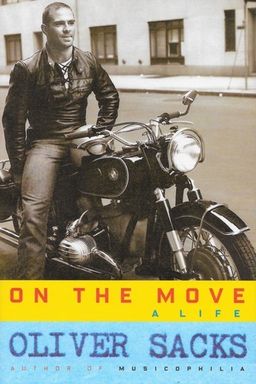
When Sacks left England for California, he embraced transformation—both literal and symbolic. The disciplined Oxford student became ‘Wolf,’ a motorcycle-riding, record-setting weightlifter immersed in the subcultures of San Francisco. In exploring new identities, he wasn’t merely rebelling against tradition; he was experimenting with selfhood, much as scientists experiment with hypotheses.
Yet this search for freedom carried risks. Love with Mel, his Navy companion, blossomed into heartbreak and spiraled into addiction. Amphetamines offered escape and insight—until they nearly destroyed him. His hallucinatory experiences—seeing passengers transformed into insect-headed beings—revealed both the brain’s fragility and the horror of losing control. The fine line between curiosity and chaos mirrored his scientific interest in neural mechanisms of perception and his personal descent into disordered consciousness.
Recovery Through Meaning
Ultimately, Sacks overcame addiction not through willpower alone but through rediscovery of purpose. His epiphany that he needed meaningful work led him to clinical neurology, where he found humans, not hypotheses, as his true subjects. At the Bronx headache clinic, he studied migraines and recognized each patient’s pain as embedded in personality, emotion, and creativity. These insights became his first major book, Migraine, marking his healing through writing. As he fused scientific observation with narrative empathy, the storyteller finally came home to the scientist.
Legacy of a Literary Neurologist
In the years that followed, Sacks transformed medicine into literature. Writing and healing merged: his case studies became parables of human resilience. His persistent rewriting—like revising Awakenings to add hundreds of footnotes—reflects the restless perfectionism of an artist who sees every life as an unfinished draft. You might say he treated his patients’ stories the way he treated his manuscripts—with care, revision, and reverence for complexity.
This book’s message, then, isn’t only about Oliver Sacks; it’s about you. It reminds you that science can be humane, knowledge can be compassionate, and a life of inquiry can be guided by both logic and love. Whether you’re deciphering data or emotions, you’re telling a story—one that can lead, as it did for Sacks, toward understanding and redemption.