
Idea 1
Istanbul-to-Kathmandu: A Coming‑of‑Age by Travel
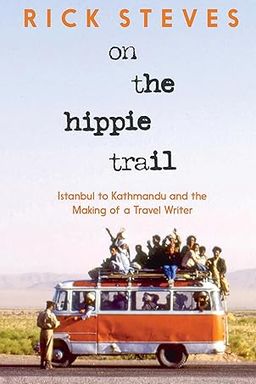
When was the last time a journey asked more of you than a guidebook and a credit card? In On the Hippie Trail, Rick Steves argues that the road from Istanbul to Kathmandu wasn’t just a route—it was a rite of passage. He contends that travel, when stripped of comforts and certainty, becomes an education in humility, curiosity, and courage. To grow, you must court discomfort, accept chaos, and learn to see with others’ eyes. That is the spine of this journal-turned-memoir: a young traveler learning to become a lifelong student of the world.
You follow 23-year-old Rick and his friend Gene across 3,000 overland miles in the summer of 1978—through Turkey’s gritty bus lots, Iran’s simmering politics on the eve of revolution, Afghanistan’s hash-scented tea houses, Pakistan’s rifle-slung frontier, India’s monsoon-soaked megacities and sacred rivers, and Nepal’s Himalayan valleys. Along the way, a theme repeats: adversity is not an interruption to travel; it is the curriculum. The Pirate driver who crashes their bus in Anatolia, a dull vaccination needle bending into Gene’s arm at the Afghan border, and a tentless night on the grass in Mashhad become teachers as surely as the Taj Mahal at sunset or Kashmir’s lotus-dotted lakes.
What This Journey Tries to Prove
Steves’s core claim: if you want a broader perspective, you have to trade control for connection. He learns to sleep on concrete platforms, negotiate with hustlers and money-changers, and trust strangers like Abe—the Tehran translator-playboy whose balcony soirees, spaghetti dinners, and political debates reveal the social strata within a repressive state. He watches rich-poor divides up close (Abe’s ice-cream-and-guitar evenings versus Amir Kabir’s bug-bitten budget hotels) and realizes privilege isn’t just a passport—it’s a lens you must adjust constantly. He begins to see what anthropologists and travel writers like Pico Iyer and Paul Theroux often stress: mobility without humility is just motion. (Compare with Rolf Potts’s Vagabonding on embracing uncertainty.)
What You’ll Learn as You Read
First, you’ll witness how fear converts into momentum—why committing to go east with a good partner mattered more than perfect planning. Then you’ll trace “trailcraft”: the on-road systems that replace guidebooks—scavenged advice (the BIT Guide), seat selection scams, border scripts, and the psychology of bargaining. You’ll also see the art of strategic splurging: after two days of melons and pop, upgrading to Herat’s Hotel Mowafaq becomes a survival tactic, not a sellout—an early version of Rick’s later mantra, “good sleep, good food, good experiences.”
Next, the book takes you deep into ritual and reverence—from the solemn glow inside Amritsar’s Golden Temple to the 4:30 a.m. boat ride on the Ganges, where cremation fires crumble blackened feet into ash before your eyes. Then it explores consciousness and music: Rick’s first hash in Herat opens a new dimension of color and sound; later, in Kathmandu’s Pie & Chai, ganja makes Dylan and the Doors feel three-dimensional. He is never flippant about it; this is not hedonism so much as a controlled experiment in perception. (Think of Aldous Huxley’s The Doors of Perception filtered through a traveler’s notebook.)
Why It Matters Now
The Hippie Trail ended a year later—Afghanistan invaded, Iran convulsed. But Steves’s thesis is timeless: you can still ride the “Reality Express” if you’re willing to leave the safe balcony and step into the bazaar. Culture shock, he says, is the growing pain of a broader mind. Whether you’re haggling for a fox pelt in Herat, sharing a barber’s roadside shave in Molarband, or being outwitted by holy monkeys at Swayambhunath, each encounter becomes a mirror: you hold up your habits and assumptions, and the world gives you feedback.
Key Idea
“Fear is for people who don’t get out much.” Steves’s postscript reframes the whole trek: travel isn’t about collecting places; it’s about connecting perspectives. The real souvenir is a recalibrated moral compass—less ethnocentric, more patient, more attuned to human dignity.
By the end, you see a piano teacher from Edmonds, Washington decide to pivot his life. After 60,000 words of notes and a fateful epiphany in Kathmandu, he lets go of students, converts a recital hall to a lecture hall, and founds a mission-driven travel enterprise. If you’ve ever wondered whether a single, strenuous journey can alter your trajectory, this book offers a bracing yes—and a toolkit for making your own road a classroom.