
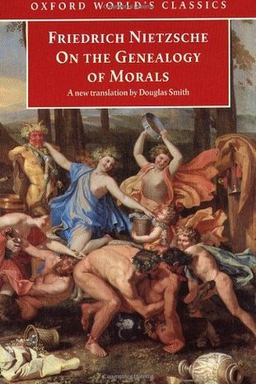
On the Genealogy of Morals cover

On the Genealogy of Morals

by Friedrich Nietzsche

Friedrich Nietzsche''s ''On the Genealogy of Morals'' challenges readers to reconsider the foundations of morality. By exploring the evolution of moral values, Nietzsche invites us to embrace new perspectives that celebrate life, creativity, and personal freedom, moving beyond traditional norms.

The Origins and Power of Moral Values

Why do we call some actions good and others evil—and who first decided what those words would mean? In On the Genealogy of Morals, Friedrich Nietzsche invites you to look behind the curtain of morality itself. He insists that what we take to be timeless moral truths are not divine revelations or rational deductions—they are historical constructs born from human struggles for power, resentment, and self-preservation. Nietzsche’s question is radical: what if morality has not elevated humanity, but made it sick?

Across three essays, Nietzsche examines the origins, functions, and psychological consequences of moral ideas. He dives into how ‘good’ and ‘evil’ emerged from ancient social hierarchies, how guilt and a ‘bad conscience’ were forged through the internalization of instinct, and how ascetic ideals spread across religions, cultures, and philosophies to dominate Western thought. Each essay pushes you to reconsider what it means to value life, power, and progress.

Genealogy as a New Kind of History

To trace morality’s “genealogy” is not to write a polite intellectual history—it’s to expose the secret, often ugly processes that produced our most sacred values. Nietzsche’s genealogical method, later echoed by Michel Foucault, investigates how moral categories evolved through conflict, coercion, and creative reinterpretation. Like a philologist-psychologist hybrid, Nietzsche dissects language roots (such as the German ‘gut’ and ‘schlecht’) and examines social structures, uncovering how power relations between nobles and slaves birthed moral systems that still govern our thoughts and feelings today.

A Moral Revolution Hidden in Plain Sight

The first essay lays Nietzsche’s bombshell thesis: Western morality results from a slave revolt in values. The noble moral world of antiquity, rooted in distinction and vitality, was turned upside down through resentment—especially by priests and oppressed classes who redefined “good” to mean meekness and “evil” to mean strength. In this reversal, ancient vigor was condemned as sin. The rise of Christianity represented the triumph of this morality of weakness, which Nietzsche believes inverted mankind’s natural instincts and life-affirming drives.

But his goal isn’t nostalgia for brutality—it’s lucidity. By seeing that our cherished ideals arise not from truth but from psychological needs, Nietzsche hopes we can reinterpret them, perhaps even move beyond them. Every “should” hides a “because someone once willed it,” and genealogy reveals those wills.

From Punishment to Conscience

In the second essay, Nietzsche analyzes guilt and conscience as tools invented to control instinct and memory. Humanity’s civilizing process turned outward cruelty inward, engraving pain into the very notion of responsibility. By tracing this transformation from animal forgetfulness to human self-condemnation, Nietzsche shows how suffering became moralized. Justice, for him, began not with fairness but with the logic of debt—between creditor and debtor—and evolved into systems of punishment that shaped the soul through pain. Modern moral guilt, he warns, is the residue of that ancient cruelty turned inward against life itself.

The Ascetic Priest and the Meaning of Life

The third essay studies the ascetic ideal, embodied by saints, philosophers, and scientists alike. Nietzsche argues that when faced with meaninglessness, mankind preferred self-denial to nihilism. The ascetic priest offers suffering as life’s justification by turning pain into virtue. In doing so, he stabilizes sick societies but deepens psychological illness by shaming natural instincts. Even modern science, Nietzsche provocatively claims, inherits this same ideal—it seeks ‘truth’ with a quasi-religious zeal, still valuing denial and mastery over life rather than the creative affirmation of it.

Throughout, Nietzsche’s tone is part diagnosis, part provocation. He writes as both doctor and iconoclast, aiming not merely to explain moral history but to awaken readers from complacency. His ultimate message: to become free, you must first see through the moralities that secretly bind you.

Why It Matters Today

Nietzsche’s work remains fiercely relevant because it speaks to a civilization haunted by moral rigidity and existential fatigue. When you question your work ethic, your guilt, or your impulse toward self-sacrifice, you are confronting the same inner battle Nietzsche mapped—between life’s raw creative power and inherited systems of repression. His challenge is not to abandon morality but to reinvent it from strength, to create values that affirm life rather than negate it. As he writes, “Man would rather will nothingness than not will at all.” The urgency of his insight lies in your choice: will you continue to live by inherited illusions—or forge your own meanings despite them?


Master and Slave Morality: The Reversal of Values

In Nietzsche’s first essay, you encounter a thrilling but unsettling idea: morality began as a declaration of social power. The noble classes of ancient societies decided what was ‘good’—and that meant what was suitable to them: strength, pride, vitality, beauty. To be good was to be noble; to be bad was merely to be common. These ancient value systems were celebratory, affirming the instincts and accomplishments of the powerful.

Master Morality: Strength and Creativity

Nietzsche calls this mode of value creation master morality. In Homeric Greece and similar societies, masters used language to claim ownership of meaning itself. They didn’t ask whether their actions benefited others; they simply affirmed life as it expressed their excellence. A word like 'good' originally carried no moral submissiveness—it meant noble, courageous, beautiful. The warrior, the poet, the statesman—all embodied the overflowing power of life.

But this moral outlook depended on social distance. Nietzsche coins the phrase pathos of distance to describe how hierarchy itself generated meaning. Those at the top felt no guilt in their superiority; they saw their dominance as proof of vitality. The masters had the luxury to create values freely, like artists.

Slave Morality: Resentment as Creative Force

Then history turned—and the weak learned to moralize. Through what Nietzsche calls the slave revolt in morality, the oppressed, guided by priests, redefined the moral vocabulary. Unable to fight back physically, they triumphed psychologically. They proclaimed that the meek, humble, and poor were good, while the noble, powerful, and sensual became evil. This was not enlightenment—it was revenge.

For Nietzsche, Christianity was the culmination of this slave revolt. The Jewish prophets, in their defiance of empire, first cast power as sin and weakness as redemption. Christ universalized that inversion: the last shall be first, and suffering became the path to salvation. The cross, Nietzsche says, is the ultimate symbol of this reversal—*“God on the cross”*, the triumph of weakness over strength.

The Psychology of Resentment

Resentment—or ressentiment—is the psychological engine behind slave morality. Instead of acting, the weak react. They cannot change reality, so they reframe it. Their morality springs from vengeance disguised as virtue. Modern pity, altruism, and egalitarianism—traits we consider moral—are, for Nietzsche, subtle disguises of this same ressentiment. Such values tame humanity but also flatten it.

For Nietzsche, to overcome this moral sickness, you must rediscover a creative stance toward life—a new kind of self-affirming strength beyond both master arrogance and slave resentment. It means reclaiming the right to create values—your own, not those inherited from centuries of guilt and revenge.


The Birth of Guilt and Bad Conscience

The second essay carries Nietzsche’s analysis inward—deep into the human soul. Here he tells the fascinating story of how guilt, debt, and punishment intertwined to form our modern sense of conscience. Imagine humanity as once wild and forgetful, guided by instinct rather than reflection. To make such a creature predictable—to breed an animal that can make promises—society had to carve memory into flesh through pain.

From Debt to Moral Obligation

Nietzsche traces the idea of guilt (Schuld) to its origin in economic debt. Primitive communities treated wrongdoing as a failure to repay, punishable not by moral reproach but by compensation through suffering or shame. When legal systems demanded repayment not in money but in blood or pain, people learned to equate their pains with payment—a dangerous grammar that later turned spiritual.

Religion transformed this distinction into moral substance. Humanity began to see itself as in debt not to fellow humans but to God. Under Christianity, that debt became infinite—repayable only through eternal guilt or divine sacrifice. Nietzsche writes that God himself ‘paid himself’ on the cross, an image he calls Christianity’s “stroke of genius.”

The Internalization of Instincts

To live peacefully in society, early humans had to suppress their animal drives. But instincts don’t vanish—they turn inward. This is what Nietzsche calls the internalization of man. The same energy that once expressed itself in conquest and cruelty now rages within as self-reproach. Thus the ‘bad conscience’ was born: a form of self-directed aggression, a sickness of the will.

This psychological inversion—the transformation of strength against the self—created the modern soul. We became interesting, deep, and tragic. Yet Nietzsche calls it an ‘illness,’ because it shackles the instinct for life with a perpetual sense of sin.

The Cost of Moral Civilization

Nietzsche argues that civilization’s achievements—self-awareness, responsibility, culture—are also its neuroses. Every moral development came at the price of vitality. Punishment, though originally a simple means of controlling behavior, eventually turned existential. Suffering stopped being viewed as fate and became evidence of moral failure. “Man would rather will guilt than not will at all,” Nietzsche writes. The bad conscience became humanity’s new creative force—but one built on torment.

If the first essay described an external moral revolution, this one reveals the internal counterpart: the domestication of humanity through the invention of guilt. Understanding this history liberates you from guilt’s spell. You can see how much of what you call conscience is not voice of divine truth, but the echo of centuries of social conditioning turned inward.


The Ascetic Ideal and Humanity’s Search for Meaning

By the time Nietzsche reaches his third essay, the question shifts: if morality arose from weakness and guilt, why has it proved so irresistibly powerful? His answer is that moral systems—especially religious asceticism—gave humanity what it most craves: a meaning for suffering. The ascetic priest and philosopher both promise to turn pain into purpose, chaos into order. In doing so, they preserved humanity from nihilism—but at great cost.

The Role of the Ascetic Priest

The ascetic priest, Nietzsche says, is a kind of spiritual doctor for a sick species. He recognizes human misery and offers an interpretation that makes suffering bearable. “You suffer because you are guilty,” he tells the masses. “Redeem yourself through obedience and faith.” This turns despair into moral drama and binds society together through shared guilt.

Yet Nietzsche is both repelled and impressed by this figure. The priest keeps humanity from collapsing into chaos, channeling resentment into self-discipline, but he also deepens the illness by sanctifying suffering. His moral medicine soothes pain only by multiplying its cause.

The Many Faces of the Ascetic Ideal

Nietzsche tracks the ascetic ideal through artists, philosophers, and scientists. Artists like Richard Wagner, he laments, embrace asceticism when they turn from sensual vigor to pious renunciation. Philosophers from Schopenhauer to Kant reach a similar point when they treat truth as something opposed to life. Even modern scientists, who pride themselves on objectivity, still serve the same ideal—they worship truth as an absolute, valuing denial, discipline, and order above vitality and creativity.

Thus, far from vanishing with secularization, the ascetic ideal survives in disguised forms. Every search for transcendence through purity or knowledge continues its legacy. Nietzsche insists: as long as we crave absolute meaning, we remain under its spell.

Against the Will to Nothingness

At its core, the ascetic ideal answers humanity’s terror of meaninglessness. When we could no longer believe in the gods of strength or nature, we preferred to turn against ourselves rather than face nothing at all. The ascetic’s motto—“life as suffering for a higher world”—keeps the will alive, but only as a will to negation. This is what Nietzsche calls the will to nothingness: better to will oblivion than to stop willing.

Nietzsche sees hope, however, in recognizing this mechanism. Once you understand that meaning itself can enslave you, you can begin to create new meanings grounded not in denial but affirmation. The challenge he leaves you with is monumental: can you give your own ‘yes’ to life, without needing it to be redeemed by something beyond it?


Nietzsche’s Psychologist’s Lens on Morality

Throughout the Genealogy, Nietzsche plays the role of a psychological anatomist. He doesn’t condemn moral systems as false in a purely rational way—he diagnoses them as symptoms. Morality, he argues, is a collective neurosis, a set of psychological strategies to manage fear, weakness, and resentment.

Moral Values as Survival Strategies

By treating moral ideas as expressions of instinct, Nietzsche reframes philosophy as a kind of dynamic anthropology. Every moral code, from priestly asceticism to utilitarian altruism, reveals the physiological condition of those who create it. When individuals are strong, their morality affirms life. When they are weak or ill, their morality suppresses life to protect it. For Nietzsche, even pity—a seemingly noble emotion—is a disguised craving for control, a subtle assertion of superiority over the pitied.

The Illness of Civilization

Nietzsche traces cultural decline to the chronic sickness of bad conscience. Civilized life confines animal energies, breeding psychological tension. The priest’s genius lies in managing this sickness—he both invents the disease and sells the cure. His techniques (confession, self-blame, faith) keep people functional but unfree. Modern ideologies continue the same dynamic under new guises—political guilt, social shame, or ideological zeal.

If Freud would later turn to repression and sublimation, Nietzsche was already exploring their moral ancestry. He saw psychology as moral physiology—a way to ask, “What kind of body and spirit are these ideas serving?” His diagnosis is medical, not moral: Europe suffers from a spiritual anemia that began when strength learned to call itself sinful.


Science, Truth, and the Modern Will to Meaning

What happens to morality when traditional religion collapses? Nietzsche’s later sections of the third essay answer: science inherits the same spiritual disease. Though it claims to oppose faith, modern science still worships its own god—Truth—with the same ascetic fervor. The scientist, like the priest, sacrifices joy, instinct, and sensuality to an ideal higher than life itself.

The Hidden Piety of Science

Nietzsche provocatively argues that scientists are the “most recent offspring” of the ascetic ideal. Their devotion to objectivity, neutrality, and self-denial reproduces religious austerity under secular guise. They too seek a realm beyond flux and contingency, believing that truth has intrinsic value even if it condemns humanity to insignificance. “Even we godless men,” Nietzsche quips, “still light our torches from the flame of a thousand-year-old faith that truth is divine.”

When faith in God wanes, the faith in truth takes its place. But what if truth itself is an idol? Nietzsche challenges his readers to ask why truth should matter more than life or creativity. This daring question anticipates twentieth-century thinkers like Heidegger and Foucault, who also recognized that ‘reason’ is never neutral but grounded in power dynamics and values.

Beyond Truth and Nihilism

The death of God does not liberate humanity by itself—it confronts us with a void. Nietzsche warns that without the ascetic ideal’s framework, people risk falling into nihilism, the belief that life has no value. Yet the task is not to restore faith, but to discover a new kind of affirmation that doesn’t depend on metaphysical guarantees. Science, for all its discipline, cannot supply this; it can only describe. To move forward, Nietzsche suggests we must become artists of meaning, not its bureaucrats.

In questioning why we value truth, Nietzsche performs philosophy’s most dangerous act: turning its light back on itself. The result isn’t cynicism, but a new kind of courage—the courage to create values knowing they are our own inventions, not decrees from the heavens.


Life-Affirmation Beyond Good and Evil

Ultimately, Nietzsche’s Genealogy aims to liberate life from moral constraints that suffocate its vitality. Instead of choosing between master and slave morality, or between religion and science, Nietzsche calls for a new revaluation of all values—a perspective that says ‘yes’ to life in all its contradictions, even suffering and uncertainty.

The Courage to Create Values

Nietzsche’s solution to nihilism is creative strength. The meaning of life cannot be found—it must be made. He urges you to abandon ressentiment and moral dependency, to see existence not as a problem to be solved but as art to be practiced. Values, like works of art, express their creator’s energy. To affirm life means to embrace the creative and destructive forces within yourself as inseparable.

The Will to Power as Revaluation

This revaluation depends on what Nietzsche elsewhere calls the will to power—not domination over others, but the drive toward growth, expression, and self-overcoming. Moralities that stifle the will to power are anti-life. True strength, Nietzsche insists, is not cruelty but the ability to bear life’s chaos without seeking escape into otherworldly consolations. The future ‘free spirit’ or Overman would transform suffering into creation, guilt into will, and meaninglessness into play.

By ending On the Genealogy of Morals with the image of man who “would rather will nothing than not will,” Nietzsche both diagnoses humanity’s illness and prescribes its cure. To affirm life means daring to will even the burden of its meaninglessness—and in doing so, to become the creator of new values that redeem the earth itself.

Dig Deeper

Get personalized prompts to apply these lessons to your life and deepen your understanding.

Go Deeper

Get the Full Experience

Download Insight Books for AI-powered reflections, quizzes, and more.