
Idea 1
The River’s Worldview And Its Costs
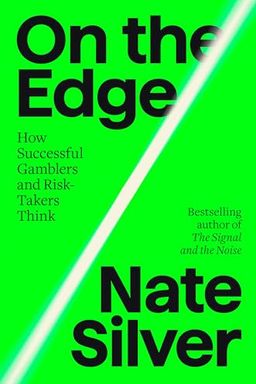
How do you make better bets in a world of fast change and adversarial feedback? In this book, Nate Silver argues that a sprawling community he calls the River—poker pros, quants, crypto founders, sports bettors, rationalists, and VCs—has quietly set the rules of modern decision-making: think in expected value, model adversaries, hunt small edges, and scale them. The River isn’t just a hobby scene; it’s a shared culture that prizes probabilistic thinking and operational execution. Silver’s core claim is double-edged: the River is winning because tiny, compounding edges beat grand speeches—but when that worldview scales, you must confront real costs to ethics, trust, and civic life.
A Single Ecosystem With Many Tributaries
Silver maps the River into Upriver (rationalists and effective altruists), Midriver (VCs and hedge funds), Downriver (casinos, Vegas, sports betting), and the Archipelago (gray/offshore markets like crypto). These aren’t silos; they overlap in norms and people. You’ll meet hedge-funders who play high-stakes poker, poker pros who build options-style hedges, and EAs who talk in Kelly sizing. The shared canon includes expected value (EV), mixed strategies, Bayesian updates, and optionality. You can picture their world as one big decision lab, where a 2–3 basis-point edge is gold if you can repeat it thousands of times.
Why EV Is The River’s Lingua Franca
When you think in EV, you stop demanding certainty and start asking what pays off over many trials. Silver’s 2016 election model gave Trump a 29% chance while markets implied ~17%; that spread was a +EV bet regardless of outcome. Sports bettors prize closing line value, poker players make profitable folds and bluffs over thousands of hands, and VCs swing at asymmetric payoffs where a few 10–1000x winners carry the fund. You can use the same lens for careers, startups, and even mundane choices (Silver’s coin-flip dinner trick) because the point is to minimize regret and maximize long-run payoff under uncertainty.
Game Theory In The Wild
Poker gives you a clean lab for strategy. Nash equilibrium and mixed strategies teach you to randomize so opponents can’t exploit you; modern solvers like PioSOLVER and the Pluribus lineage operationalize this by outputting precise bet/check mixes. In practice, you toggle between GTO (defensively sound) and exploitative play (attacking opponent leaks). The Doug Polk vs. Daniel Negreanu match showcases this tension, as does live poker’s messy reality of tells, pressure, and physiology (Jared Tendler’s coaching on tilt; John Coates’s work on hormones in traders). You learn two instincts: build robust baselines, then adjust when others reveal patterns.
The River Versus The Village
Silver juxtaposes the River with the Village (D.C., legacy media, parts of academia). The Village ties identity to policy and moralizes outcomes; the River decouples identity and process, prizes calibration, and looks for +EV regardless of tribe (“you can disagree with someone politically and still take their sandwiches”). This clash explains controversies from FiveThirtyEight’s forecasts to COVID policy fights and AI governance debates: probabilistic maps versus moral verdicts.
Where The Costs Emerge
Scale the River’s playbook into casinos, platforms, or crypto and you get powerful optimization—plus moral hazards. Gary Loveman’s Moneyball at Harrah’s raised slot holds from ~5.6% to ~7.8% with analytics; that’s billions pulled from players, many problem gamblers (Natasha Schüll’s “machine zone” critique). In sports betting, retail sportsbooks limit winners while branding entertainment for the masses. In crypto, SBF fused high-IQ risk appetite with utilitarian justifications and thin controls; the result was catastrophic. And in AI, the accelerationist impulse hits existential tail risks, raising stakes beyond normal market errors.
A framing you can use
“Play the process, not the outcome.” The River’s promise is better decisions via EV, mixed strategies, and calibration. The civic question is how to keep those strengths while constraining their social downsides.
The Book’s Arc—And Your Playbook
Across the chapters, you learn to adopt EV thinking and raise-or-fold discipline; to pair GTO baselines with exploitative reads; to translate empathy into strategic prediction; and to see how market microstructure and behavioral design shape outcomes. You then explore how venture’s asymmetric math tolerates hedgehog founders, how crypto magnified River pathologies, and how Kelly sizing separates survivable risk from ruin. Finally, you recalibrate your beliefs with bid-ask ranges, locate AI on a Technological Richter Scale, and decide which future you’re steering toward—hyper-optimized “casino capitalism” or Le Guin’s constrained utopia. Silver closes with three civic principles—Agency, Plurality, Reciprocity—to keep the River’s dynamism while preserving democratic guardrails. (Note: this synthesis echoes Philip Tetlock’s fox-versus-hedgehog lens and Daniel Kahneman’s humility about noisy estimates.)