
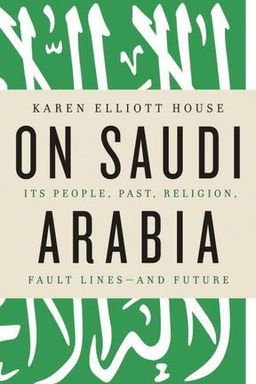
On Saudi Arabia cover

On Saudi Arabia

by Karen Elliott House

Delve into the complex world of Saudi Arabia with Karen Elliott House''s ''On Saudi Arabia.'' This insightful book uncovers the country''s contradictions-vast wealth amid poverty, strict traditions challenged by modernity, and a rising youth demanding change. Discover the challenges Saudi Arabia faces in its journey towards a balanced and progressive future.

Saudi Arabia’s Balancing Act: Survival and Strain

You can think of Saudi Arabia as performing a constant balancing act—a fragile dismount between money, faith, and generational expectation. The Al Saud survive through a web of bargains: oil wealth as social glue, religion as divine endorsement, patronage as governance, and social quietude as protection against revolt. But the pressures of youth, technology, economics, and global scrutiny have made that traditional equilibrium increasingly brittle.

The architecture of power

Since Ibn Saud unified the kingdom, the House of Saud has traded material benefits for obedience. Oil revenue finances free education, health care, housing schemes, and subsidies. In return, Saudis rarely pay taxes or demand representation. Political legitimacy flows from a religious pact: Muhammad ibn Saud’s 18th‑century alliance with the cleric Muhammad ibn Abd al Wahhab still underpins the monarchy’s claim to be the Custodian of the Two Holy Mosques. Tribes and families receive patronage distributed through royal channels—goods, jobs, and favors—to keep loyalty fragmented and competitors divided.

That model worked for decades because society was insulated: strict walls—physical, religious, social, and economic—kept citizens deferential and disconnected. But the emergence of the Internet and social media cracked that insulation. Now millions see poverty amid opulence, corruption amid sermons, and young graduates unable to find jobs while foreign labor fills the private sector.

Emerging strains and fault lines

The stresses are interlinked. First, demographic: roughly 70 percent of Saudis are under thirty, and nearly 40 percent of those aged twenty to twenty‑four are unemployed. Second, economic: oil dependence and imported labor create structural dysfunction; one in three residents is foreign and nine of ten private‑sector workers are non‑Saudi. Third, ideological: the Wahhabi establishment that legitimized the monarchy now splinters into conflicting clerics and online reformers. Fourth, succession: the transfer of power from aging sons of Ibn Saud to their grandsons raises uncertainty over unity and reform.

Social labyrinth and controlled fragmentation

Inside neighborhoods, high walls reflect social hierarchies shaped by tribe, family, and gender. Honor culture enforces conformity; shame equals social death. This engineered labyrinth—familial dependence, religious policing, tribal pride—discourages collective action. Yet it also blocks national competence: institutions remain patronage‑bound and resistant to meritocracy. Corruption exposed during Jeddah’s floods symbolized systemic decay, as citizens realized how royal largesse often failed to protect them from mismanagement.

Women and youth: the catalysts of change

Two forces challenge the status quo most clearly. Women test boundaries—from the 1990 driving protest to Princess Adelah’s campaign against domestic violence and business pioneers like Alia Banaja. King Abdullah’s limited reforms—appointing women to advisory posts, granting voting rights in municipal elections—opened symbolic cracks. And then youth: digitally networked, impatient, and globally aware. Videos like Feras Bugnah’s “We Are Screwed” or social campaigns after the Jeddah floods show how private frustration converts to civic critique.

Education and economy as mirrors

Education exposes the deeper contradiction: lavish spending but rote learning and religious dominance produce underqualified graduates. King Abdullah’s Tatweer schools and KAUST—the coeducational science university managed by Saudi ARAMCO—represent efforts to modernize. Yet conservative teachers and bureaucratic inertia block systemic change. Similarly, economic reform collides with a welfare trap: temporary handouts like the SR500‑billion 2011 package buy calm but avoid real restructuring. ARAMCO stands as the isolated exception of efficiency and gender integration.

Religion and terrorism: cause and cure

Saudi Arabia’s jihadist problem grew from state‑sponsored zeal that later turned inward. The government’s rehabilitation program—led by Prince Muhammad bin Nayef with psychology and art therapy—demonstrates pragmatic containment but not resolution. The ideological battlefield now spreads online; clerics compete with secular voices, and the once‑monolithic faith authority fractures.

Foreign balancing and possible futures

Abroad, stability depends on managing the oil‑for‑security pact with Washington while checking Iranian influence. Riyadh fears Shiite activism and Iranian proxies more than Western criticism. It engages China and Russia economically yet retains U.S. protection militarily. At home, the monarchy faces four trajectories: maintain the status quo (short‑term calm, long‑term decay), pursue managed reform (risky but constructive), relapse into repression (temporary control), or collide into crisis.

Core takeaway

Saudi Arabia’s survival depends on a delicate interplay of faith, wealth, and adaptation. The same instruments that built stability—oil patronage, religious legitimacy, divided society—now constrain reform. The coming generation’s choices, more than royal decrees, will decide whether the kingdom evolves peacefully or faces a reckoning born of imbalance.


Oil and Patronage Politics

Oil remains Saudi Arabia’s lifeblood and political leash. Petroleum revenues finance a vast welfare system that substitutes for representation: free health care, education, housing grants, and public-sector jobs. No taxes mean no elected accountability. You live in a rentier state where citizens are clients, not shareholders. (In comparative political economy, this mirrors Kuwait or Qatar but on a grander scale.)

Dependency and dysfunction

One in three residents is foreign, and nine of ten private-sector employees are expatriates. Saudis prefer governmental posts with guaranteed pay and minimal productivity. Entrepreneurs struggle within a closed, corrupt system of licensing and favoritism. The public sector resembles a grand welfare engine rather than an innovator. Remittances reach nearly SR100 billion annually, draining local economic circulation.

Vision plans and reality gaps

Ambitious blueprints—Vision 2020, National Science & Technology Innovation Plan—fill ministry shelves. Execution lags behind rhetoric: nearly all government megaprojects miss deadlines. The bloated Princess Nora University project exposed cost overruns and inefficiency. Without institutional competence, oil wealth buys infrastructure but not accountability. Economic diversification remains rhetorical as petrochemicals and state monopolies dominate GDP.

Saudization and the ARAMCO model

Saudi ARAMCO stands as proof modernization works in bounded zones. It values merit, integrates women, enforces discipline, and delivers world-class output. Yet its culture cannot easily replicate across society: it threatens networks of patronage. The state’s Saudization effort—forcing private firms to hire nationals—struggles against cultural resistance to manual work and employers’ bias toward inexpensive foreigners.

Key lesson

When economic power depends on hydrocarbons and handouts, reform demands diversifying dignity as well as income. Saudi stability requires transforming subjects into stakeholders—a shift from consumption to contribution.


Religion and Legitimation

Religion in Saudi Arabia is not just faith—it is statecraft. The alliance between the Al Saud and Wahhabism created a dual authority: rulers control worldly affairs; clerics validate them spiritually. The monarch’s title, "Custodian of the Two Holy Mosques," merges political sovereignty with divine stewardship. But modern life has fractured that once‑unified front.

Instrumental faith and loss of trust

Fatwas shifted from piety to pragmatism—authorizing U.S. troops in 1990 or defending monarchy interests. Such rulings convinced many believers that clerics serve politics, not theology. Oscillation between indulgence and repression—funding foreign jihadists, then policing domestic radicals—deepened cynicism. With satellite TV and social media, diverse voices emerged: moderates like Salman al Awdah, bureaucratic conservatives, and foreign clerics. Ordinary Saudis shop fatwas online instead of following state ulama.

Fragmented clerical landscape

Disputes like Ahmad al Ghamdi’s gender‑mixing statement or internal denouncements reveal loss of coherence. Adaptations—legal opinions about cell‑phone Korans or women at KAUST—show elasticity under pressure. But contradictions multiply: women may study at coeducational KAUST yet face street segregation enforced by the Hai’a religious police. This erosion of moral authority weakens the monarchy’s religious legitimacy.

Faith as battleground

When religion becomes contested, every sermon and online post turns political. Moderates argue Islam supports equality and social justice; radicals accuse both princes and clerics of betrayal. The regime responds through control—monitoring preachers, rewriting textbooks—but legitimacy now requires spiritual authenticity, not obedience. Understanding this nexus explains why faith now both crowns and destabilizes Saudi rule.


Education and Its Reform Wars

Education lies at the center of Saudi Arabia’s modernization dilemma. Despite extraordinary spending, the system cultivates memorization instead of thought. King Abdullah’s campaigns—the Tatweer project, scholarship expansion, and coeducational KAUST—are battles against entrenched conservatism. Ghazi al Gosaibi’s quip, "Invading a country is easier than changing its curriculum," sums up the challenge.

Rote legacy and consequences

Religious dominance means students recite verses rather than experiment or debate. Teaching ranks draw from low‑performing graduates. Graduates saturate the job market with religious or social degrees that fail private‑sector expectations. This mismatch feeds youth unemployment and, at the extremes, susceptibility to radical ideologies. (Note: similar patterns appear in Egypt and Pakistan after faith‑heavy education policies.)

Tatweer and experimental reform

Tatweer schools symbolize hybrid progress: girls in conservative Buraidah sing the national anthem; in Riyadh, students present English videos and joke about wine with teachers’ cautious pride. These snapshots show incremental cultural shifts but persistent resistance. Supervisors—70 percent reportedly hardline Salafis—often ignore reform textbooks. Even revised definitions of jihad or tolerance face sabotage behind closed doors.

Scholarships and KAUST’s symbolism

Over 100,000 students study abroad on government scholarships to inject global exposure. KAUST, managed by Saudi ARAMCO with Dr. Choon Fong Shih at its helm, functions as an insulated island—coed, tech‑driven, immune to the religious police. It demonstrates the possible Saudi future but remains quarantined from mainstream education.

Key takeaway

Education reform is ultimately political reform. Until teachers change, textbooks evolve, and critical thinking is valued over obedience, Saudi Arabia’s vast investments will generate frustration instead of innovation.


Women and the Social Awakening

Women symbolize both Saudi restraint and its moral potential for change. Bound by guardianship, segregation, and custom, they embody the extremes of control. Yet their activism—from the 1990 driving protest to Princess Adelah’s domestic‑violence campaign—has become the most credible internal movement for modernization.

Constraints and slow openings

Traditional codes confine women: legal dependence on male approval, limits on travel and work, and social stigma for visibility. King Abdullah’s decrees—photo IDs, Shura Council seats, and promised municipal votes—offered symbolic cracks in the system. While positions remain mostly ceremonial, each royal blessing grants activists space to expand claims.

Forms of activism

  • Public protest—drive‑ins, social‑media defiance, and petitions demanding mobility.
  • Legal advocacy—Royal family involvement enabling shelters and laws against domestic abuse.
  • Economic participation—entrepreneurs like Manal Fakeeh and Alia Banaja, athletes and cultural leaders pushing visibility.

The wider impact

Women graduate in majority from universities but remain underemployed (under 12 percent workforce participation). They are not only a moral issue but an economic one: integrating women is vital for productivity. Each success story—Fatima Mansour’s court victory, Reema’s soccer team, female engineers at ARAMCO—illustrates micro‑steps toward equality. The verse often cited, “I suffer not the good deeds of any to go to waste, be he man or woman,” anchors activism within Islamic legitimacy.

Essential insight

Women form the wedge of Saudi change: every incremental gain expands civil space. Reforming gender norms equates to reforming the state itself.


Youth, Digital Voices, and Restless Change

Saudi Arabia’s youth represent both promise and peril. Demographically dominant and digitally fluent, they expose the contradictions of a paternalistic system. Joblessness, censorship, and inequality drive them online, where criticism spreads faster than censors can respond.

Numbers and frustration

With 70 percent under thirty and high unemployment, the young face stalled opportunity. More than six million Saudis use social media intensively. Online videos ridicule corruption, housing shortages, and bureaucratic waste. Feras Bugnah’s film “We Are Screwed” exemplified viral outrage. Youths who volunteered during Jeddah’s floods turned digital activism into real community service.

Expressions of discontent

  • Digital dissent—tweets, YouTube critiques, and independent reporting.
  • Street rebellion—joyriding (“tafheet”), nationalist riots, small acts of lawlessness.
  • Religious reaction—some channel anger into fundamentalism or jihadist movements.

Efforts to channel energy

Reformers attempt outreach: Ahmad Shugairi’s youth campaigns, Prince Turki bin Khalid’s “Al Shams” newspaper, and ARAMCO’s prep programs build civic and career paths. But without sustained economic inclusion and expression, frustration may morph into instability. As one businessman put it, “The young are at a crossroads—they want dignity and a sense their effort matters.”

Strategic takeaway

Digital youth rewrite the Saudi social contract: transparency becomes expectation, not favor. Empowering them may be risky, but ignoring them guarantees rupture.


Family, Princes, and Succession Risks

The Al Saud family’s size and hierarchy create both power and paralysis. Thousands of princes enjoy prestige; only a handful rule. As the generation of Ibn Saud’s sons ages, succession moves toward grandsons—an untested frontier.

Structure of privilege

Privileged princes run ministries, provinces, or foundations. Many—like Sultan bin Salman (astronaut turned tourism advocate) or Turki al Faisal (ex‑intelligence chief)—symbolize capable leadership limited by seniority politics. Wealth distribution through royal charities ensures internal loyalty but obscures public accountability.

Succession and generational tension

The Allegiance Council formed in 2007 aims to institutionalize succession, yet real decisions still hinge on senior consensus. As brothers die, the race among grandsons—Muhammad bin Nayef, Khalid al Faisal, and others—intensifies. A breakdown could evoke past rivalries like the Saud‑Faisal feud, threatening family unity and regime legitimacy. Each appointment in defense or interior ministries signals balance or bias among branches.

Consequences

A disordered succession risks public unrest, regional factionalism, and foreign manipulation. The metaphor of moving beads together (“rosary rule”) captures how interlinked positions must align to prevent imbalance. The monarchy’s credibility depends less on age or lineage than on capacity to modernize coherently.


Poverty and Inequality

Behind Saudi wealth stand millions in quiet poverty. In Jeddah’s slums or Hafr al Batin’s outskirts, citizens and stateless bedoons survive on minimal welfare. Stories like Umm Turki—a mother living on SR1,700 per month—and Umm Muhammad—a widow refused a permit for business—illustrate the invisible majority.

Structural causes

Uneven wealth stems from patronage economics, housing monopolies, and gendered labor laws. Many depend on charity funded by wealthy families like Abdul Latif Jameel. The moral economy demands giving but lacks systemic reform. State plans for poverty elimination remain incomplete despite royal tours of poor areas.

Political implications

Visible poverty undermines claims of Islamic justice and prosperity. When citizens see palaces beside shanties, religious legitimacy weakens. Real economic equity requires institutional accountability and opportunity—neither achievable under fragmented patronage.

Moral insight

Saudi poverty is not just economic—it is political silence born of dependency. Reform demands visibility, dignity, and empowerment beyond alms.


Foreign Policy and the Search for Security

Saudi foreign policy revolves around survival—balancing dependence on the United States with rivalry against Iran. The Roosevelt‑Ibn Saud oil‑for‑security pact still anchors the alliance. Yet U.S. skepticism of autocracy after the Arab Spring and fears of Iranian expansion have strained traditional alignments.

Iran as existential threat

Tehran’s reach into Iraq, Lebanon, Syria, and Yemen alarms Riyadh. Threats to the Eastern Province’s Shia minority fuel paranoia of internal unrest. Attacks near Abqaiq and Tehran’s nuclear ambitions sustain Saudi dependence on American defense guarantees. Prince Turki al Faisal’s assertion that “no benign scenario” exists with Iran underscores the anxiety.

Diplomatic diversification and double image

The kingdom courts China and Russia for energy partnerships while promoting interfaith dialogues and peace initiatives at the UN. Yet fights over protocol and domestic intolerance undercut credibility. Decades of exporting conservative Islam sit uneasily beside global outreach.

Lesson

Saudi Arabia must reconcile external moderation with internal rigidity. Sustainable foreign policy demands matching diplomacy abroad with tolerance at home.


Possible Futures: Reform, Repression, or Collapse

The book closes by imagining Saudi Arabia’s possible futures—four paths shaped by internal strain and external pressure. You can picture the kingdom as a 747 flying with aging pilots and restless passengers: still aloft but increasingly unstable.

Status quo: controlled decline

Continuing lavish spending like the SR500‑billion 2011 package buys peace but deepens dependency. Patronage persists while reform stalls. Inertia breeds stagnation.

Managed reform: risky renewal

A new‑generation leader could mirror ARAMCO’s meritocracy—gradual political opening, rule of law, empowered women, and true education modernization. Success here requires courage to defy senior clerics and entrenched welfare expectations.

Repression: retreat into control

Reverting to conservative dominance and surveillance provides short‑term stability but risks radical blowback among youth and women—the groups most alienated by stagnation.

Collapse: improbable but catastrophic

A convergence of succession conflict, economic failure, and regional turmoil could fracture institutions and endanger global oil markets. Even if unlikely, the scenario warns of consequences beyond borders.

Final insight

The Saudi future will hinge on whether rulers transform survival tactics into genuine reform. Doing nothing is a choice—but one increasingly unsustainable under the pressures now visible everywhere from Riyadh’s palaces to Jeddah’s slums.

Dig Deeper

Get personalized prompts to apply these lessons to your life and deepen your understanding.

Go Deeper

Get the Full Experience

Download Insight Books for AI-powered reflections, quizzes, and more.