
Idea 1
Liberty, Equality, and the Moral Progress of Society
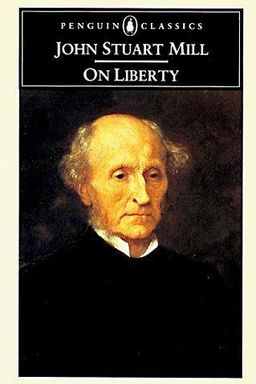
What principles justify society’s control over individuals, and what purposes justify freedom itself? In his major liberal works—from On Liberty and The Subjection of Women to Chapters on Socialism—John Stuart Mill crafts a comprehensive vision of liberty as both a moral necessity and a condition of social progress. He argues that you cannot achieve collective good without personal freedom, that equality between men and women is essential for human improvement, and that even in economics, coercion and centralisation must be tempered by individual development and voluntary cooperation.
The core argument: the harm principle
Mill’s central maxim—now known as the harm principle—sets the outer limit of legitimate power: the only purpose for which society may interfere with an individual’s liberty is to prevent harm to others. This principle reframes both law and morals. You may disapprove of another’s conduct or character, but you have no right to suppress it unless you can demonstrate concrete injury to others. For Mill, liberty is not the absence of all restraint but a rational boundary against domination—whether by the State, majority opinion, or private prejudice.
Such restraint demands humility. Every claim to punish or compel assumes you know better than the person concerned. Mill reminds you that the burden of proof lies with those who wish to coerce. His examples—the temperance movement’s push for prohibition, Sabbatarian laws banning harmless recreation, and prosecutions of freethinkers like Holyoake—show how moral zeal can morph into tyranny when ‘offence’ substitutes for actual harm.
Freedom of thought and discussion
From this principle of non-interference flows Mill’s most famous defence of free expression. He insists that silencing opinion is an injury not only to the speaker but also to society’s capacity for truth. Speech matters because truth emerges through conflict, not consensus. Even false opinions force you to test true beliefs and keep doctrines as living convictions rather than fossilised formulas. Mill dramatises this idea through his reductio: even if all humankind held one view and only one person dissented, the majority would have no right to silence that lone voice.
His argument is practical as well as moral. A society that censors controversy becomes intellectually stagnant. The examples of Socrates, Jesus, and Marcus Aurelius’s persecution of Christians illustrate how suppressing dissent destroys wisdom and virtue. To preserve the self-correcting energy of civilisation, you must treat even offensive ideas as instruments of enlightenment unless they directly incite violence or immediate harm.
Individuality and human development
Mill’s belief in free speech connects to his broader moral anthropology: individuality is not selfish eccentricity but the soil of moral growth. Human beings are not machines outputting obedience; they are living agents who mature through choice, experiment, and error. When society demands uniformity, it produces mediocrity. Mill defends the right to ‘eccentricity’ because great energies and creative powers grow only where people dare to differ. Diverse characters—like the plural institutions of Europe contrasted with China’s long stagnation—are engines of civilisation.
For you, Mill’s point is clear: if you wish for a progressive society, cultivate difference. Respect is due not because every lifestyle is equally correct, but because only voluntary, self-directed living develops judgment and virtue. Tolerating error and diversity is not moral weakness; it is moral training.
From liberty to equality
Mill applies his liberal ethics directly to gender. In The Subjection of Women, he calls the legal status of wives under English law a ‘relic of the law of force.’ Marriage as practiced in his time, he argues, is domestic despotism: the husband’s control of property, custody, and obedience converts partnership into servitude. The moral cost is mutual corruption: men learn arrogance, women acquire the arts of submission and deceit. Equality before the law is not only a matter of justice for women but a precondition for developing the moral character of both sexes.
Mill dismantles the idea of a fixed ‘woman’s nature.’ What we call innate traits, he says, are the outcomes of centuries of subordination—a greenhouse product of social conditioning. Because women have been trained to please and obey, existing behaviour cannot reveal genuine capacities. His proposed method is experimental: remove legal barriers, open education and public life, and then observe what women freely choose and accomplish. Only liberty provides legitimate knowledge of human potential.
Political and economic extensions
Mill’s argument for equality culminates in political reform: women should vote and hold office on the same terms as men. Suffrage, he says, is primarily a defensive right—protection of one’s interests in lawmaking—and history itself refutes claims of incapacity, as figures like Elizabeth I or Margaret of Austria demonstrate. Economic independence anchors those rights: property under marriage must remain under each spouse’s control just as it was before union. Voluntary community of goods may be noble, but enforced dependence is unjust.
Equality inside the home, Mill predicts, will transform character at large. Domestic tyranny breeds habits of dominance that spill into politics; reciprocal relations at home breed justice, sympathy, and civility. Reformed family life, therefore, becomes a ‘school of freedom.’
Mill’s social imagination: between capitalism and socialism
In his final essays on socialism, Mill addresses the tension between individual liberty and economic justice. He appreciates socialist critiques of capitalism—poverty, insecurity, and moral distortion under commercial rivalry—but rejects revolutionary schemes that sacrifice freedom to uniform control. His solution is incremental and experimental: cooperatives, profit-sharing partnerships, and local associationism that blend liberty with equality. Large-scale socialism, he argues, demands a moral transformation—habits of cooperation and honesty—that must be cultivated before administrative machinery can sustain it.
The thread uniting all these domains—law, speech, gender, and economy—is Mill’s conviction that liberty is not an end in isolation but the precondition for moral and social advancement. When individuals exercise reason and choice without coercion, society generates diversity, innovation, and justice. The task of reform is therefore practical and progressive: confine power to the prevention of harm, open every path to equal participation, and cultivate character through freedom. Only then can reform avoid becoming tyranny in moral disguise.