
Idea 1
Immunity, Responsibility, and the Shared Body
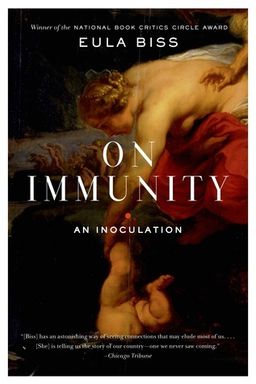
How do you protect what you love in a world where nothing is truly safe? In On Immunity: An Inoculation, essayist Eula Biss confronts this question through an exploration that is both personal and cultural, scientific and philosophical. She weaves her own experience as a mother grappling with the decision to vaccinate her child into broader reflections on myths, medicine, and the metaphors that shape how we understand immunity.
At its heart, Biss’s argument is that immunity—both biological and social—is not an individual possession but a form of mutual responsibility. She suggests that vaccination is not simply a private choice but an ethical act that binds our bodies together in a shared ecosystem of protection and vulnerability. Her investigation questions what it means to protect our children in an age marked by distrust of institutions, fear of toxicity, and an obsession with purity. Through literary allusion, medical history, and personal narrative, Biss contends that immunity is a metaphor for how community itself functions: we survive through connection, not isolation.
Myth and the Quest for Invulnerability
Biss begins with ancient myths—the story of Achilles, the dragon-blooded hero with one vulnerable spot, and the fairy tales of parents making perilous bargains for their children’s safety. These myths mirror the parental impulse to protect a child from every harm. But as Biss learns after her son’s birth, absolute safety is impossible. Immunity, like mortality, carries its own vulnerabilities. “Immunity is a myth,” she writes; it can never be complete. The modern vaccine, she realizes, is our attempt to bargain with fate—a measured risk meant to guard against far greater dangers.
Fear, Trust, and the Body Politic
Biss situates vaccine anxieties within an atmosphere of cultural distrust—corrupt corporations, wavering governments, and sensationalist media have eroded confidence in authority. When public trust wavers, she observes, people turn inward, seeking control through self-curation: organic food, toxin-free homes, and selective vaccination. But this pursuit of purity, she argues, mirrors older systems of exclusion, echoing how societies once associated disease with filth and moral corruption. As she puts it, our modern obsession with “toxicity” has replaced the moral panic of “filth theory.” Both isolate the self from an imagined contaminating other.
The Collective Body and Moral Obligation
Central to Biss’s argument is the concept of herd immunity—a scientific reality that also serves as an ethical metaphor. When enough individuals are vaccinated, a community becomes collectively resistant to disease, protecting even those who cannot be vaccinated. Biss views this as a modern form of altruism, “a banking of immunity,” where each person’s participation strengthens the social whole. This shared protection depends on trust and mutual responsibility, challenging the myth of individual autonomy that dominates Western thinking. For her, herd immunity embodies Kierkegaard’s idea that loving one’s neighbor is both moral and literal: our health is linked to the bodies around us.
Immunity as Metaphor and Mirror
Throughout the book, Biss examines how metaphors shape our perception of medicine. She finds that when we describe vaccination as a “shot” or “jab,” we invoke imagery of violence and invasion. When we compare disease to war, we see our bodies as battlefields rather than ecosystems. Instead, she proposes metaphors of interdependence—gardens, webs, and shared bodies—that better express the cooperative nature of our immune systems and societies. Drawing from immunologists, she notes that the cells within our immune systems communicate more like educators or diplomats than soldiers. This reframing helps us see immunity not as self-defense but as relationship and adaptation.
The Moral Ecology of Modern Life
Biss’s exploration expands beyond immunology into ecology and ethics. She draws parallels to environmentalist Rachel Carson’s Silent Spring, which revealed how the health of humans and ecosystems are intertwined. While Carson fought the indiscriminate use of DDT, Biss critiques indiscriminate distrust of medicine. Both, she suggests, stem from fears of contamination and a yearning for control in a complex world. Yet Biss finds hope in the messy interdependence of life—our bodies are already “polluted” with microbes and chemicals, but also full of mutual life. To be alive is to be porous, shared, and dependent.
Why It Matters
By the end of On Immunity, Biss has transformed a debate often reduced to science versus skepticism into a meditation on trust, collective responsibility, and the boundaries of self. Her argument matters because it illuminates not only why we should vaccinate, but also how we live with one another in an age of fear and fragmentation. In a society that prizes independence, she reminds us that true safety arises from connection. Immunity, like community, is only as strong as our willingness to share it.