
Idea 1
Democracies versus death cults
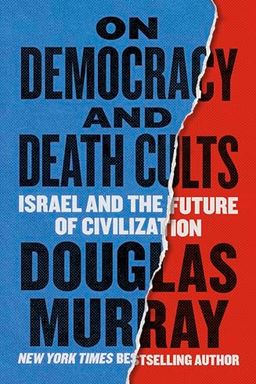
What happens when a society built to protect life confronts an adversary that openly sanctifies death? In On Democracies and Death Cults, Douglas Murray argues that October 7, 2023, made this conflict in values painfully visible. He contends that Israel’s sudden exposure to mass atrocity—and the West’s whiplash-inducing reaction—revealed a fundamental divide between liberal democracies that struggle toward law, restraint, and human dignity, and movements like Hamas (and their state backers) that instrumentalize civilians, glorify martyrdom, and weaponize moral language. To see the stakes clearly, Murray insists, you must look squarely at what happened, who did it, how they did it, and why so many in the West rushed to invert victim and perpetrator.
Murray’s core claim is both moral and strategic: democracies cannot survive by denying evil, minimizing its methods, or outsourcing their security to illusions, euphemisms, or international bodies that will not uphold basic norms. The book combines frontline eyewitness reporting, interviews with survivors and first responders, conversations with military and political leaders, and encounters with captured perpetrators. It then pans out to show how Iran’s revolutionary project and its proxies (Hamas, Hezbollah, Islamic Jihad, the Houthis) have built a regional war machine—while Western elites and institutions indulged fictions about “proportionality,” “genocide,” and “apartheid” that invert reality and paralyze necessary action.
What this summary covers
You’ll start with the day itself: the Nova music festival massacre, the sacking of kibbutzim like Be’eri and Nir Oz, and the mass kidnappings that turned families into hostages to strategy. You’ll see why Israelis felt a promise was broken—the implicit social contract that “the IDF will be here in minutes”—and how that breach produced both trauma and resolve. Then you’ll trace the “conception” inside Israel’s security establishment: the hubris that Hamas had been deterred by money, jobs, and the creature comforts of power; the overconfidence that Iron Dome plus superior intelligence could indefinitely substitute for defeating the threat at its source.
From there, you’ll examine Hamas’s specific methods: tunnels woven into homes, schools, mosques, and hospitals; civilians used as shields and props; the deliberate blending of fighters into crowds; and the manipulation of media and casualty data. You’ll stand at Gaza’s Salaheddin “humanitarian corridor,” watching soldiers plead over a loudspeaker for any Israeli children in the crowd who understood Hebrew to step forward—no one does—and you’ll follow the evidence trail through Shifa Hospital’s underground complex. You’ll also meet heroes—Jewish, Muslim, and Druze—who ran toward the chaos: United Hatzalah volunteers, an Arab-Israeli physician used as a human shield, a lone major battling for hours with a handgun, and a wounded police officer defending Sderot’s station rooftop for nearly a day.
Why the world turned—and what it tells you
The book then turns to the West. Why did cities fill with celebrations, not vigils? Why did elite campuses devolve into revolutionary cosplay—encampments chanting for “intifada,” administrators parsing calls for genocide as “context dependent,” and foreign actors (including Tehran) amplifying the fire? Murray situates this in a deeper moral confusion: a generation schooled to see their own countries as settler-colonial and structurally evil reached for the only script they knew. They projected their guilt onto the Jews by repackaging old hate as new justice (see Vasily Grossman’s insight below). The result: posters of kidnapped toddlers ripped down with glee; leading newspapers hedging rape reports; and an international legal class that equated the arsonist and the firefighter.
A mirror for moral failure
“Tell me what you accuse the Jews of—I’ll tell you what you’re guilty of.” —Vasily Grossman (Life and Fate)
Why this matters to you
Whether or not you follow Middle East news, Murray’s point is personal: in a world where war, atrocity, and information warfare collide, your instincts—when to doubt, when to name evil, when to act—decide whether a democracy can defend life without losing its soul. You’re asked to discard comforting illusions: that “managing” threats is the same as defeating them; that right words can replace hard choices; that institutions committed to neutrality will protect you from actors committed to your destruction. The book demands moral clarity: the difference between a society that builds safe rooms for its children and a group that stores RPGs beneath a baby’s crib is the difference between civilization and its sworn enemies.
In the final chapters, Murray returns to first principles. Democracies can defeat death cults not by mirroring their methods, but by refusing to equivocate about what’s at stake. That means telling the truth about how the atrocities were done, understanding the regional architecture that sustains them, and reclaiming the West’s moral vocabulary from those who have turned it upside down. It means honoring ordinary courage—parents holding safe-room doors, medics driving into ambushes, students resisting intimidation—and refusing the temptation to outsource judgment to those who confuse balance with blindness. The throughline is simple and demanding, drawn from Deuteronomy: “Choose life.”