
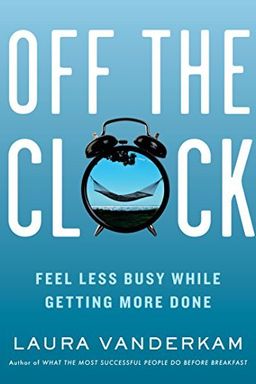
Off the Clock cover

Off the Clock

by Laura Vanderkam

Off the Clock by Laura Vanderkam offers a transformative approach to time management, revealing how to feel less busy while achieving more. Through personal anecdotes and scientific insights, learn to create meaningful memories, nurture relationships, and optimize your daily routine for a more fulfilling life.

Off the Clock: Feeling Time Abundance in a Busy Life

Have you ever looked up from your phone or your calendar and wondered where the day went? In Off the Clock: Feel Less Busy While Getting More Done, time-management expert Laura Vanderkam asks that very question—and offers a paradoxical answer. The key to feeling like you have more time isn't cramming more tasks into your day. It's learning to experience time differently. Vanderkam contends that time is both precious and plentiful: we all have 168 hours each week, but only some people seem to live those hours with ease, meaning, and joy. Her book uncovers how to do just that—to turn a full life into one that feels spacious, memorable, and even relaxed.

Drawing on research, case studies, and her own time-diary experiments tracking every half hour of her life, Vanderkam explores how we can reshape our relationship with time. She invites you to stop viewing time as a resource slipping away and instead to see it as a garden to be cultivated, a story to be told, and a canvas for mindful experience. The book blends data from a 900-person study with personal narratives—from principals and parents to entrepreneurs and artists—to show that time abundance is a skill available to anyone.

The Time Paradox: Precious Yet Plentiful

Vanderkam opens by framing what she calls the “time paradox.” While modern life seems busier than ever, the moments we treasure—those off-the-clock experiences of freedom—don’t come from merely reducing obligations. They come from intention. Living “off the clock” doesn’t necessarily mean quitting your job or moving to a cabin. It means designing your hours so they reflect who you want to be. She argues that awareness, adventure, and connection are the cornerstones of this experience. Mindfulness gives you time; choices give you freedom.

Who Feels Pressed for Time—and Why?

In a study of working parents, Vanderkam discovered sharp contrasts in people’s perceptions of time. A high percentage reported feeling constantly pressed. Yet the top 20 percent of respondents—those who felt they had enough time for the things that mattered—didn’t necessarily work fewer hours. They simply approached time differently. They planned ahead, invested in memorable experiences, built boundaries, and noticed rather than filled their hours. They lived mindfully, not automatically. This distinction between the minutes we have and how we perceive them forms the book’s central mission: learning to feel time-rich even when life is objectively full.

Seven Shifts for Feeling Time Abundance

Across seven chapters, Vanderkam outlines the mental and practical shifts that allow you to reclaim time freedom:

  • Tend Your Garden: Know where your time goes and design your days consciously.
  • Make Life Memorable: Stretch time through meaningful experiences and memory-making.
  • Don’t Fill Time: Create blank space and resist busyness for its own sake.
  • Linger: Learn to dwell in enjoyable moments without rushing to the next.
  • Invest in Happiness: Use time, money, and mindset as tools to create fulfillment.
  • Let It Go: Release unrealistic expectations and learn the power of ‘good enough.’
  • People Are a Good Use of Time: Deep relationships stretch time and meaning.

Each theme builds on the previous, shifting from awareness to memory, from clearing to savoring, from inner to outer connection. This layered approach acknowledges that we experience time not just by our scheduling systems but by our emotions—an idea echoing Csikszentmihalyi’s concept of flow and Alan Burdick’s reflections in Why Time Flies.

Why These Ideas Matter

The value of Off the Clock lies in its synthesis of practicality and philosophy. Vanderkam treats time management not merely as productivity science but as a gateway to joy. Her question—“How can we feel less busy while getting more done?”—becomes a blueprint for how to live better. In an age of perpetual busyness, this book helps you replace anxiety with agency. It teaches you to tend what truly matters, clear what doesn’t, and linger long enough to notice life itself.

Core Message

Freedom with time doesn’t arise from having fewer responsibilities—it comes from conscious attention, wise choices, and compassion toward yourself. You can’t control time, but you can learn to experience it more richly.

That’s the promise of being “off the clock”: not escaping life’s fullness, but embracing it with depth, calm, and wonder.


Tend Your Garden: Conscious Ownership of Time

Vanderkam begins with the metaphor of the garden—a balanced ecosystem you must deliberately cultivate. Most people, she says, let time grow wild. Like weeds left untended, interruptions and inefficiencies choke out the important tasks that should flourish. Her research through the National SAM Innovation Project—a program that helps school principals improve productivity—illustrates this. Principals who tracked their hours found they spent less than 40% of their time on instructional leadership, the part of their jobs that mattered most. Once they measured how they used time, they could redesign their schedules to make space for higher-impact work.

Mindfulness Gives You Time

To tend your own time garden, you need mindfulness—seeing clearly how your hours unfold. Vanderkam herself tracked every half hour of her life for years, discovering truths that dismantled her assumptions. She didn’t work fifty hours per week, as she thought, but closer to forty. She slept 7.4 hours per night and spent nine hours on chores. These realizations were liberating: awareness revealed possibility. Like meditation teacher Bhante Gunaratana’s quote—“Mindfulness gives you time; time gives you choices; choices, skillfully made, lead to freedom”—awareness is the root of growth.

Designing a Realistic Ideal Day

Instead of chasing perfection, Vanderkam suggests designing a “realistic ideal day”—a version of normal life that honors your priorities. She advises readers to look at their week like a schedule template: 168 hours of potential. What would you keep? What would you prune? Planning your days ahead of time—especially on Fridays—turns anxiety-filled hours into productive ones. Her “Three-Category Priority List” (Career, Relationships, Self) is a simple but powerful weekly ritual. By placing just two or three items under each heading, you commit your time to what truly matters while allowing space for rest and serendipity.

Ownership: Becoming the Master Gardener

Taking charge of your hours requires believing they’re yours to begin with. Vanderkam compares this mindset to New York’s Central Park Conservancy, which revived the city’s urban gardens through “zone gardeners”—individuals accountable for specific plots. Life works the same way. You’re the gardener responsible for your patch of time. You can’t control the weather—unexpected disruptions, illness, or chaos—but you can control how you adapt and replant. Even with limits, tending invites beauty and choice.

“Mindfulness gives you time. Time gives you choices. Choices, skillfully made, lead to freedom.”—Bhante Gunaratana

Ownership transforms time from something that happens to you into something you shape. When you track, reflect, and redesign your schedule—when you choose to tend your hours—you gain clarity and confidence. You realize, as Vanderkam writes, that you really do have time to do what matters most.


Make Life Memorable: Stretching Time Through Experience

Time feels short partly because we forget it. Vanderkam builds on psychologist William James’s observation: “Emptiness, monotony, familiarity make time shrivel up.” Ordinary days blur together. To expand time, you must create moments the brain will remember. This chapter explores how novelty, emotion, and memory-making slow time down, turning fleeting hours into vivid, lingering stories.

Memory as Time Travel

Vanderkam recounts psychologist Liz Currin’s vivid memory of taking her daughters to a neighborhood pool decades earlier. The moment—packing toys, applying sunscreen, and returning home for naps—was unremarkable, yet it became her “treasure chest memory.” Why? Because Currin has chosen to revisit it, polish it, and dwell within it. Memory, says Vanderkam, is like art restoration; paying attention preserves light and color. When you remember mindfully, you expand your sense of self and time.

Novelty and Emotional Intensity

The human brain stores memories based on change. Lila Davachi, a researcher at NYU, notes that in environments rich with variety, we form more memory “units,” making days feel longer in hindsight. Think of vacations: one adventurous day can generate dozens of distinct memories—rides at Disney, waves at the beach, sunsets, laughter—that form an intricate mental landscape. Vanderkam’s own TED week—featuring amusement parks, cross-country travel, and emotional presentations—felt like one of the longest of her life because it overflowed with novelty and meaning.

Balancing Routine and Adventure

Of course, not every day can be extraordinary. Routine gives stability, but too much sameness erases time. Vanderkam encourages readers to ask daily, “Why is today different from all other days?” Perhaps it’s taking a new route to work, sharing dinner outside, or learning something fresh. For author Dorie Clark, this question inspired her “New York Adventures”—weekly excursions to museums, comedy clubs, and hidden spots around the city. Fifty-two small adventures transformed her year from a blur into a tapestry of memories.

Cultivating and Wooing Memories

Memories deepen when you “woo” them—through reflection, sensory cues, and storytelling. Write entries in a journal. Make photo books instead of letting pictures languish on your phone. Revisit old places and objects, from a white coat worn in London to a travel receipt found in a book. Vanderkam cites research showing that people can strengthen past memories retroactively; even strong emotions today can clarify recollections of old events. Time expands backward as well as forward when you live deliberately.

“When we say time flies, what we really mean is we don’t remember where it went.” Memory, when consciously cultivated, slows time and restores depth to life.

Vanderkam’s challenge is clear: don’t just count hours—craft stories within them. A life full of memorable experiences will feel not only longer but fuller, echoing Alan Burdick’s insight that remembering is a form of time travel. The more memories you make, the more life you live.


Don’t Fill Time: White Space Creates Freedom

Busyness can masquerade as importance. Vanderkam’s research reveals that people who feel most relaxed about time aren’t necessarily those with empty calendars—they are those who choose not to fill every minute. “Don’t fill time” is her commandment against the cultural addiction to busyness. Open hours aren’t wasted; they are the soil where creativity, rest, and joy can grow.

Reclaiming White Space

Vanderkam tells the story of Jeff Heath, a corporate executive who deliberately leaves space on his calendar. When asked why he can always meet “anytime except Wednesday morning,” he replies, “I like white space.” He still manages global teams across continents, but by refusing meeting clutter, he can focus deeply and respond thoughtfully. This intentional openness signals control and even invites new opportunities—his company expanded his responsibilities precisely because he looked like he had time for them.

Decluttering Schedules

Borrowing from Marie Kondo’s approach to tidying, Vanderkam asks: what if we kept only the obligations that “spark joy”? While practical life can’t be all joy-sparking, the act of questioning every recurring meeting, email chain, or chore can transform a week. She suggests declaring a “time amnesty”—a jubilee in which you cancel everything that isn’t life-maintenance or love. After extricating yourself, choose future commitments with care. Her rule of thumb: if you wouldn’t say yes tomorrow, don’t say yes for October. Boundaries, not busyness, define freedom.

Time Dividends and Technology Discipline

Smart decisions made today can compound into future free time—what Vanderkam calls “time dividends.” From teaching your children to cook to creating simple systems at work, each investment returns minutes later. But the biggest time thief isn’t meetings or chores—it’s our phones. In her study, low time-perception participants checked phones nearly thirteen times per hour, compared to five for those who felt relaxed. Constant checking fractures attention and makes hours feel rushed. Choosing to unplug—even briefly—creates continuity, awareness, and mental calm.

Doing something is not always better than doing nothing. Open space invites opportunity in ways a cluttered calendar can’t.

“Don’t fill time” ultimately means embracing the courage of emptiness. As Vanderkam writes, only in unhurried hours can we see possibilities. Like Heath’s schedule, openness isn’t indulgence—it’s mastery.


Linger: The Art of Savoring Time

If tracking time teaches awareness and freeing time creates space, lingering shows how to stretch the experience itself. Vanderkam defines lingering as “the opposite of rushing”—a mature, joyful attention to moments worth inhabiting. Drawing on William James’s insights that the present always melts as we grasp it, she explores how mindfulness and savoring can make time feel abundant right here and now.

Lingering vs. Rushing

Journalist KJ Dell’Antonia’s story anchors this idea. After constant chaos from shuttling four children to ice hockey games, she chose “linger” as her word for the year. Instead of racing from rink to rink, she paused—staying for second dinner at home, chatting with her kids, exploring nearby chocolate shops after games. This deliberate slowing changed family equality from stressed efficiency to shared joy. Lingering is adult dawdling with intention.

Stopping the Frenzy of Lateness

Being perpetually late, Vanderkam notes, destroys the ability to enjoy the present. Chronic lateness isn’t just rudeness; it’s often optimism and people-pleasing gone awry. Her advice: build buffers into your life. Schedule as if you’ll need fifteen extra minutes for transition and half an hour for travel. Arriving early isn’t lost time—it’s time regained for peace, reflection, or conversation. As she writes, learning punctuality is learning presence.

The Science of Savoring

Psychologist Fred Bryant’s research on savoring shows that joy intensifies when you consciously notice it. On summiting Snowmass Mountain, Bryant heightened his experience by scanning the scenery, expressing gratitude to his companions, and mentally imagining revisiting the moment in the future. Savoring, Vanderkam explains, isn’t escapism—it’s awareness in action. You can practice it daily through the “mini vacation exercise”: spend ten minutes fully enjoying a small pleasure, label your sensations, and store the memory deliberately.

Slowing Down

Lingering also happens through pace. When subjects were told to maximize enjoyment of a cookie, they ate more slowly. Movement, walking, reading—all feel richer when less hurried. Even in parental chaos, Vanderkam finds tiny moments of peace—rocking her son before his nightly howl, whispering gratitude for this fleeting stage of childhood.

Lingering means recognizing that even brief ordinary minutes can be beautiful. You prolong joy by truly noticing it.

Lingering transforms time from linear to layered. As Vanderkam writes, “Bad stuff will kick your door in—but the good stuff won’t. You have to find it and wrestle with it.” Learning to linger is how you wrestle joy back from the rush.


Invest in Happiness: Making Time Work for Joy

In one of the most practical chapters, Vanderkam explains that happiness requires investment—of money, attention, and time itself. Her argument echoes Daniel Kahneman’s research on wellbeing: happiness emerges from how we design experiences, not how much free time we have. To feel off the clock, you must treat happiness like any other serious investment—with intentional contributions and compounding benefits.

Money as a Time Tool

Money can’t buy happiness directly, Vanderkam admits, but it can buy time used well. Her examples range from small conveniences—like childcare enabling meaningful parent-child moments—to larger shifts, such as living closer to work to shorten miserable commutes. The measure of success is simple: hours spent on joy versus hours spent counting minutes. Outsourcing aggravations and prioritizing life experiences (not possessions) converts cash into calm.

Pay Yourself First—with Time

Borrowing a financial metaphor, Vanderkam says you must “pay yourself first” by dedicating peak hours to what nourishes you. CEO Chris Carneal does this literally: he rises at 4:55 A.M., works out, prays, and reflects at a Waffle House before his workday begins. When he arrives at the office, he’s already energized and fulfilled. Likewise, journalist Katherine Reynolds Lewis got her dream book deal only after moving her creative writing time to Monday mornings—the week’s most energized hours. Give your best time to what matters most, not what’s most urgent.

Enduring and Enjoying

Not all minutes are pleasant, but with a mental shift, even suffering can contain grace. Vanderkam introduces recreational endurance athlete Amelia Boone and cancer survivor Layla Banihashemi to show how focusing on small intervals (“next twenty minutes,” “next obstacle”) creates mental spaciousness. Joy isn’t avoiding hardship—it’s noticing beauty within it: the sunrise after the race, the sip of coffee after a sleepless night. Harmony Smith, a lawyer paying off debt while raising five kids, calls this “doing my time.” Yet she fills her days with laughter, simple traditions, and purpose. Investing in happiness means finding color—even in grey hours.

Happiness is never accidental. It is the earned interest on what you choose to pay in—money, time, and attention.

By investing intentionally in joy, Vanderkam concludes, time stops being an adversary. It becomes an ally—a resource that rewards what you value and mirrors the quality of your choices.


Let It Go: The Freedom of Good Enough

Letting go of unrealistic expectations, Vanderkam argues, is not laziness—it’s liberation. The chapter opens with the story of Laureen Marchand, a 66‑year‑old artist in rural Saskatchewan struggling with burnout and blocked creativity. After failing to meet her own productivity ideals, she learned Vanderkam’s mantra: “Make art when you can. Relax when you can’t.” Paradoxically, this self-compassion made her more creative. She produced paintings joyfully and hosted exhibitions with renewed vigor. The lesson: flexibility is not failure; it’s sustainability.

Managing Expectations

Vanderkam explores how suffering often comes not from lack of time but from mismatched expectations. Philosophically, she links this to Buddhism’s teaching on desire from the Dhammapada: subdue desire and sorrows fall away “like drops of water from a lotus flower.” The author also introduces psychologist Barry Schwartz’s research on maximizers vs. satisficers. Maximizers agonize over the perfect choice—career, house, spouse—and end up miserable. Satisficers know there is no best anything; “good enough” is plenty good. Each unnecessary comparison eats hours mentally.

Better‑than‑Nothing Goals

Vanderkam turns from expectations to action. Setting perfect goals paralyzes progress; setting easy, repeatable ones accumulates mastery. Her “BTN goals”—Better Than Nothing—are micro‑commitments like reading one page or running one mile daily. Her father’s 40‑year Hebrew‑reading streak began with thirty minutes a day; her own running streak built from one mile to daily 5Ks. Persistence beats perfection. Each drip hollows the stone.

The Secret of Prolificacy

People who seem endlessly productive—like novelist Katy Cannon, writing several books per year—share one secret: they lower short‑term expectations. Cannon works in timed bursts of 30 minutes, producing small daily wins that compound into finished novels. Done is better than perfect, Vanderkam reminds us, because perfect never gets done.

Gentleness is not weakness—it is the persistence that turns moments into masterpieces. Good enough, done consistently, leads to greatness.

Letting go reframes success. Low expectations met steadily build extraordinary outcomes. In time management and creative work alike, “perfection” is the enemy of progress; “good enough” is the bridge to freedom.


People Are a Good Use of Time: Relationships Expand Hours

In the final chapter, Vanderkam reveals the most profound paradox of time: investing in people expands it. Through stories of friendship, leadership, and family life, she shows that connection—not solitude—creates the sensation of spaciousness. Whether chatting over dinner or mentoring colleagues, time spent deeply engaged with others transforms hours into meaning.

Intentional Relationships

The friendship between Elisabeth McKetta and Cathy Doggett embodies intentional time. For decades, these two women—living in different cities—speak every Monday, holding each other accountable to their goals and wellbeing. Doggett’s insistence on commitment teaches McKetta that friendship requires scheduling and mindfulness, not spontaneous hope. Their ritual proves Vanderkam’s thesis: relationships thrive when treated with the same clarity as work plans.

Quantity and Quality

Time logs from Vanderkam’s surveys reveal that people who feel most time‑rich spend more minutes with friends and family. These interactions aren’t background noise; they’re intentional. Whether reading with a child, discussing dreams with a spouse, or doing chores together, shared presence converts ordinary time into belonging. She calls this “monotasking relationships”—focusing fully on one person amid life’s chaos.

Networking as Human Connection

Vanderkam recasts networking as genuine curiosity. Quoting author Molly Beck’s Reach Out strategy, she suggests connecting with one person each day—a friend, colleague, or stranger—to widen authentic bonds. Small messages compound into strong social capital. Whether leading teams like law‑enforcement officer Christopher Brest or strengthening home friendships, people who listen and invest are rewarded with time’s richest dividend: trust.

Love and Acceptance

Letting go applies to relationships too. Children, spouses, friends—they’ll never fit ideals. Philosopher Alain de Botton calls marriage “a choice of which variety of suffering we’ll sacrifice ourselves for.” Accepting imperfection, Vanderkam writes, saves endless hours of rumination. Love expands time by moving us from control to discovery—seeing others anew each day. Her story of taking her son Jasper on a two‑day New York City trip shows this vividly: seeing familiar streets through his eyes restored wonder she thought she’d lost. “I experienced amazement through someone else’s eyes,” she writes.

People don’t consume time—they multiply it. Every sincere conversation, shared laugh, or patient moment makes hours feel longer and fuller.

Relationships, at their best, turn fleeting minutes into memories that endure. When you plan for people with hours to live—not hours to kill—you experience time as generous, not scarce. That, Vanderkam concludes, is the ultimate secret of living off the clock.

Dig Deeper

Get personalized prompts to apply these lessons to your life and deepen your understanding.

Go Deeper

Get the Full Experience

Download Insight Books for AI-powered reflections, quizzes, and more.