
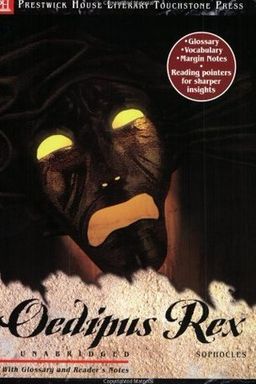
Oedipus Rex cover

Oedipus Rex

by Sophocles

Sophocles'' Oedipus Rex is a timeless tragedy that delves into the myth of King Oedipus, exploring themes of fate, identity, and human nature. As Oedipus uncovers shocking truths about his life, the play challenges our understanding of destiny and self-discovery.

The Tragic Search for Truth and Identity

How far would you go to uncover the truth about yourself, even if that truth destroyed everything you loved? That piercing question sits at the heart of Oedipus Rex, Sophocles’ timeless tragedy. The story follows Oedipus, the proud king of Thebes, whose tireless pursuit of truth leads him not to enlightenment, but to ruin. Sophocles uses Oedipus’ story to explore fate, free will, blindness—both literal and metaphorical—and the devastating consequences of knowledge. The play asks us to confront uncomfortable truths about self-knowledge, moral responsibility, and the limits of human understanding.

From the moment we meet Oedipus, his life revolves around problem-solving. He once defeated the Sphinx with brilliant reasoning, saving Thebes and earning his crown. Now, as the city groans under a plague, he again assumes the role of savior, vowing to find and punish the murderer of Laius, the former king. But in this quest for justice, he unknowingly pursues himself. Sophocles’ genius lies in transforming Oedipus’ greatest strength—his relentless reasoning—into his fatal flaw. The very intellect that freed Thebes becomes the weapon that destroys its savior.

Fate and Free Will Intertwined

The Greek world believed in divine prophecy and destiny, yet Sophocles dramatizes how human choices paradoxically bring fate to completion. Laius and Jocasta try to avert the oracle’s prediction by abandoning their infant son. Oedipus himself, learning of the same prophecy, flees Corinth to avoid harming his presumed parents. Yet every step he takes—every act of moral intent—draws him closer to the very catastrophe foretold. Sophocles makes us question whether we are ever truly free or simply instruments through which fate plays its music.

The Blindness of Knowledge

Throughout the play, seeing and blindness serve as metaphors for understanding. The prophet Teiresias, blind yet all-seeing, perceives the truth Oedipus cannot face. Oedipus, conversely, possesses physical sight but moral blindness. He sees clues but cannot interpret them until it’s too late. When he finally realizes the truth—that he has killed his father and married his mother—he gouges out his own eyes, transforming literal blindness into tragic self-awareness. The irony is cruel: only when deprived of vision does Oedipus truly see.

Hubris and the Fall of Greatness

Classical tragedies often revolve around hubris—pride overwhelming wisdom. Oedipus’ pride in his intellect and leadership blinds him to warnings. He dismisses Teiresias and accuses Creon of conspiracy, convinced that only he can solve Thebes’ crisis. As Aristotle later observed in his Poetics, Oedipus exemplifies the perfect tragic hero: noble yet flawed, powerful yet doomed by his own virtue. His fall evokes both fear and pity, reminding us of the precarious nature of human greatness.

The Human Cost of Truth

Sophocles suggests that truth itself carries a moral weight. Oedipus insists on uncovering the mystery of Laius’ death, despite repeated pleas to desist. Jocasta’s desperate warning—“Do not seek more knowledge”—embodies the human fear that some truths are too terrible to reveal. When Oedipus persists, he learns that knowledge can destroy identity and community alike. His personal revelation leads to the collapse of his family, his kingship, and his sanity. The audience, witnessing this disintegration, must ask whether there are limits to the pursuit of truth.

The Chorus as Moral Mirror

Greek chorus members serve as collective commentators, guiding the audience through emotional and ethical responses. In Oedipus Rex, they oscillate between reverence for Oedipus as savior and horror at his downfall. Their evolving judgment reflects the moral tension between justice and compassion—the same tension that defines human ethics. Sophocles uses the Chorus to remind us that truth often demands a collective reckoning, not just individual suffering.

Why It Still Matters

More than two millennia later, Oedipus Rex still speaks to us because it dramatizes a universal human struggle: the desire to understand ourselves and the fear of what that understanding might reveal. In psychology, Freud’s “Oedipus complex” borrowed the myth to explain unconscious conflict between love and guilt. In philosophy, thinkers like Nietzsche and Camus saw in Oedipus a metaphor for human defiance and absurdity. Sophocles’ play reminds you that even your best intentions and deepest truths can lead to pain—that knowledge, identity, and destiny are perilously entwined. And yet, through suffering, Oedipus attains wisdom, showing that truth, however tragic, remains essential to human dignity.


Fate vs. Free Will: The Inevitable Path

Sophocles’ treatment of fate and free will invites you to consider how much control you truly have over your own life. Everything that happens to Oedipus seems predetermined by prophecy, yet every choice he makes springs from moral conviction and reason. His tragedy lies not in ignorance of fate but in his attempts to resist it.

The Oracle’s Chain

Before Oedipus was born, the oracle warned Laius that his son would kill him and marry his mother. To prevent this, Laius ordered the baby’s feet pinned and cast away. But that single act of defiance creates the conditions for destiny to unfold. Similarly, when Oedipus learns the same prophecy as an adult, he flees Corinth—ironically heading toward his parents’ true homeland. Sophocles uses these mirrored decisions to show that willful avoidance often fulfills rather than escapes destiny.

Freedom Inside Fate

Though fate dictates the broad strokes, Sophocles leaves room for moral agency. Oedipus’ bravery in confronting the Sphinx and later the plague exemplify heroism. His downfall arises not from wickedness but from a tragic flaw: the belief that intellect grants freedom from prophecy. This illusion of control—equally relevant to modern readers—is what binds human greatness to vulnerability. Even when you act with courage, unseen forces can steer your life toward consequences beyond comprehension.

Comparative Perspective

In contrast to Homer, who celebrated human agency, Sophocles insists that moral insight lies in accepting limits. Later thinkers—from St. Augustine to modern philosophers like Spinoza—echo his vision of freedom within necessity. You cannot escape your fate, but you can choose how to confront it. Oedipus, stripped of vision and throne, still exercises moral will in accepting punishment and caring for his daughters. That enduring act of choice transforms submission into dignity.


The Symbolism of Blindness and Sight

What does it mean to truly see? In Oedipus Rex, sight is not about vision—it’s about comprehension. Sophocles weaves this symbolism throughout, turning physical sight into a metaphor for moral and spiritual awareness. The play contrasts Oedipus, the sighted yet ignorant king, and Teiresias, the blind yet all-knowing prophet.

Teiresias and Inner Vision

When Teiresias first appears, Oedipus mocks his blindness as incompetence. But Teiresias sees deeper truths. He warns Oedipus that he himself is the pollution of Thebes. The king rejects this revelation, unable to interpret invisible realities. In this exchange, Sophocles exposes how arrogance can make seeing men blind. Teiresias’ insight arises not from physical ability but spiritual depth—a blindness that reveals divine vision.

The Journey from Ignorance to Insight

By the play’s end, Oedipus’ literal act of self-blinding becomes symbolic purification. His eyes, which once sought outward solutions, now turn inward to moral reckoning. The transformation recalls the Socratic injunction to “know thyself.” For Sophocles, blindness becomes a paradoxical form of wisdom: through suffering, the human spirit sees reality stripped of illusion.

Modern Reflections

Even today, the image of blindness in leadership resonates—from political hubris to personal denial. Many modern thinkers (like Jung and Murdoch) have revisited Sophocles’ idea that humility opens the eyes of understanding. Oedipus’ blinding is not punishment alone; it’s metamorphosis—a shift from arrogance to insight. You too face moments when truth hurts to see, yet denial darkens the soul far more than blindness ever could.


The Cost of Knowledge

Sophocles compellingly argues that wisdom comes with suffering. Oedipus’ entire tragedy stems from noble curiosity—his need to know. Yet his discoveries dismantle every bond of family, kingship, and identity. The play thus explores whether knowledge itself is worth the pain it brings.

Truth as Destruction

Oedipus begins his investigation to save Thebes, demanding absolute honesty from all citizens. At every stage, someone warns him to stop—Teiresias through prophecy, Jocasta through pleading—but he refuses, equating ignorance with weakness. When the truth emerges, he loses everything. Sophocles reveals a cruel irony: the champion of truth becomes its greatest victim.

Knowledge and Identity

In learning who he truly is, Oedipus unlearns who he thought he was. The hero who saved Thebes from the Sphinx becomes its curse; the son of kings reveals himself as the murderer of his own father. His revelation transforms him from savior to abomination in one instant. The play reminds you that self-discovery, though often glorified, may expose unbearable truths about origin, intention, and consequence.

From Moral Inquiry to Existential Insight

Jocasta’s suicide and Oedipus’ self-blinding complete the descent from knowledge to despair. Yet both acts embody autonomy—they reclaim control over unbearable truth. Sophocles ultimately portrays wisdom as painful but necessary. You cannot undo knowledge, but you can choose ethical response. In that choice lies tragic greatness: to endure what must be known, and to live, however exiled, in the light of that truth.


Power, Pride, and Leadership

Sophocles vividly paints Oedipus as both model ruler and cautionary tale. His leadership embodies decisive intellect and genuine concern for his people, but his pride—his certainty that he alone can fix Thebes—becomes his undoing. The play thus becomes a meditation on the ethics of power.

The Hero as Leader

In the opening scene, Oedipus appears before the suffering citizens, promising immediate action. His empathy and resolve reflect strong leadership. Yet pride lurks beneath compassion; he treats Creon’s and Teiresias’ advice as threats rather than counsel. His insistence on authority silences voices of moderation—a political parallel to how hubris blinds governance.

The Political Morality of Hubris

Sophocles wrote during Athens’ golden age, when civic pride often outweighed humility. Oedipus’ confidence in rational mastery mirrors the democratic faith in human reasoning. His fall, therefore, warns us against mistaking intelligence for omniscience. Leadership demands discernment, not domination. As Creon’s cautious reasoning shows, balance—not certainty—sustains justice.

Learning Through Defeat

The once mighty king ends broken and blind, yet his final humility restores moral clarity. By asking only that his daughters be cared for, Oedipus paradoxically becomes most human in his weakness. Sophocles invites you to see leadership not as triumph over fate but as accountability within it—a principle echoed by Stoic philosophers and modern ethics alike.


The Chorus and Collective Conscience

The Chorus in Oedipus Rex embodies the moral pulse of Thebes. It mediates between divine law and human suffering, guiding you, the audience, through the emotional and ethical implications of every revelation. Its shifting perspective—from jubilation to pity—reveals how collective consciousness evolves during crisis.

Voice of the People

Initially, the Chorus praises Oedipus as Thebes’ savior. When rumors of guilt appear, they wrestle with doubt yet cling to faith in his virtue. By the end, they mourn not a criminal but a fallen hero. Their evolution mirrors society’s struggle between justice and empathy—a moral journey familiar to any community confronting scandal or downfall.

Moral and Religious Reflection

The Chorus invokes gods like Apollo, Zeus, Athena, and Artemis, showing religion’s role as ethical compass. Their prayers contrast with Oedipus’ rationalism, suggesting that wisdom requires both reverence and reason. The elders remind you that no ruler stands above cosmic law.

The Final Judgment

In the closing lines, the Chorus offers the play’s final advice: “Count no man happy till he dies.” This aphorism captures the essence of tragedy—that human fortune is fleeting and happiness is only secure in death. Through them, Sophocles warns every generation that prosperity, fame, and intellect may collapse under the weight of inexorable fate.


Suffering, Wisdom, and Redemption

Sophocles concludes with a paradox: Oedipus loses everything yet gains wisdom. His suffering becomes the crucible through which moral insight is forged. The play teaches that redemption arises not from reversing fate but embracing truth with humility.

The Purifying Power of Pain

After Jocasta’s death and his own blinding, Oedipus begs for exile. Though devastated, he no longer denies responsibility. His self-inflicted punishment transforms pain into purification. This reflects the ancient Greek idea that pathos—suffering—is the means through which humans reconcile with divine justice.

Wisdom Through Acceptance

When Oedipus accepts Creon’s authority and entrusts his daughters’ future to him, he attains humility. He sees himself not as victim but as moral agent. In this acceptance lies redemption—a serene understanding amid ruin. Sophocles’ tragedy thus ends not with despair but revelation: even in blindness, insight remains possible.

A Lesson Beyond Time

Throughout philosophy and psychology, this pattern of enlightenment through suffering endures—from Nietzsche’s embrace of pain as transformative to Jung’s individuation through shadow. When life confronts you with guilt or grief, Oedipus Rex teaches that clarity and dignity emerge when denial ends. The play closes with darkness, but within that darkness, the moral light of human resilience glows eternal.

Dig Deeper

Get personalized prompts to apply these lessons to your life and deepen your understanding.

Go Deeper

Get the Full Experience

Download Insight Books for AI-powered reflections, quizzes, and more.