
Idea 1
Laugh, Learn, and Look Death in the Eye
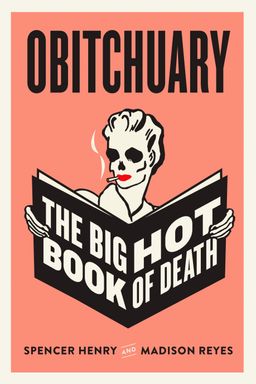
When someone you love dies (or when you merely think about your own exit), do you freeze, fumble, or joke your way through it? In Obitchuary, Spencer Henry and Madison Reyes argue that humor, history, and hands-on know-how form a surprisingly powerful antidote to the fear and fog that often surround death. They contend that you can make better choices, grieve more honestly, and even find community by learning what really happens to bodies, funerals, obituaries, and the industries orbiting them—without turning away from the weird, the wild, or the downright WTF.
This isn’t a hushed etiquette manual. It’s a romp through the end of life—from what your body does in the hours and weeks after you die, to how to design a send-off that feels like you, to the way obituaries can stab, soothe, or side-eye one last time. You’ll meet professional mourners and funeral strippers, Victorian tear-catchers and coffin torpedoes, body-farm scientists and cadaver dogs, celebrity caskets and companion plots. And yes, you’ll read some deliciously scathing obits that double as moral fables about legacy and last words.
Why this matters (and why now)
We’re living through a quiet revolution in how we die and mourn. Cremation is now the American majority choice; green burials and memorial diamonds compete with embalming and mausoleums; DIY funerals, living funerals, and obituary one-liners (“Doug died.”) all ask you to rewrite the script. Meanwhile, a culture that avoided talking about death is now bingeing true crime, touring historic cemeteries, and swapping “coffin spinner” facts at dinner. Like Caitlin Doughty’s Smoke Gets in Your Eyes or Mary Roach’s Stiff (contextual companions), Obitchuary argues you’re braver and more practical when you’re informed—and you’re kinder when you can laugh without looking away.
What you’ll learn in this summary
First, you’ll walk through the body’s postmortem timeline—Fresh to Dry—so you understand rigor mortis, livor mortis, the infamous “death chill,” and even death erections (yes, really), then survey your disposition menu: embalming, natural burial, cremation, cryonics, mummification, body farms, tattoo preservation, and “extreme embalming” like Ohio biker Billy Standley buried astride his Harley in a plexiglass casket. Next, you’ll design the “big day”: funeral attire across cultures, celebrity last looks (Aretha’s four outfits and Louboutin heels), and Victorian mourning warehouses that sold crepe veils so toxic they could make you sick.
From there, you’ll pivot to FUNerals: paid wailers (moirologists), dancing pallbearers, socialites seated with Champagne, and the Taiwanese/Chinese controversy over funeral strippers. You’ll unpack wills and obituaries—how they sugarcoat monsters (Michael Haight) or scorch earth (Kathleen Dehmlow)—and meet coffin confessors, sin-eaters, and last-word legends. You’ll explore living funerals in Japan (seizensō) and South Korea’s “Well Dying” coffins that use contemplation, not caskets, to save lives.
Then comes the hard stuff: historical atrocities and taboos (necrophilia cases, grave robbing, and the Lamb/Sconce cremation scandal), medical misadventures (lobotomies from Rosemary Kennedy to a 12-year-old “because he was defiant,” and the nineteenth-century terror of premature burial that spawned waiting mortuaries and bell-rigged safety coffins). You’ll look at love after the last breath—companion plots, heart burials (Henry I and Richard the Lionheart), and broken-heart syndrome stories (Johnny Cash and Debbie Reynolds)—and zoom out to pets and grief: ancient to modern pet cemeteries, animal mourning rituals, and the heroics of cadaver dogs like Pearl, Apollo, and Buster.
The tone: irreverent, humane, and useful
Henry and Reyes mix rigor with riffs. You’ll get precise dates, odd patents (coffin torpedoes!), and global practices alongside recipes (Funeral Potatoes) and gentle, practical advice for supporting grieving friends (bring breakfast, send delivery gift cards). They won’t let you forget that obituaries are for the living—and that a funny one can heal as much as a solemn one. By the end, you’ll be more prepared to plan, more able to comfort, and less likely to be blindsided by the logistics you didn’t know to expect.
Key idea
Laughter doesn’t trivialize death; it punctures fear so you can act. If you can say the unsayable (even just, “Doug died.”), you can also ask the practical, loving questions that make a better goodbye.
If you’ve ever wondered what to wear in a casket, whether caskets can explode (they can), why some Victorians collected tears, or how to ensure your final party isn’t a flop, this summary will give you the stories, the science, and the scripts to face the end with curiosity and care. In short: you’ll be the person everyone’s grateful to have around when things get real.