
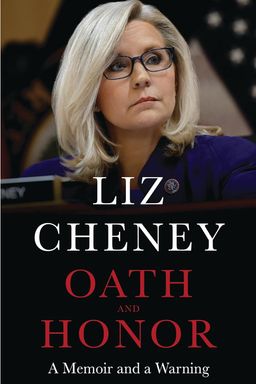
Oath and Honor cover

Oath and Honor

by Liz Cheney

Oath and Honor by Liz Cheney is a gripping insider memoir that details the events leading up to and following the January 6 Capitol riots. Cheney exposes the threats to democracy posed by political violence and misinformation, offering a dire warning for America''s future.

Defending Democracy in the Age of Lies

How does a democracy withstand sustained attacks from within its own institutions? In her book, Liz Cheney argues that the most serious threat to American democracy after the 2020 election was not external, but internal—a campaign of deliberate falsehoods designed to overturn a lawful vote. Through insider documentation, witness accounts, and legal analysis, Cheney reconstructs how political leaders, lawyers, and media figures collaborated—sometimes through silence, sometimes through direct action—to subvert the peaceful transfer of power. The book is both a historical narrative and a warning about moral corrosion under partisan pressure.

You see the story unfold in several arcs: the fabrication of lies about fraud, the legal and political schemes to overturn results, the January 6 insurrection, the Republican Party’s response, and the eventual congressional investigation. Together, these parts show how quickly a constitutional republic can be shaken when truth becomes optional and self-interest replaces duty.

The Birth of the Big Lie

It began with a single narrative repeated ad nauseam: that the 2020 election was stolen. Trump’s team turned ordinary ballot-counting processes into supposed evidence of fraud. Advisors like Bill Stepien and Attorney General Bill Barr told him there was none, yet he persisted. Media allies amplified phrases like 'ballot dumps' and 'rigged machines,' creating an echo chamber immune to legal fact. Over 60 lawsuits were filed and nearly all failed—courts from Nevada to Pennsylvania demanded evidence that never appeared. Even Trump-appointed judges dismissed the cases.

Still, repetition substituted for proof. The public narrative hardened into faith, creating a population segment convinced the election was stolen despite a complete lack of evidence. Cheney emphasizes this as a modern psychological and civic crisis—where law and belief diverge, and legal defeat cannot destroy a political myth.

The Architecture of Subversion

While lies spread publicly, a parallel operation sought to exploit legal and procedural loopholes. The plan for alternate electors, the pressure campaign on Mike Pence, and the orchestration of objections in Congress all formed a multi-step strategy to reframe certified results as contested. Internal emails and calls show Rudy Giuliani, Jenna Ellis, and John Eastman coordinating legalistic justifications for what was, in essence, a coup by paperwork. Cheney reveals how members like Mike Johnson circulated an amicus brief misleading colleagues about its origin while building political cover for objections. That document became a symbolic pledge of allegiance—to Trump’s narrative, not the Constitution.

Crisis at the Capitol and Beyond

The rhetoric turned kinetic on January 6. Cheney’s firsthand account captures the moment Congress itself became the target of the movement it had tolerated. You see the fear inside the chamber—gas masks, barricades, desperate texts to the President asking him to stop the mob. Instead, Trump tweeted attacks on Pence, inflaming the crowd further. The day culminated in deaths, injuries, and the desecration of a democratic ritual. Yet that night, lawmakers returned to finish the count, a symbolic reaffirmation that process must outlast violence.

Institutional Responses and Republican Retreat

After the attack, institutions attempted accountability through impeachment and investigation, but political will quickly wavered. The House impeached Trump; the Senate acquitted, even as many senators acknowledged the facts. Within the GOP, figures like Kevin McCarthy shifted from condemnation to reconciliation, visiting Mar-a-Lago weeks later. Cheney’s expulsion from leadership for telling the truth revealed how loyalty supplanted constitutional principle, embedding the “big lie” as party orthodoxy.

Parallel to Congress’s attempts, Trump’s influence reached the Pentagon, where firings and loyalist appointments raised fears of military misuse. Former defense secretaries intervened publicly to remind the armed forces of their constitutional oath—the kind of warning unseen in modern U.S. history. These moments show institutional fragility but also resistance: individuals stepping up when guardrails bent.

The Search for Truth and the Price of Speaking It

From her expulsion to daily threats, Cheney shows what standing on principle costs in a polarized environment. Constituents once friendly became hostile, local officials received death threats, and cable segments spurred harassment. Yet she frames this not as martyrdom but as necessity—proof that democracy depends on citizens choosing truth even at personal risk. Her family’s experiences mirror the broader public’s descent into conspiratorial thinking, revealing how misinformation can corrode not only politics but community fabric.

Why It Matters Now

The latter chapters—covering the January 6 Committee, televised hearings, subpoenas, and final reforms—shift from crisis to reconstruction. Cheney details how bipartisan institutional design, persistent litigation, and evidence-based storytelling preserved democratic accountability. The Committee’s work culminated in criminal referrals and the 2022 Electoral Count Act reform, clarifying that the vice president’s role is purely ministerial.

Ultimately, Cheney’s narrative is about moral courage. The book asks whether citizens and leaders will value truth above power, process above personality. By tracing the interplay between political lies, institutional mechanics, and individual choice, she turns one of America’s darkest episodes into both a record and a challenge. The next survival test, she warns, will not depend on institutions alone—it will depend on what you choose to believe and defend.


Engineering a False Election Crisis

The first half of Cheney’s narrative dissects how the 'stolen election' myth was engineered. What you see is not spontaneous misunderstanding but a coordinated communication strategy. Trump’s team and media allies transformed procedural normalities—late-night ballot reporting or mail-in processing—into allegations of cheating. Figures like Rudy Giuliani and Sidney Powell held bizarre press events, including the famous Four Seasons Total Landscaping moment, where fantasy replaced fact with institutional backing. Courts quickly swatted away these claims, but their defeats strengthened loyalty tests inside the GOP rather than undermining belief.

Legal Reality vs. Public Myth

You see a striking divergence emerge. The judiciary did its job—over sixty losses out of sixty-two cases, including opinions by Trump-appointed judges. Yet this legal closure did not end the political story; it intensified grievance. The gap between legal truth and emotional persuasion became fertile ground for radicalization. Election officials like Georgia’s Gabe Sterling publicly pleaded for calm, warning 'someone’s going to get killed,' after disinformation spurred death threats. Poll workers Ruby Freeman and Shaye Moss were vilified for doing their jobs, while federal officials like Chris Krebs were fired for upholding fact.

Why Lies Persist

Cheney underscores how falsehood survives defeat when continually amplified by partisan platforms. Reality became fragmented by media bubbles, algorithmic reinforcement, and political necessity. Even after losing every court case, Trump and his allies adapted—from legal argument to populist mantra. The persistence of the lie set the stage for what came next: turning legal processes themselves into tools for subversion.

Core Lesson

Facts alone can’t defend a system when emotional allegiance replaces evidence. Strengthening democratic resilience requires both institutional rigor and sustained civic truth-telling.

By reconstructing the timeline from election night to early December 2020, Cheney lets you see the ecosystem of actors, incentives, and echo chambers that converted a political loss into a civic crisis. It's a case study in how misinformation behaves like contagion—legal containment is possible, but societal inoculation takes far longer.


The Multi-Front Plan to Overturn the Vote

After losing in courts, Trump’s circle pursued a different front: procedural sabotage. Cheney’s reconstruction shows how the 'fake electors' plan, pressure on Mike Pence, and congressional objections coalesced into a single scheme designed to prevent or delay certification of legitimate results. Alternate elector certificates from seven states were created and mailed to Washington with the intent to introduce manufactured ambiguity—so Pence could claim uncertainty and block Joe Biden’s victory.

Layered Tactics

The plan was modular. Step one: create doubt through media repetition. Step two: generate fake slates of electors. Step three: obtain political cover through state legislators or public figures. Step four: pressure the vice president to act outside legal authority. The White House enlisted figures like John Eastman, who proposed legal memos asserting Pence could reject certified votes. Cheney juxtaposes these arguments with contemporaneous memos clarifying that Pence’s role is ceremonial, not discretionary—a constitutional fact ignored by the inner circle.

Behind the scenes, allies like Representative Mike Johnson circulated an amicus brief to the Supreme Court supporting Texas v. Pennsylvania, falsely suggesting widespread legislative backing. Senators such as Josh Hawley and Ted Cruz planned objections to at least one state’s electors, ensuring the joint session would devolve into debate. It was a coordinated strategy, not a series of coincidences.

If It Had Worked

Cheney makes clear how catastrophic success would have been: constitutional paralysis, competing claims of presidential legitimacy, and potential civil unrest. The Founders never designed a contingency for Congress rejecting certified votes. It took individual courage—especially from Pence—to refuse unlawful pressure and allow the count to proceed. By identifying names, dates, and communications, Cheney shows how democracy survived not by institutional inevitability but by personal compliance with law under great duress.

What makes this section powerful is its specificity. These were real documents, meetings, and phone calls—not theoretical debates. The scheme’s exposure turns the book into both an indictment and an educational manual on how fragile constitutional procedures can be when weaponized by ambitious actors.


January 6 and the Price of Delay

The crescendo came on January 6, 2021. The mob’s breach of the Capitol was not sudden chaos; it was the logical endpoint of months of radicalization. Cheney’s eyewitness account captures both intimacy and terror: lawmakers pulling gas masks from under chairs, security barricading doors, chants of 'Hang Mike Pence' echoing through halls. She describes Republican colleagues who moments earlier planned to object now shouting for their lives. The scene made literal the consequences of rhetoric detached from truth.

Inside and Outside the Chamber

Outside, organized groups like the Oath Keepers and Proud Boys executed coordinated movements that later led to seditious conspiracy convictions. Inside, representatives crouched as police fought to hold back the mob. The president’s silence—and his tweet attacking Pence mid-assault—exposed dereliction of duty in real time. Cheney portrays the contrast vividly: Vice President Pence evacuating under threat while still refusing to abandon his constitutional role, versus a president watching events unfold on television.

Leadership Under Siege

As lawmakers sheltered, Cheney and others worked to ensure Congress reconvened that night. Returning to the chamber, amid shattered glass and tear gas traces, members completed certification—a gesture of defiance and restoration. The episode reaffirmed that institutions survive only through action, not symbolism. (Note: Similar “return same-day” strategies have been used in other democracies to signal legitimacy after attempted coups.)

By chronicling both the external mobs and internal hesitation, Cheney ensures readers grasp January 6 not as an isolated riot but as the violent punctuation mark on an orchestrated campaign to undo an election.


Confronting Cowardice and Party Decay

In the aftermath, Cheney shifts focus from the attackers to those who enabled them through silence or compliance. She calls it a 'plague of cowardice'—a phrase marking the moral collapse of party leadership. Kevin McCarthy epitomizes the theme: initially acknowledging Trump’s responsibility, then reversing himself within days and making a pilgrimage to Mar-a-Lago. Cheney documents messages where McCarthy rationalizes appeasement as survival. The theme recurs: ambition and fear eclipsing duty.

Institutional Self-Sabotage

By May 2021, the GOP removed Cheney from leadership—not for policy dissent but for refusing to endorse a lie. Her removal illustrates how party mechanisms can enforce conformity as effectively as law suppresses dissent. State parties, too, turned punitive: Wyoming’s leadership censured her, while the Republican National Committee labeled the January 6 investigation 'persecution.' These acts formalized the party’s abandonment of accountability.

Personal Consequences of Truth

The cost was personal. Cheney faced daily threats, had to order her daughter to leave their home after online doxing, and lost long-time friends to conspiracy belief. Her story mirrors how disinformation fractures communities—neighbors and relatives radicalized by selective media diets. She links upticks in threats directly to specific television segments attacking her, highlighting the symbiosis between cable outrage and real-world menace.

Key Reflection

In polarized environments, choosing truth becomes a form of bravery. But retaining integrity in office may carry higher personal costs than losing it.

This section humanizes the political crisis. Through text exchanges, personnel actions, and her eventual primary loss to a Trump-endorsed opponent, Cheney provides a portrait of how institutions erode from within when truth-tellers are treated as traitors and cynics as pragmatists.


Building the January 6 Committee

Cheney then details how investigation became preservation. When invited by Speaker Pelosi to serve on the January 6 Select Committee, she saw the decision as a constitutional obligation, not partisan defiance. The Committee’s unusual design—two Republicans, seven Democrats, a unified staff of litigators and prosecutors—was key to credibility. She and Chairman Bennie Thompson crafted a plan built on evidence-first principles rather than political theater, aiming to finish within eighteen months.

Designing for Trust and Speed

To preserve public trust, the Committee adopted trial-style hearings and team questioning instead of the standard five-minute rotation. James Goldston’s production team helped structure televised narratives that could translate complex evidence for millions of viewers without sensationalism. Staff like Joe Maher and John Wood—career conservatives—ensured internal ideological balance while pursuing aggressive litigation on privilege claims. The result was a rare bipartisan legal engine inside a partisan Congress.

Litigation as Leverage

The Committee asserted unprecedented assertiveness: pursuing criminal contempt against Steve Bannon, suing to enforce Mark Meadows’s compliance, and securing an 8–1 Supreme Court decision affirming access to presidential records. Judge David Carter’s crime-fraud ruling on Eastman’s emails—finding that Trump and Eastman likely engaged in an effort to obstruct Congress—marked a historic legal determination of potential criminal intent. These victories turned congressional oversight into meaningful accountability rather than symbolic reprimand.

This phase of the book reads like a civic case study on institutional repair under stress—how meticulous staffing, clear goals, and strategic litigation can reconstruct truth when political will alone cannot.


Public Witness and the Power of Truth

Once the Committee secured access and cooperation, it focused on narrative clarity. Televised hearings in 2022 followed a seven-part structure tracing the entire conspiracy from misinformation to violence. Over twenty million people watched the opening session—proof that transparent process could re-engage public attention. Cheney’s segments often featured direct, unrehearsed testimony from officials like Bill Barr, Richard Donoghue, and Cassidy Hutchinson, whose accounts made visible Trump’s intent and awareness of illegality.

Revealing Intent

What gives these hearings power is accumulation: multiple witnesses, internal documents, and real-time messages proving that top officials told Trump the fraud claims were false. Hutchinson’s vivid recollections—from White House chaos to Trump demanding removal of metal detectors and excusing violence—gave viewers direct insight into consciousness of guilt. When contrasted with text exchanges from Fox hosts pleading for intervention, the hearings dismantled post-hoc defenses of ignorance.

Emotional and Ethical Anchors

The Committee balanced legal exposition with moral gravity. Testimonies from Officer Michael Fanone describing being tased, or from election workers Shaye Moss and Ruby Freeman detailing threats, reminded Americans that disinformation’s victims are human. Cheney’s approach—combining prosecutorial precision with emotional storytelling—turned civic education into collective reckoning.

These sessions became the book’s emotional heart: snapshots of accountability delivered through factual exposure. Cheney demonstrates that public truth-telling, strategically structured and ethically anchored, remains democracy’s most potent antidote to authoritarian mythmaking.


Accountability, Reform, and Renewal

In concluding chapters, Cheney connects findings to forward action. The Committee’s Final Report recommended criminal referrals—including obstruction, conspiracy, and false statement charges—and proposed rewriting the Electoral Count Act. Partnering with Zoe Lofgren, Cheney helped draft a bipartisan reform clarifying the vice president’s ceremonial role and raising thresholds for objections. That measure’s eventual passage became a concrete legacy of the investigation.

Restoring Guardrails

Beyond law, Cheney stresses civic responsibility. She notes her own political price—losing her congressional seat, public censure, and alienation from her party—but frames these as proof that defending democratic principles is inseparable from personal risk. Foundation-building requires integrity from individuals as much as procedural reform from institutions. (Note: This echoes Vaclav Havel’s notion that 'living in truth' is the first step toward freedom.)

After leaving office, Cheney continued advocacy through the Great Task PAC, focusing on protecting democracy across party lines. Her call to action: citizens must choose representatives who honor oaths above ideology, media that report honestly, and systems that reward courage rather than compliance.

Final Message

Democracy’s defense depends less on slogans than on the daily practice of truth—by voters, officials, and institutions alike.

Cheney closes on a sober optimism: truth can prevail, but only through vigilance. The book ends as both testament and toolkit—a reminder that the battle for democratic integrity is ongoing, and your participation determines its outcome.

Dig Deeper

Get personalized prompts to apply these lessons to your life and deepen your understanding.

Go Deeper

Get the Full Experience

Download Insight Books for AI-powered reflections, quizzes, and more.