
Idea 1
Designing Decisions: The Power of Small Nudges
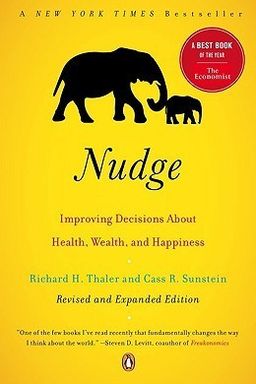
Every decision you make—what to eat, how much to save, how to vote—is shaped by invisible design choices in the environment around you. In Nudge, Richard Thaler and Cass Sunstein argue that the world is built through choice architecture: the structure of how options are presented. There is no neutral design; every form, menu, webpage, or policy steers you toward certain outcomes. The book’s radical yet pragmatic claim is that we can—and should—use this architecture deliberately to improve lives while preserving freedom of choice.
Thaler and Sunstein call this philosophy libertarian paternalism. It sounds paradoxical because it combines two moral impulses: protect liberty while helping people make better choices. The premise is simple—you keep your freedom, but defaults, framing, and feedback make better decisions easier. Governments, companies, and individuals can apply these methods without coercion or heavy-handed regulation.
Humans vs. Econs: Understanding How We Think
To design good nudges, you must start with the right model of human behavior. Most economics assumes we are rational calculators—"Econs"—who maximize utility with perfect foresight. But in reality we are "Humans," driven by bounded rationality, limited attention, and emotion. Following Daniel Kahneman and Amos Tversky, the authors distinguish between two systems of thought: the fast, intuitive Automatic System and the slow, deliberate Reflective System. The automatic mind relies on heuristics—anchoring, availability, representativeness—that simplify complex decisions but often produce systematic errors.
This cognitive framework explains why we fall for predictable traps: buying high in markets, neglecting retirement enrollment, or misjudging risks. Instead of blaming irrationality, Nudge teaches you to design environments that align with how real humans think and feel. Framing, timing, and feedback can help your automatic processes make better choices without requiring constant vigilance from the reflective system.
Choice Architecture: The Tools of Nudging
Every environment—from a cafeteria to a mortgage form—can channel behavior. A nudge is any small feature of a choice architecture that predictably changes behavior without forbidding options or altering economic incentives. Carolyn’s cafeteria experiment—simply changing the arrangement of food—boosted healthy consumption by 25%. Schiphol Airport’s famous etched fly in urinals reduced spillage by 80%. These examples illustrate the economic power of subtle, context-sensitive design.
What makes a good nudge? It must be easy to avoid, transparent, and designed to make people "better off as judged by themselves." You can recognize successful nudges in the design of iPhones, supermarket shelving, or organ donor forms. The genius of this approach lies in balancing freedom with structure—you can always choose not to follow the nudge.
Why We Need Nudges: Real-World Failures
Thaler and Sunstein present vivid policy domains where human limitations clash with complex decisions: retirement planning, healthcare, credit markets, education, and environmental protection. Each case reveals the same pattern—information overload, confusing defaults, and poor feedback lead to costly mistakes. Traditional regulation either ignores these cognitive limits or substitutes coercion for clarity. Nudges, in contrast, use psychological reality to improve outcomes softly.
When Medicare Part D allowed seniors to choose among dozens of drug plans, most were overwhelmed; random assignment left the poorest patients worse off. In Sweden’s privatized pension system, most investors chased past returns and suffered losses. In both cases, better defaults and simple RECAP-style transparency (Record, Evaluate, Compare Alternative Prices) could have saved people money and confusion. Nudging replaces random chaos with informed structure.
The Moral Core: Freedom with Structure
At its heart, Nudge is an ethical argument for designing systems that respect choice while helping people act on their own goals. Paternalism becomes libertarian when interventions are light-touch, low-cost to resist, and aligned with people’s self-declared preferences. Whether the challenge is obesity, overspending, or climate change, the authors show that small, intelligent design tweaks can achieve what mandates cannot: sustainable improvement without resentment.
Across every domain—finance, health, education, environment—the book’s message stays constant: make good choices easy, make bad choices visible, and never remove freedom. This framework bridges behavioral science and policy design, helping you see that even minor features of context—defaults, deadlines, framing—can decide outcomes as profoundly as laws or prices. You already live inside architecture shaped by someone; this book invites you to shape it mindfully.