
Idea 1
Memory, Loss, and the Shape of Love
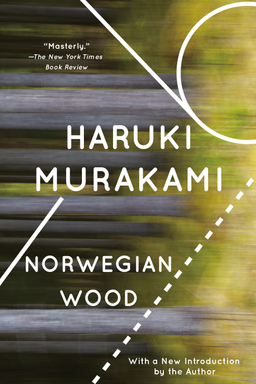
When you open Norwegian Wood, you are immediately pulled into a meditation on memory, grief, and the slow art of surviving intimacy. The story begins with a song—the Beatles’ “Norwegian Wood”—playing on a plane to Hamburg, which triggers a flood of recollection for Toru Watanabe, the narrator. From that song, the reader plunges backward eighteen years into a landscape of suicides, fragile loves, and the moral labor of remembering. Haruki Murakami uses this structure to ask how memory preserves, distorts, and reshapes identity. What happens when the past refuses to stay buried? How do you live on ethically with memories you cannot erase?
The narrative engine of memory
In Murakami’s narrative, memory operates not as passive recall but as a living organism—an engine that both rejuvenates and consumes. The recurring meadow scene, defined by its sharp sensory clarity—grass smell, wind, bird cries—returns throughout the novel like a dream that fades at its edges. Watanabe admits that he can recall the sound of the wind long before he can picture faces. The implication is that memories of sensation outlast those of people: the physical world becomes the archive when human relationships blur. He writes as an act of preservation, trying to hold fading faces inside sentences before time completes their erasure.
Grief as atmosphere
At the novel’s moral center lies the suicide of Kizuki, Watanabe’s best friend, whose death uproots both him and Naoko, Kizuki’s girlfriend. Murakami emphasizes that death is not opposite to life but woven into it—a fine dust breathed daily. This insight transforms the novel from a tale of events into a chronicle of endurance. Watanabe leaves his hometown of Kobe for a university dorm in Tokyo, but his relocation only relocates the grief. Death does not end; it migrates inside him. (Note: This view aligns with existential writers like Albert Camus, who also treat catastrophe as an ongoing atmospheric presence rather than an event.)
Intimacy as responsibility
The relationships that follow are saturated with obligation. When Watanabe and Naoko fall into a hesitant love after Kizuki’s death, their intimacy feels like a moral recall of their lost friend. Naoko seeks shelter in him; he seeks meaning in her fragility. But each encounter between them carries both erotic tenderness and despair. The novel suggests that love is not merely emotional—it's ethical, demanding care without guarantees. Watanabe’s efforts to remember Naoko, to write letters and visit her sanatorium, become his way of honoring a promise: to preserve a life even after it withdraws from the world. This same moral gravity recurs later with Midori, whose vitality challenges him to choose the living over the ghostly.
Cultural anchors as emotional maps
Music and literature thread through every major relationship in the book. Songs act as time travelers: “Norwegian Wood,” “Yesterday,” or Bach’s pieces provide access to emotional states words cannot express. Likewise, Watanabe’s habit of reading Fitzgerald or Baldwin is not just intellectual—it becomes an identity practice that separates him from peers and binds him to select others. Murakami renders culture as a shared emotional shorthand: a record, a book, a melody can function as an emotional compass through time. (Note: Readers familiar with Proust’s madeleine or Joyce’s musical refrains will recognize this as a modern variation on involuntary memory.)
A world built from small rituals
From the dorm’s flag-raising ceremonies to the sanatorium’s farming routines and Reiko’s match-burning music ritual, everyday acts hold the novel together. Murakami portrays life as a structure of repetition: you wake, wash, write a letter, play a song. These minor patterns are what let the characters survive in the absence of certainty. Watanabe’s “winding the spring” ritual each morning—thirty-six turns of invisible discipline—becomes emblematic of survival by habit. Ritual, in other words, is memory turned into motion.
Freedom, responsibility, and the unfinished
By the end, Norwegian Wood offers no neat redemption. Naoko’s death reopens the original wound, and even Reiko’s serene wisdom cannot erase Watanabe’s uncertainty. Yet through the novel’s closing acts—with Midori’s direct demand for presence and Watanabe’s weary acceptance that death coexists with life—you are left with a subtle form of hope. The work of living, Murakami suggests, lies in staying awake to memory without being consumed by it. To remember truly is to live alongside absence and to keep turning the spring, one day at a time.