
Idea 1
The Complexity of Human Connection
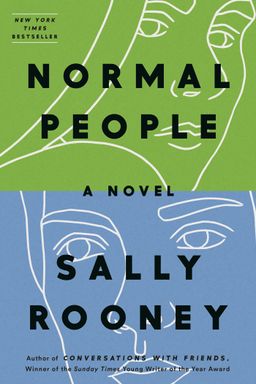
What makes two people truly understand each other? Is love alone enough to bridge the immense spaces that exist between human beings—or does it simply reveal how vast those spaces are? In Normal People, Sally Rooney takes these questions and builds a quietly explosive novel around them. She argues not through theory or exposition, but through the lives of two young people—Marianne Sheridan and Connell Waldron—whose connection drifts, reforms, and endures despite the pressures of class, shame, power, and self-doubt. The story is both intimate and political: a portrait of private longing in the midst of social expectation.
At its core, Normal People explores what it means to be seen and known by another person. Rooney contends that this knowing is not simple or seamless. Rather, intimacy exposes every layer of fragility—the fallout of class inequality, trauma, and the persistent search for identity. The novel reveals how relationships are not merely emotional entanglements but arenas in which inequality and self-worth constantly play out. This makes the book sound sociological, but it never loses the emotional pulse of its protagonists.
A Story of Two Intertwined Lives
Marianne and Connell grow up in the same small Irish town, but their circumstances are worlds apart. Connell’s mother cleans Marianne’s family home—already a symbol of overlapping intimacy and social division. In school, Marianne is ostracized, seen as strange and aloof, while Connell is popular and well-liked. Yet behind closed doors, they find a private world of tenderness that neither can replicate elsewhere. Rooney traces their story from late adolescence into young adulthood, through university years and beyond, showing how their connection continually shifts between the poles of friendship, love, and need.
Rooney invites you to witness not just what happens between them, but also what they fail to articulate—the silences that destroy and sustain them. The distance between who they are in public and who they are in private becomes one of the book’s most enduring themes. Connell’s fear of being judged for seeing Marianne in school mirrors broader questions about masculinity, shame, and class. Marianne’s acceptance of emotional pain is similarly revealing: her self-perception has been fractured by social isolation and family abuse. Theirs is a love both reliant on and endangered by these invisible forces.
The Political in the Personal
Rooney writes in a deceptively simple style that often disguises sharp political commentary. When Connell, the working-class scholarship student, joins the world of elite academia, his discomfort highlights the understated but pervasive inequalities shaping both Irish life and Western education. Marianne, though financially privileged, suffers from an emotional poverty imposed by her family’s cruelty and neglect. Through their relationship, Rooney demonstrates how money, background, and social power seep into every human gesture—from the way people speak to how they touch one another.
This dynamic recalls works like Elena Ferrante’s My Brilliant Friend, where power shifts in friendship mirror larger social hierarchies. Rooney’s characters wrestle not with grand events but with the moral economies of daily life. Every text message or missed call carries the weight of inequality, vulnerability, or pride. She suggests that love cannot be pure in an impure system. The result is a modern love story that refuses the fantasy of escape.
Why It Matters Now
Why does this matter to you as a reader? Because Rooney captures something urgently recognizable in contemporary life: the longing to be known completely and the fear that we never will be. Normal People examines how social media, status, and emotional insecurity warp our ability to communicate. It’s a book about the ache of misconnection, about how people can spend years orbiting the same emotional truths without ever quite colliding.
By the end, Connell and Marianne’s bond remains unresolved—neither fully romantic nor platonic, but profound nevertheless. They have altered each other irrevocably, opening the possibility of goodness in a world that too often confuses power for love. For Rooney, what makes people ‘normal’ is not conformity but vulnerability: the capacity to be reshaped by knowing—and being known by—another soul. In reading this, you are reminded that love, though painful, is one of the few routes left to genuine transformation.
“It’s entirely possible to be a normal person, and yet be profoundly lonely.” — Sally Rooney, paraphrased theme
The novel asks you to consider: what is the cost of being known? And are intimacy and independence mutually exclusive, or can love exist as a force that allows both? These questions, entwining the political with the deeply personal, make Normal People not just a story of two lovers, but a mirror held up to modern humanity itself.