
Idea 1
Why Complex Systems Fail by Design
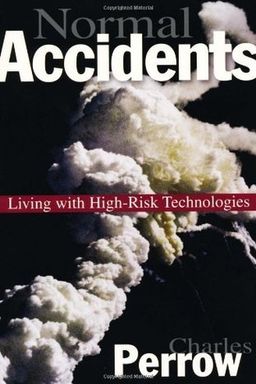
Every society depends on systems so intricate—nuclear reactors, chemical refineries, air traffic control, shipping fleets, and power grids—that their smooth functioning seems like proof of human mastery. But Charles Perrow, in his influential work Normal Accidents, argues the opposite: in some systems, accidents are not anomalies—they are inevitable. He calls these normal accidents, meaning failures built into the structure of complex, tightly coupled technologies. These systems do not just occasionally break; they are designed in ways that make breakdown unavoidable over enough time.
Perrow’s insight emerged from his investigation of disasters like the 1979 Three Mile Island nuclear accident, the Torrey Canyon oil spill, and later industrial calamities such as Bhopal. His goal was not to assign blame but to reveal a structural truth: you cannot train or regulate away system accidents when the architecture of the system itself allows small failures to interact and escalate faster than any operator can understand or respond.
Complexity and Coupling: The Core Framework
Two main ingredients shape how and why systems fail: interactive complexity and tight coupling. Complex systems—whether nuclear reactors or air traffic networks—contain components that interact in hidden, nonlinear ways. Tight coupling means there is little slack for delay or substitution: if one part falters, others follow quickly. Together they create what Perrow calls the dangerous quadrant, where accidents are normal because no one can predict or isolate the chain of failures in time.
For example, in a nuclear plant, a valve failure might trigger misleading gauges, which cause operators to misjudge reactor pressure and make counterproductive decisions. This is not incompetence—it is the system producing incomprehensible signals under stress. You can theoretically design coupling to be looser or simplify interactions, but often efficiency, cost, or physics push in the opposite direction.
From Components to Systems: The DEPOSE Framework
To understand why small triggers become disasters, Perrow proposes the DEPOSE model—six sources of failure: Design, Equipment, Procedures, Operators, Supplies, and Environment. When an incident occurs, examining each level clarifies whether it is a component malfunction or a system accident. For instance, at Three Mile Island, faulty design (an indicator showing a command rather than the valve’s actual position) interacted with equipment flaws (a stuck PORV), procedural deficits, and environmental conditions. DEPOSE encourages analysts to move beyond the lazy diagnosis of "operator error."
Learning from Catastrophe: When Redundancy Fails
Every major industrial domain—nuclear, petrochemical, marine, or aerospace—illustrates Perrow’s thesis. At Three Mile Island, five minor failures combined into a cascading crisis. In petrochemical plants like Flixborough, temporary bypasses and production pressure produced vapor-cloud explosions. In shipping, radar and radio reduced some risks but introduced new ones: mutual misunderstandings between captains created collisions that no technology could predict.
Even aerospace, a field with extraordinary safety improvements, exhibits this duality. Automation reduces average accident rates but adds hidden failure modes and overreliance on software. Pilots in systems like the DC-10 or Apollo missions faced moments where automated design logic conflicted with human intuition. In the Apollo 13 crisis, survival required human simplification—ripping away automatic coupling and improvising low-tech fixes that saved the crew.
Organizational and Economic Dimensions
Perrow moves beyond machines to examine institutions. Regulators like the FAA or NRC often defer essential safety upgrades for political or economic reasons, while industries prioritize cost containment, leading to underinvestment in safety. Bhopal exemplified this: refrigeration units were shut down to save money, alarms broken, and local communities unprotected. In shipping, contract structures and fragmented regulation encouraged captains to take risky shortcuts. Profit, not ignorance, drives many of these structural vulnerabilities.
He also maps the sociological roots of decision-making in risk management. Some rely on absolute rationality—the engineering ideal of optimizing cost-benefit ratios—while others operate through bounded rationality or social rationality, weighing dread, fairness, and trust. Public fear of nuclear power after Three Mile Island, often dismissed as irrational, is in fact deeply rational in social terms: it accounts for inequitable risk distribution and catastrophic unknowns that technocratic models ignore.
Living Hazards: From Dams to DNA and Y2K
Perrow expands the lens beyond traditional industrial accidents. The Teton Dam failure illustrates how bureaucratic institutions ignore geologists’ warnings because halting construction is politically costly. In recombinant DNA research, early caution at Asilomar yielded to economic pressure for rapid commercialization, creating a new frontier of risk where synthetic life forms could escape containment. The Y2K computer problem—a test for global interdependence—revealed how tightly coupled software, embedded chips, and global infrastructure could fail together if not vigilantly coordinated. Even when catastrophe was largely avoided, Y2K exposed the fragility of a world increasingly knitted by code and electronics.
The Moral of Normal Accidents
Perrow’s argument is not fatalism but realism. When complexity and coupling cross a critical threshold, you face a choice: simplify, decouple, or sometimes abandon the system. Training, alarms, or stricter procedures cannot guarantee safety in systems that exceed human comprehension. The challenge, he insists, is political and moral as much as technical. You must decide which technologies society can afford to keep—and which are too dangerous not because people err, but because they will inevitably fail together.