
Idea 1
A Hotter Planet and the Age of Movement
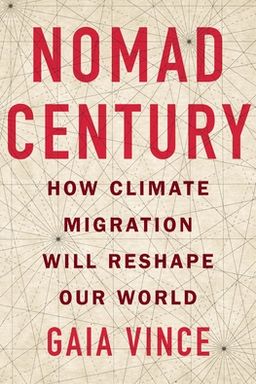
You live in the opening act of the planetary century — one that will shape how and where billions survive. This book argues that global heating, migration, and the reinvention of cities are inseparable: as climate systems destabilize, people must move, and societies must reorganize. The author’s central claim is stark but hopeful: mobility is humanity’s oldest survival technology, and the challenge of our age is to manage it humanely, intelligently and at scale.
From planetary emergency to human strategy
Earth’s climatic baseline is shifting faster than at any time in human history. With atmospheric CO₂ concentrations exceeding 420 ppm — levels unseen in three million years — scientists project a warming trajectory of 3–4°C by 2100 unless radical mitigation occurs. Even 1–2°C has already amplified fire seasons, melted glaciers, and triggered deadly heatwaves. The accumulation of oceanic heat and crossing of tipping points (like Greenland’s and Antarctica’s ice sheets) guarantee disruptions for centuries. In this context, migration isn’t a choice; it’s the logical human adaptation to changing habitability zones.
The climate system’s inertia means that even if emissions stop today, warming will persist due to stored heat and feedback loops. Yet agency remains: every fraction of a degree avoided saves cities, livelihoods and species. Pragmatically, that means planning for both decarbonization and displacement—building for a future that is simultaneously hotter and more mobile.
The four forces of disruption
The book frames the visible consequences of climate change as four “horsemen”—fire, heat, drought and flood—that increasingly overlap. Fires consume carbon sinks and cities alike; rising wet-bulb temperatures make outdoor work and life impossible across large swathes of the tropics; megadroughts desiccate breadbaskets; and floods erase coastal economies. Each event exposes the weakness of borders and national systems built for a more stable world.
Their interaction — fires releasing CO₂ that intensifies heat, or floods following drought-baked soils — demonstrates that crises now compound and synchronize. This cascade isn’t just environmental; it’s profoundly social as food prices rise, insurance collapses, and migration pressure amplifies political fracture.
Migration as continuity, not crisis
The author reframes migration as the process that made civilization possible rather than an anomaly to be resisted. From the Yamnaya migrations that reshaped Europe to the modern global circulation of goods and labour, human progress has always been a story of movement. Today’s international networks—diasporas, remittances, digital trade, and education exchanges—extend that lineage. Closing borders or criminalizing migration doesn’t preserve nations; it undermines global resilience and economic vitality.
Migration will accelerate because of physical necessity: parts of the tropics and coastlines will become unlivable. But it can also be a design opportunity—to renew aging economies, fill labour shortages, and repopulate safer latitudes in an orderly, mutually beneficial way.
The new geopolitics of movement
Modern nation-states, born out of fixity and control, are unequipped for a mobile century. Borders were designed to manage citizenship and taxation, not to adapt to climatic redistribution of habitability. While goods and capital flow freely, people face lethal barriers—walls, camps, and offshored detention systems. This creates the paradox of globalization: we protect wealth but criminalize the human movement that sustains economies.
The book calls for rebalancing: if your laptop crosses oceans daily, people should have regulated, legal routes to do the same. This is not open-border idealism but managed pragmatism—using visas, quota systems, and international funds to channel migration ethically and efficiently.
A blueprint for coexistence and regeneration
As equatorial and coastal regions lose viability, the northern latitudes — Canada, Scandinavia, the upper Midwest, Siberia — will emerge as new settlement zones. Yet resettlement on this scale raises moral, logistical, and ecological challenges: protecting permafrost, building new cities, and sustaining food, water, and energy systems. The author argues that only cooperative planning—global funding, adaptive architecture, sustainable materials, and restored ecosystems—can make the “New North” habitable without repeating the colonial patterns of the past.
Ultimately, this book is both warning and manual. It tells you that climate change and migration are not two stories but one narrative: a civilization forced to move by the consequences of its own success. The task isn’t to stop movement, but to make it safe, just and regenerative—turning survival into renewal rather than collapse.