
Idea 1
Living Without Panic: Gutman's Journey from Fear to Freedom
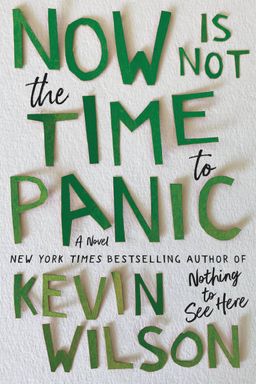
What if the thing that makes you successful—the confidence that drives you, the perfectionism that defines your career—is also what keeps you living in fear? In No Time to Panic, journalist Matt Gutman, a war correspondent and national TV reporter, takes readers into a deeply personal investigation of the panic disorder that haunted him for decades. Through science, self-experimentation, and storytelling, Gutman argues that panic isn’t a defect—it’s a perfectly natural signal of our humanity. His core insight: panic is not a malfunction of the brain, but a misunderstood evolutionary tool.
Gutman’s book begins with an admission few want to make. Though he’s built a public persona of unwavering courage—dodging sniper fire in Afghanistan and hurricanes in the Bahamas—he confesses that broadcast calm masks crippling terror: panic attacks during live television. These are not mere jitters. They feel like dying—heart racing, lungs collapsing, memory erased under the heat of a camera’s gaze. After one catastrophic mistake during the Kobe Bryant crash coverage nearly derailed his career, Gutman realized he had a choice: hide or heal.
The Courageous Coward
At the heart of No Time to Panic lies the paradox Gutman calls “the courageous coward.” He can brave war zones and tornadoes but melts under studio lights. That juxtaposition drives his inquiry: why would a person who thrives in real danger crumble in perceived danger? The book’s journey blends memoir and science, tracing how evolutionary psychology, neurobiology, and modern therapy redefine fear not as pathology but adaptation.
Gutman delves into how panic mimics heart attacks—explaining why millions mistake their symptoms for cardiac distress. He interviews emergency personnel and evolutionary biologists, revealing that what feels lethal is often just the body’s alarm system misfiring. Panic, he learns, is a perfectly normal response to the fear of social rejection—the modern equivalent of being cast out of one’s tribe. Our ancestors feared expulsion more than predators; today, the same circuitry lights up when we fear embarrassment before others. The body’s twisted logic means a TV reporter feels mortal peril when a camera turns on.
Unmasking the Hidden Epidemic
Gutman exposes the quiet epidemic of panic disorder across professions. CEOs confess midnight collapses; actors and students share crippling dread. The book estimates half of Americans experience panic at least once, and millions are misdiagnosed in emergency rooms as heart attack patients. This secrecy fuels shame—a self-perpetuating cycle Gutman lived through. His story becomes a mirror for readers: panic isn’t rare weakness, it’s common chemistry.
The book oscillates between science and story. Gutman’s quest leads him to unconventional healers—from psychiatrists prescribing SSRIs to shamans offering frog toxins (the kambo ritual), breathwork, and psychedelic journeys. He tries pharmaceutical fixes (Paxil, Xanax, propranolol) but finds no cure. Each attempt reveals the limits of mainstream medicine: drugs treat symptoms but not meaning. Seeking something deeper, he explores hypnosis, ayahuasca, mushrooms, ketamine—each promising transcendence beyond fear. In these experiments, Gutman isn’t a tourist; he’s a desperate researcher searching for neural rewiring.
Science Meets Spirit
From evolutionary biologist Robert Sapolsky to psychiatrist Randy Nesse, Gutman discovers that anxiety was never meant to destroy us; it was designed to save us. Fear and worry helped our ancestors plan hunts, avoid predators, and maintain social bonds. But in modern life, our ancient alarm system has no lions to track—so it turns on us. The paradox of evolution means anxiety once adaptive now overfires in a world of cameras, Zoom calls, and social scrutiny.
Gutman reframes fear as “good panic.” The right kind of fear motivates survival and compassion. The wrong kind paralyzes. His goal becomes not eliminating panic but befriending it—learning its cues, accepting its inevitability. He embraces what anxiety researchers call “acceptance over avoidance” (similar to Jon Kabat-Zinn’s mindfulness approach). When Gutman finally opens up publicly about his panic, he finds an unexpected cure: connection. Disclosure replaces shame with solidarity. Talking about panic becomes therapy.
A Research Journey Turned Human Story
Gutman conducts a crash course on the neurobiology of panic—the amygdala’s alarm system, the hypothalamus-pituitary-adrenal cascade, the hormonal symphony behind fight, flight, and freeze. He makes complex science relatable, comparing panic to “a blue screen of death” for the brain. Through metaphors and humor, he translates medical data into human experience: the body’s chaos isn’t madness—it’s miscommunication.
Ultimately, No Time to Panic insists that healing isn’t linear or pharmaceutical—it’s evolutionary, emotional, and social. After everything—from kambo burns to breathwork sobbing to psychedelic visions—Gutman learns that panic fades not through elimination but integration. Fear belongs in life’s ecosystem. The book ends with humility: there is no miracle cure, only good medicine—knowledge, breathing, crying, moving, and talking. This realization leads to his final lesson: panic is a teacher, not a tormentor.
Through his vulnerability and courage, Gutman transforms panic from private torture into universal conversation. For readers, the message is clear: you cannot conquer panic by fighting it. You conquer it by listening—and by remembering that fear, in all its adrenaline and absurdity, is simply proof that you are alive.