
Idea 1
Power, Secrecy, and the Battle for Truth
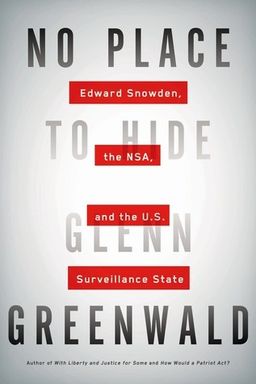
How free can you really be if someone is always watching? In No Place to Hide, Glenn Greenwald asks this haunting question and delivers a detailed exposé on the National Security Agency’s (NSA) mass surveillance systems revealed by whistleblower Edward Snowden. The book argues that the right to privacy is not an outdated concept but a fundamental cornerstone of human freedom—and Greenwald shows how the U.S. government systematically dismantled that freedom through technological omnipresence, secrecy, and media complicity.
Greenwald contends that post-9/11 America transformed its intelligence agencies into instruments of total surveillance, capable of monitoring virtually every digital communication on Earth. Through his partnership with Snowden and filmmaker Laura Poitras, he tells the story of how they unearthed thousands of classified documents showing the NSA’s ability to “collect it all”—to see, store, and analyze any email, chat, or phone call anywhere, anytime.
The Ethical Battle Behind Surveillance
At the heart of the book lies a question about responsibility: what does moral courage look like when faced with the machinery of secrecy? Greenwald presents Snowden as the epitome of conscience—a young NSA contractor who was willing to sacrifice his career, his safety, and possibly his liberty to reveal government wrongdoing. Snowden’s dilemma mirrors one faced by whistleblowers such as Daniel Ellsberg (who leaked the Pentagon Papers in 1971) and Chelsea Manning (who disclosed classified war documents)—people who decided that fidelity to truth outweighed obedience to authority.
Greenwald invites readers to see Snowden not as a fugitive but as a modern-day citizen philosopher. Snowden believed the surveillance state had grown beyond democratic oversight and that its existence posed a global threat to privacy, autonomy, and dissent. His choice—handing over evidence to journalists rather than politicians—was deliberate, signaling a belief that journalism, when done properly, could be the last line of defense against unchecked power.
A Journalist in the Crosshairs
Greenwald’s own story becomes a test of that freedom. When he joined Laura Poitras to meet Snowden in Hong Kong, he was thrust into what felt like a real-life spy thriller—complete with encrypted chats, coded signals (a Rubik’s Cube used as an identifier), and the constant fear of surveillance. But beyond this cloak-and-dagger drama, he experienced firsthand the pressure journalists face when reporting truths that challenge state power. The hostility he later endured—from politicians, pundits, and even other journalists—became a crucial part of the book’s argument: the press, once seen as a watchdog over government, had largely become its lapdog.
Greenwald describes mainstream American outlets like The New York Times and Washington Post as organizations too close to the powerful to act independently. They often consult the government before publishing sensitive leaks, allowing officials to determine which truths reach the public. His experience with the Snowden files convinced him that true journalism requires confrontation, not collaboration, with authority.
The Broader Impact: Privacy and Power
What’s at stake in this story extends far beyond government spying. Greenwald explains that constant surveillance does not merely record behavior; it reshapes it. Drawing on thinkers like Michel Foucault and Jeremy Bentham, he argues that when people know they are being watched, they internalize authority—they censor themselves, conform, and fear dissent. This chilling effect turns citizens into compliant subjects, allowing those in power to rule more easily.
For Greenwald, privacy is not about hiding; it’s about having room to think, to experiment, to be truly free. Without it, democracy withers, and dissent dies in silence. The Snowden revelations, then, are not simply stories of political scandal—they’re existential warnings about the future of liberty in a hyper-connected world.
Why It Matters to You
If you’ve ever felt uneasy about how much technology knows about you, or wondered whether convenience comes at the price of control, this book speaks directly to that anxiety. Greenwald’s narrative is not just history—it’s an urgent call to reclaim agency. He shows that mass surveillance is not merely a technical phenomenon; it’s a culture that thrives on fear and obedience. Every text you send, every search you make, every click you perform adds to a system of visibility that erodes personal power. Recognizing this is the first step to fighting back.
“Surveillance is not only about what governments know—it’s about what they can make people do.”
Greenwald’s key warning is that invisible control breeds visible compliance. The book’s title—No Place to Hide—is not merely descriptive; it’s prophetic. If ordinary citizens don’t defend privacy now, they may wake up to a world where secrecy is the privilege of the powerful and exposure is the fate of everyone else.
Across its chapters, Greenwald combines investigative journalism, political philosophy, and personal experience to reveal how the surveillance state undermines liberty. From Snowden’s moral conviction and the NSA’s “collect it all” culture to the complicity of corporate media and global governments, the book delivers both a warning and a manifesto for resistance. It challenges you to ask one unsettling question: if the most powerful institutions on Earth already know everything about you, what remains of freedom itself?