
Idea 1
The Credo Paradox and Its Cost
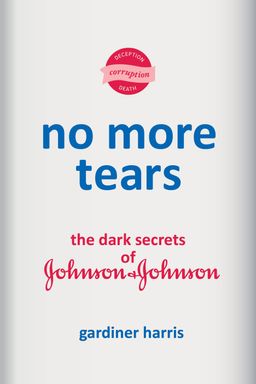
How can you tell the difference between a company that lives its values and one that uses values as armor? In this book, the author argues that Johnson & Johnson perfected a powerful duality: a public “Credo” of patient-first ethics that won extraordinary trust, and a private playbook that repeatedly compromised science, pressured regulators, and marketed risk to grow markets. The core claim is simple but unsettling: J&J’s trust doesn’t just attract customers—it shapes the decisions of doctors, regulators, journalists, and judges, allowing the firm to endure or even prosper through scandals that would sink others.
You learn how this paradox forms, why it persists, and how it affects you as a patient, clinician, or policymaker. The narrative threads through talc and baby powder, the 1982 Tylenol murders, biotech and oncology (Procrit/EPO), psychiatry (Risperdal), opioids (Duragesic, Nucynta, and the poppy supply chain), medical devices (Pinnacle hips, Prolift mesh), a contraceptive patch (Ortho Evra), and even the Covid vaccine. Across them runs a pattern: manipulate testing standards, suppress or delay evidence, seed science with paid influence, litigate to block rivals, and lean on a revered brand to disarm skepticism.
The Credo as Strategic Shield
J&J’s Credo—etched in stone at headquarters—teaches employees that the company puts patients first. The iconic Tylenol recall in 1982 became a corporate parable: James E. Burke pulled millions of bottles and pioneered tamper‑evident packaging, earning a Harvard case study and decades of goodwill. That story, repeated at every onboarding, functions like a moral inoculation: when crises come later, people remember Tylenol and give J&J the benefit of the doubt.
Yet the book shows the same firm quietly redacted talc lab reports, told Mount Sinai researchers to retract talc findings, and ran covert campaigns to widen risperidone use. You watch executives invoke the Credo while organizational routines—PR vetting, selective testing, lawyered submissions—permit misdirection. The paradox isn’t that J&J never does the right thing; it’s that the story of doing right becomes a shield behind which it too often gets away with doing wrong.
A Playbook That Repeats
The playbook recurs across different businesses. In talc, the industry adopted J4‑1, a weak asbestos test that misses contamination. In drugs, you see trial suppression (EPO/Procrit) and “sell the symptoms” promotion (Risperdal) that targets children and the elderly. In opioids, J&J supplies precursor alkaloids from Tasmanian poppies, markets Duragesic and Nucynta with safety spins, and sues to delay generics. In devices, the 510(k) shortcut greenlights implants based on “substantial equivalence,” and J&J leverages seeding trials, ghostwriting, and underreported failures (Pinnacle hips, Prolift mesh). In women’s health, Ortho Evra masks estrogen exposure with a buried “correction factor.” Even the Covid vaccine chapter shows quality lapses at Emergent, dose destruction, and safety pauses undermining a shot at redemption.
Across these episodes, the regulatory setting matters. The FDA’s cosmetics office was underfunded; device reviewers depended on user fees; political appointees curtailed ad enforcement; and agency leaders had conflicts (Arthur Hayes) or leaned on industry to secure budgets (Margaret Hamburg’s AdvaMed deal with help from Alex Gorsky). When watchdogs need what the watched can supply—data, fees, or political cover—independence erodes. Weak tests get institutionalized, and risky products sail through.
Why This Matters to You
If you are a patient, you may assume household brands and FDA stamps equal safety. If you are a clinician, you may rely on CME and respected speakers who are, in fact, sponsored. If you are a policymaker, you may read “stakeholder” comments that are really market-defense briefs. The book asks you to invert the usual question. Don’t ask, “Is the product approved?” Ask, “What evidence sits behind the approval, who paid for it, what got buried, and how did the company shape the testing rules?”
How to Read the Rest of the Story
You’ll first see how talc—wrapped in a mother‑baby scent—hid asbestos debates for decades. You’ll revisit Tylenol 1982 with new eyes: yes, courageous recall; also missed distribution clues and early absolution from a conflicted FDA chief. You’ll then track biotech triumph turned tragedy (EPO), off‑label psychiatry (Risperdal), and opioids, where J&J’s reach spans from engineered poppy fields to prescriber lists (Andrew Kolodny calls J&J a “kingpin” because of scale and supply). You’ll enter the device world’s permissive 510(k) lane, where metal hips and pelvic meshes harmed thousands while sponsored surgeons fronted the science. You’ll close with Ortho Evra’s concealed estrogen and J&J’s Covid vaccine stumble, which tie back to an enduring theme: trust without transparency creates systemic risk.
Key Idea
The Credo is both aspiration and strategic shield. When a revered brand lowers your skepticism, you must increase your scrutiny.
(Note: If you’ve read works on corporate mythmaking—like James Stewart on Enron or Andrew Hopkins on BP—you’ll recognize the archetype: a grand narrative that organizes identity inside and perception outside, often masking structural failures. Here, the brand’s moral aura becomes a durable moat—until independent science, litigation discovery, or catastrophe punctures it.)