
Idea 1
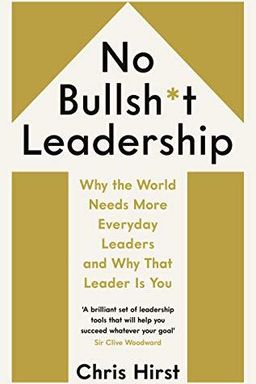
No Bullsh*t Leadership: Leading Without the Fluff
What if leadership wasn’t about charisma, ego, or grand theories—but simply about getting things done? In No Bullsh*t Leadership, advertising executive Chris Hirst argues that effective leadership is far less mystical than we’ve been led to believe. It isn’t reserved for CEOs or military generals, nor does it require a “leadership gene.” Hirst insists that leadership is a craft—a set of learnable, repeatable behaviors built around clarity, decisiveness, and the ability to create environments where others thrive.
Hirst’s message is refreshing: leadership is difficult, but not complicated. We don’t need new jargon or fancier titles; we need everyday people in every sphere—from classrooms to factories to boardrooms—to step up and learn the straightforward principles of leading well. But to do that, we have to strip away the “leadership-industrial complex,” full of consultants and fluff, and focus on what actually drives change: action.
The Case for Everyday Leaders
For Hirst, today’s world doesn’t need more hierarchical managers perched at the top—it needs what he calls everyday leaders. Anyone who has responsibility for others—a team leader, a teacher, a nurse manager, or a volunteer organizer—is leading already. The problem is, few recognize themselves as such because most leadership discourse feels alienating. Leadership isn’t about having the loudest voice; it’s about taking responsibility, setting clear direction, and turning talk into tangible progress. Leadership by consent, not by command, is the new reality of modern organizations.
Cutting Through the Noise
Traditional leadership literature, Hirst warns, has put the idea of leadership on a pedestal. Many books and MBA programs have reduced it to buzzwords—"vision statements," "synergy," "mission alignment"—that cloud rather than clarify. The author’s antidote is to reframe leadership as navigation: moving a group of people from a starting point (A) to a clearly defined destination (B). Once you know where you are and where you’re going, your job is to guide, motivate, and empower your team to get there. Everything else—strategy decks, brainstorming sessions, or culture-building exercises—means little without action.
That pragmatic outlook permeates the whole book. Hirst encourages bias toward momentum over perfection, simplicity over jargon, and humanity over hierarchy. Instead of waiting for the perfect strategy, a good leader decides fast, acts fast, and learns fast. He draws from dozens of examples—from IBM’s 1990s turnaround under Lou Gerstner to England’s 2018 World Cup penalty shootout triumph—to show that effective leadership thrives under pressure when clarity and execution trump complexity.
A Blueprint for Action-Oriented Leadership
Across eight concise chapters, Hirst constructs a roadmap for results-driven, human-centered leadership. He begins by dismantling the myth of the "born leader" (Chapter 1), then defines the purpose of leadership as a simple journey from present state to desired future (Chapter 2). From there, he dives into decisive execution (Chapter 3), demonstrating that leadership is the art of getting things done—and that doing beats endless planning every time. Chapters 4 and 5 explore how to build winning cultures and attract the right people, while Chapter 6 focuses on endurance—leading requires both energy and resilience. Chapter 7, “Leading Yourself,” is a deep reflection on how leaders can sustain themselves mentally, physically, and emotionally, rejecting the glorification of burnout. Finally, Chapter 8 translates these lessons into the art of leading change.
Why It Matters Now
In a time of constant disruption—political divides, digital transformation, and workplace evolution—Hirst’s message feels urgent. Leadership has been mystified into paralysis; people are too afraid of being wrong to act decisively. His framework remakes leadership into something accessible and actionable: know yourself, decide quickly, support your people, and keep moving forward. “Leadership,” he writes, “is the art of getting stuff done.” It’s messy, imperfect, and full of mistakes—but it’s also deeply human.
By demystifying leadership, Hirst democratizes it. He tells readers that you don’t have to wait until you’re promoted or perfect to lead. You just have to start—today—with clarity, courage, and care for those around you. As he concludes, the growing good of the world depends on everyday leaders—ordinary people who choose to act, improve, and persist, even when no spotlight shines on them. No bullsh*t required.