
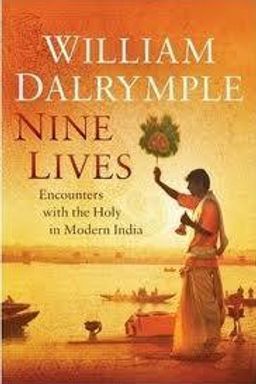
Nine Lives cover

Nine Lives

by William Dalrymple

Nine Lives by William Dalrymple takes readers on a spiritual journey across India, exploring the lives of individuals whose faith defies traditional norms. Through their stories, discover how spirituality shapes personal identity and offers resilience amidst societal challenges.

Living Faiths of South Asia

What does it mean for belief to take flesh, to anchor itself in bodies, crafts, and performances rather than textbooks? In William Dalrymple’s sweeping exploration of living religiosity across South Asia, you discover communities where ritual, art, and human vulnerability become theology in action—from Jain nuns fasting to death, to Dalit dancers manifesting gods, to Sufi women remaking faith amid violence. The book asks you to see religion not as abstract doctrine but as a network of embodied practices that express power, ethics, and imagination.

Embodiment as theology

Across these stories, belief is lived with the body: Prasannamati Mataji plucks hair in renunciation, Hari Das dances as theyyam at midnight, and Lal Peri spins in dhammal until trance becomes compassion. Every gesture teaches that faith is experienced through movement, art, and sacrifice. Even bronze sculptors in Swamimalai treat molten metal as divine matter—their casting process a ritual of birth. Religion here is crafted, performed, and sustained through daily physical discipline.

Sacred paradoxes

Dalrymple reminds you that purity and stigma coexist in South Asian faiths. Jain ascetics idealize non-attachment but weep at loss; devadasis begin as consecrated dancers but end as social outcasts; Tantrics work in cremation grounds to awaken compassion through taboo. The sacred is not tidy—it thrives in contradiction. Protest and devotion, eroticism and asceticism, political reform and mystical surrender all occupy the same spiritual stage.

Ritual as political and ethical technology

Faith becomes a social language. Theyyam performances invert caste hierarchies by making Dalits divine; chariot festivals enact civic unity by letting every villager see and touch the god; Sufi shrines offer refuge from war and misogyny. Every ritual carries moral and political critique—the possibility to reimagine power through sanctity. (Note: Anthropologists like Victor Turner argue that festivals create "liminal spaces"—temporary equality where communal repair begins.)

Continuity and erosion

Many traditions in the book survive under pressure—globalization, poverty, censorship, militancy. The bronze-casters fear loss of lineage to tourism; the bhopas of Rajasthan adapt oral epics for tourist audiences; Sufi shrines face bombings from reformist Islamists. Yet there is resilience everywhere. Ritual persistence becomes cultural resistance: singing, fasting, dancing, sculpting—all sustain identity against homogenizing modernity.

Journey through extremes

You travel from Sravanabelagola’s austere asceticism to Tarapith’s skull-laden Tantrism, from Rajasthan’s bardic deserts to Sindh’s ecstatic pluralism. Each stage expands your sense of where sanctity resides. Jain sallekhana shows transcendence through discipline; Baul songs express transcendence through love; Sufi dhammal gives transcendence through communal ecstasy. The book’s hidden map is really the geography of spiritual improvisation—how religion survives by adapting form but keeping emotional truth.

The moral core

Underneath every chapter, you glimpse an ethical pattern: attention to others and acceptance of suffering as gateways to wisdom. Whether feeding pilgrims, sculpting idols, or singing of inner divinity, these practitioners turn devotion into service. Dalrymple’s central insight is simple but profound: South Asia’s faiths endure because they are lived, not merely believed. You come away understanding that holiness here is not about escaping the world—it is about engaging it fully, with body, voice, art, and compassion.


Renunciation and Ethical Discipline

Prasannamati Mataji’s Jain practice exemplifies an extreme ethic of detachment: a life staged through initiation, austerity, and eventual fasting to death. Jainism transforms asceticism into a disciplined technology of liberation. You watch Renunciation unfold from diksha—a ritual shedding of worldly identity—to sallekhana—the voluntary fading away of bodily desire. These acts demonstrate the Jain principle of aparigraha, non-attachment, as both moral ideal and embodied challenge.

Diksha: identity transformed

When Rekha becomes Prasannamati, her hair is plucked out, her jewelry replaced with ritual tools, and her status publicly reshaped. The ceremony converts pain into symbolic rebirth—the individual is inserted into a moral community committed to pure conduct. You realize initiation is not just theatrical; it is an ethical reprogramming that teaches endurance and public accountability.

Sallekhana: death as discipline

Fast unto death shocks modern sensibilities, yet Jains see it as consummate self-control. Prayogamati Mataji’s final months—slow fasting under supervision, balance between resolve and suffering—reveal how the ritual refuses despair and sanctifies choice. It is not suicide but ritual completion, a passage into liberation through bodily mastery. (Note: Similar voluntary death disciplines existed in Buddhist and Stoic contexts emphasizing noble cessation.)

Human paradox and emotion

Despite doctrine, human attachment remains. When Mataji weeps for her dying friend, you witness compassion defeating orthodoxy. Jain renunciation thus balances emotional truth with metaphysical aspiration. It reminds you that ascetic ideals are not suppressions of feeling but frameworks for transforming it into ethical understanding.


Ritual, Theatre, and Social Reversal

In North Kerala’s Theyyam, gods descend into the bodies of Dalit performers. Hari Das’s trance shows that ritual can be politics in disguise—a spectacle that reverses caste hierarchies and reclaims dignity for the marginalized. Theyyam turns performance into revelation: momentary possession becomes moral redress.

The craft of possession

Ritual detail matters: drum rhythms, mirror crowns, turmeric, and thottam chants evoke gods like Vishnumurti or Chamundi. Possession is learned—technical precision invites the deity. It’s both art and transcendence: you see how embodied expertise accesses sacred authority without priestly mediation.

Caste inversion and protest

Theyyam’s real miracle lies in its political symbolism. Dalits become gods; Brahmins bow. Stories of Pottan Theyyam lampoon scholarly pride. This inversion, though brief, provides community healing and moral satire—a ritualized rebellion where equality appears through divine theatre.

Dual lives and endurance

Hari Das works as a jail warder the rest of the year. His alternating identities—god and laborer—reveal both empowerment and precarity. Theyyam dignifies him spiritually, even as economic hardship persists. You learn that ritual performance can sustain psychological survival amid structural inequality.


Sacred Decline and Reform

Through Rani Bai’s life as a devadasi, you glimpse a tragic shift where sacred vocation decays into social vulnerability. The devadasi once served gods and received royal patronage; today many serve men and face stigma. Dalrymple situates this change within poverty, gender, and failed reforms—where morality replaces economics as policy driver.

From prestige to exploitation

Medieval temple dancers were respected artists; by the twentieth century, dedication often meant coerced sex work. Rani Bai’s coerced childhood dedication and later life of disease and abandonment expose how ritual sanctity became a vehicle for patriarchal control. Reform without social safety nets worsened suffering.

Persistence under prohibition

The 1982 Karnataka Act banned dedication but didn’t erase practice—families still dedicate daughters under economic pressure. Criminalizing priests without offering livelihoods repeats the cycle of poverty. This story critiques a moralistic approach to reform divorced from material rehabilitation.

Health and compassion

Devadasi communities suffer high HIV rates and social abandonment. NGO doctors and activists replace religious hierarchies as new healers. Rani Bai’s endurance becomes emblematic: faith and survival persist despite systemic neglect—a call to link ethics with empathy rather than punishment.


Oral Tradition and Living Memory

Mohan Bhopa’s chanting of the Pabuji epic shows religion as storytelling in motion. Rajasthan’s bhopas preserve myth through art—the seventeen-foot phad acting as temple, map, and mnemonic. The oral tradition transforms narrative into ritual service: remembering becomes worship.

Phad as living scripture

When the phad is unfurled, incense lit, it becomes divine ground. This textile merges aesthetic form and ritual function—an artistic theology replacing stone with fabric. The bhopa’s voice activates the gods; the recital heals animals and wards spirits. It’s both myth and medicine.

Transmission and adaptation

Family training maintains accuracy, yet modern media threaten mnemonic skills. As youth drift to screens, oral epic faces erosion. Adaptations—shorter performances, tourist versions—reflect survival instincts rather than degradation. (Note: Similar transitions occurred in Homeric and Mongolian storytelling traditions.)

Usefulness as survival

Bhopas sustain their lore because it remains functional—it heals, entertains, and offers communal identity. Mohan’s life teaches that sacred art endures when it meets daily need: utility becomes sanctity’s best defense.


Syncretism and Resilience

At Sehwan Sharif, Lal Shahbaz Qalander’s shrine defies division. Hindus and Muslims pray together, women dance, malangs heal the possessed. Lal Peri—the Red Fairy from Bihar—embodies feminine devotion turned sanctuary. Dalrymple portrays Sufi culture as a bridge against exclusion and violence.

Dhammal and healing

Music and movement produce trance states where suffering converts to release. The dhammal’s rhythmic ecstasy operates as therapy—spiritual and psychological. Possession shifts from pathology to communal catharsis.

Plural devotion

Shrine practice integrates Hindu symbols and Muslim saints, sustaining regional syncretism. You see faith functioning as hospitality—religious inclusiveness born from shared need. Lal Peri’s survival narrative confirms that sanctuaries can reforge identity beyond caste or creed.

Shrines as social hospitals

Amid displacement and attacks, Sehwan operates as refuge. Sufi devotion creates emotional socialism: service and song replace policing and exclusion. This model contrasts Puritan reformers who privilege dogma over empathy, stressing that inclusive mysticism is peace’s oldest form.


Faith Under Fire

When Sufi shrines meet militant orthodoxy, theology becomes survival politics. The destruction of Rahman Baba’s shrine and attacks on Sehwan reveal ideological wars inside Islam—textual purity versus lived devotion. Dalrymple connects modern extremism to colonial and global currents reshaping South Asian faiths.

Origins of division

After 1857, scriptural reform movements (Deobandi and Wahhabi) rejected Sufi pluralism. Imported doctrines funded by Gulf money labeled music and shrine worship as shirk. Modern violence thus reflects historical reform compounded by geopolitical aid flows.

Cultural defense

Figures like Lal Peri and Sain Fakir preserve traditions through song. Their resistance is non-violent, grounded in hospitality and reinterpretation. Singing Shah Latif’s mystical verses becomes counter-extremism: an aesthetic theology confronting literalism.

Religion lived versus religion prescribed

The conflict isn’t just doctrinal—it’s about embodiment. Deobandis prize text; Sufis perform feeling. In their clash you see modern South Asia’s core tension: script versus song, control versus compassion.


War and Moral Paradox

Tashi Passang’s story confronts the impossible question—can a monk fight? His life defies stereotypes, showing Buddhist ethics rendered in history’s crucible. Passang’s renunciation of vows during Tibet’s resistance illustrates how faith adjusts under threat while keeping moral gravity intact.

Duty versus nonviolence

Passang argues that protecting dharma can justify renouncing vows: taking on bad karma to prevent greater evil. Buddhist texts allow flexibility—monks may act when spiritual survival is endangered. Violence turns paradoxical, framed as compassion in defense of truth.

Historical trauma

The Chinese invasion and CIA-supported exile resistance pulled monastics into warfare. Passang’s service in India’s forces complicates faith with nationalism. His later remorse—mantras of repentance, crafting prayer flags—reflects how religion provides ritual repair to moral wounds.

Ethical depth

Passang’s return to vows closes a circle: from purity, to action, back to purification. His story proves that spiritual ideals survive confrontation—they bend, they do not break. Buddhism’s dynamic ethics accommodate fallibility through repentance and renewed practice.


Crafting Divinity

In Srikanda Stpathy’s bronze workshop, religion becomes metallurgy. Each idol’s birth unites artistry and theology—a lost-wax process guided by ritual law. Watching him shape a Nataraja, you see how South Indian devotion persists through technical sanctity.

Technique and ritual unity

Beeswax modeling, Kaveri clay moulds, sunrise eye-opening—all follow Shilpa Shastra rules. Craft becomes worship: the silpi acts as mother and scripture as father. When the eyes open, creation completes—a theology of incarnation through labor. (Comparative note: Medieval Europe’s icon-makers shared similar crafts of sanctified matter.)

Sensuality and beauty

Chola bronzes celebrate sacred eroticism—Shiva’s dance, Parvati’s grace. Srikanda stresses how aesthetic delight enhances devotion. In this theology, sensuality is a form of love that attracts divine attention, turning art into emotion’s extension.

Lineage and modern pressure

Global demand and caste shifts threaten this continuity, yet workshops persist through ritual precision. Srikanda’s fear of lineage loss echoes broader anxieties of modern India—will commercial faith replace lived piety? His answer: we must keep sanctity in the making itself.


Tantra, Politics, and the Margins

Tarapith’s cremation ground blurs the line between holiness and taboo. Here skulls and sacrifice awaken the goddess Tara—a fierce maternal deity bridging Buddhism and Hinduism. Devotees like Manisha Ma and Tapan Sadhu live among bones, performing rituals that scandalize outsiders but sustain marginalized believers.

Tantric logic

Tantra uses the forbidden—meat, alcohol, sex, skulls—to transcend fear and convention. Pollution converts into spiritual power. Tarapith embodies reversal as divine strategy: to find light through confronting darkness. (Note: Similar philosophies appear in Daoist alchemy and Christian mystic inversions of sin as grace learning.)

Politics of faith

Modern politicians alternately denounce and solicit Tantric help, exposing hypocrisy in secular governance. Ritual becomes a shadow politics—officials seek divine favor in secret while discrediting devotion in public. Tarapith shows religion’s endurance as tactical power for the dispossessed.

Community and care

Manisha Ma’s transformation—from abused wife to Tantric priestess—reveals empowerment in marginal religion. Her skull rituals sustain belief and solidarity among outcasts. Tarapith reminds you that faith’s margins often provide its most honest strength.


Songs of Inner Freedom

Among Bengal’s Bauls you meet religion stripped to its essence—song as philosophy, love as theology. Their wandering lives fuse Sufi, Vaishnava, and Tantric ideas into a humanist mysticism: the body as temple, music as prayer. The Bauls teach inwardness and equality through melody.

The body as cosmos

Baul songs proclaim that divinity resides within—the microcosm mirrors the macrocosm. Practices of breath and controlled love become pathways to realizing God inside oneself. This democratizes holiness: no priest, just personal experience.

Music and transmission

Blind Kanai Das and Debdas Baul keep traditions alive orally, learning through apprenticeship and festivals like Kenduli. Music acts as memory; performance becomes pedagogy. Festivals thus operate as popular universities for mystic learning.

Social philosophy

Bauls reject caste and institutional religion, living syncretically between Islam and Hinduism. Their songs of universal love prefigure secular humanism, showing spirituality as inclusive rather than doctrinaire—a lesson urgent for today’s divided world.


Movement and Sacred Time

Dalrymple closes by reflecting on mobility in South Asian worship—chariots and festivals where gods travel, people receive darshan, and sacred time opens like a window. Watching bronze icons roll through villages, you see divinity democratized through movement and rhythm.

Darshan as mutual vision

Seeing the god and being seen constitute reciprocal grace. Processional bronzes extend temple boundaries to the public sphere, making holiness accessible beyond caste walls. Vision itself becomes liberation—a metaphor of mutual recognition between deity and devotee.

Festival time

As chariots roll, generations come together—offering, dancing, and witnessing renewal. Sacred calendars structure community emotion; moments of divine openness allow wishes and reconciliations. (Victor Turner would call this the restoration of social harmony through ritual liminality.)

Social inclusion

Chariot festivals give access to those excluded from temples—untouchables, travelers, children. Movement embodies divine outreach. In these temporary transformations of space and time, faith turns into civic empathy: the whole village united by shared presence before the god.

Dig Deeper

Get personalized prompts to apply these lessons to your life and deepen your understanding.

Go Deeper

Get the Full Experience

Download Insight Books for AI-powered reflections, quizzes, and more.