
Idea 1
The Power of Teams and Real Experience
If you want to understand how work really happens and how people truly thrive, stop staring at company logos and slogans. Marcus Buckingham and Ashley Goodall argue that the human experience of work doesn’t depend on a company's glossy “culture” story—it depends on your immediate team. Your team is the smallest unit of truth. It’s where you actually experience clarity, support, recognition, and growth every day. Rather than chasing abstractions about corporate culture, the authors urge you to measure what’s real—the lived experience inside teams.
Culture Is Local
The common belief that company culture determines employee happiness is mistaken. Through stories like Lisa’s—who left Company A for Company B and regretted it in under two weeks—the authors show how little corporate mission statements protect you from poor local managers. Lisa’s story illustrates that while companies announce their values, it’s the micro-world of your immediate team that defines whether you feel trust, confidence, and belonging. External symbols like on-site perks or "Leadership Principles" might signal how executive teams want to be seen, but the actual experience is shaped moment to moment by how colleagues and managers behave.
Measure What Matters
The authors’ multi-company data reveal that the variation in engagement and trust within teams inside the same company far outweighs the variation between companies. Cisco’s Krakow teams, for example, showed radically different clarity and confidence scores, proving that team identity is a stronger predictor of engagement than corporate culture. This discovery led to a practical reframe: instead of asking if the company is a great place to work, ask if your team is a great place to work. Team-level measurements become the most actionable data any leader can track.
Reliable Data and Real Signals
To understand engagement and performance, you must measure individual experience—not external ratings or personality projections. The authors’ ADP Research Institute identified eight engagement items that accurately predict sustained team performance. These items fall into two groups: “We” (mission enthusiasm, shared values, teammates’ support, confidence in the future) and “Me” (clarity, strengths-use, recognition, and growth). Together, they track how communal and individual experiences create thriving teams.
From Myth to Measurement
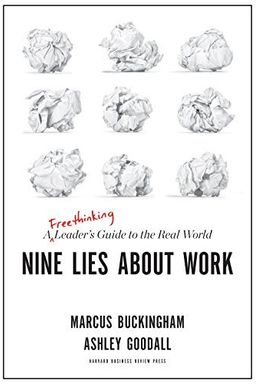
This inversion—focusing on team over company, experience over abstraction, and measurement over myth—defines the book’s central theme. It pushes you to confront the limits of old HR narratives and adopt a more precise view of human data: reliable, variable, and valid signals that reflect real experience. The authors extend this principle from engagement surveys to feedback systems, performance ratings, and leadership development, arguing that only data grounded in personal experience and intention can produce meaningful insight. When companies design work around these truths, they make teams the center of culture and measurement the center of trust.
Core Idea
Culture doesn’t live in headquarters—it lives in teams. Engagement, trust, and performance emerge from daily local experiences. Measure those honestly and you’ll understand—not mythologize—how work actually works.