
Idea 1
Harnessing Real-Time Media Through Newsjacking
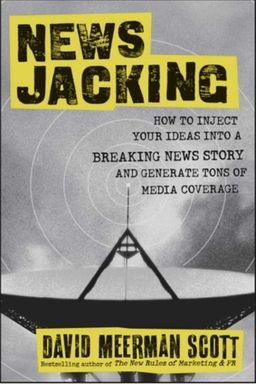
Have you ever wondered why some brands or individuals dominate the headlines even when the story isn't about them? In Newsjacking, David Meerman Scott reveals how, in today’s hyper-connected, real-time world, anyone can inject their ideas into breaking news to earn global attention, shape narratives, and even generate business results worth millions. He calls this strategy newsjacking — the art of hijacking a news story as it unfolds to spotlight your message, brand, or cause.
Scott argues that the rules of public relations and media have fundamentally changed. Traditional campaigns built on long timelines and scripted communication are being disrupted by an environment where news evolves by the minute, spread by journalists, bloggers, and social media users across the globe. The result? Speed now beats size. A lone blogger, nimble business, or alert entrepreneur can outshine multinational corporations simply by reacting smarter and faster to the world’s stories.
The Real-Time Revolution
Scott opens the book with vivid examples that explain how newsjacking works. When Texas Governor Rick Perry announced his candidacy during the 2011 Iowa Straw Poll, he hijacked Michele Bachmann’s big day without setting foot in Iowa. The media narrative instantly shifted—what mattered wasn’t Bachmann’s win, but Perry’s timing. Similarly, Wynn Resorts leveraged Paris Hilton’s arrest by banning her from its properties, turning the spotlight on its brand. Oakley climbed to the top of international coverage when Chilean miners emerged from darkness wearing Oakley sunglasses—a tiny act of generosity worth $41 million in exposure.
These stories underscore Scott’s claim that it no longer matters whether you have deep pockets or existing insider connections. If you’re observant, creative, and quick, you can harness breaking news to elevate your message above the noise.
Owning the Second Paragraph
The heart of newsjacking lies in what Scott calls “owning the second paragraph.” Journalists scrambling to report breaking news can easily find the basic facts—but they’re desperate for credible voices to add depth and context. If you can provide meaningful insight or an expert opinion right as the story unfolds, you’ll likely become that “second paragraph.” Your words will appear in coverage worldwide, offering colossal visibility.
The London Fire Brigade nailed this technique when it newsjacked the story of Kate Winslet rescuing Richard Branson’s mother from a house fire. Within hours, they invited Winslet to firefighter training, turning the event into a global public safety message. Millions saw three life-saving tips embedded in stories about Winslet’s heroism—an enormous win at virtually no cost.
From Random Acts to a Repeatable Method
Scott explains that what used to be isolated PR stunts by media insiders is now a reproducible system anyone can master. Modern tools—Twitter, Google Alerts, RSS feeds—let you monitor news in real time, spot opportunities, and act instantly. It’s a method built for the digital age. Whether you’re a nonprofit reacting to legislation, a business responding to competitors, or an individual hoping to build personal influence, newsjacking is your chance to play in the same media sandbox as billion-dollar companies.
The book encourages readers to build an ecosystem ready for quick responses: follow key journalists, track industry keywords, use hashtags, and prepare to post immediately. Timing matters more than perfection—the first strong reaction beats the slow, polished one.
The Promise and Peril of Speed
Scott doesn’t shy away from the risks. Real-time engagement can backfire if done carelessly. Kenneth Cole’s misguided tweet linking Cairo’s Revolution to his spring fashion line is a cautionary tale—a tone-deaf joke that damaged brand reputation overnight. Newsjacking is powerful, but it demands empathy, taste, and discipline.
When done right, however, it rewards courage and creativity. The CEO of Eloqua, Joe Payne, turned a competitor’s acquisition announcement into a million-dollar opportunity by blogging immediate, expert commentary. Larry Flynt, the unapologetic publisher of Hustler, used newsjacking repeatedly to champion free speech and expose hypocrisy, from offering Anthony Weiner a job to inserting Hustler’s brand into the Jersey Shore media fray.
Why It Matters Now
Scott’s central insight is that the communications landscape has democratized. Everyone—including you—can be a player in the global conversation. Newsjacking levels the playing field, helping small voices punch above their weight. It’s not only a marketing tactic; it’s a mindset that thrives on agility and awareness. Whether you want to elevate your business, your cause, or your career, learning how to react strategically to current events can generate exposure worth millions and transform your media influence overnight.
Across the chapters, Scott provides the playbook: how to monitor news streams, build real-time communication capabilities, act without bureaucratic approvals, and maintain credibility under pressure. Newsjacking teaches you that attention is up for grabs—the only question is whether you’ll be quick enough to seize it. In an era where headlines shift every hour, those who can adapt fastest will command the spotlight. That’s the new rule of media, and Scott’s mission is to teach you how to play by it.