
Idea 1
Freedom, Guilt, and Choosing the Pack
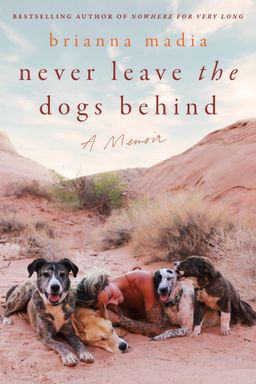
When the world unravels, what compass do you trust to find your way back to yourself? In Never Leave the Dogs Behind, Brianna Madia argues that the surest compass can be the living beings you love—and the wilder, wordless parts of yourself they awaken. She contends that radical freedom and radical responsibility are two sides of the same coin: to live feral and honest in the desert with four dogs is to shoulder consequences, name your grief, tell the truth, and keep choosing your pack—especially when public opinion, family, and even your own mind urge retreat.
This is not a tidy redemption arc. It’s a heat-drunk, dust-streaked meditation on agency: how to build a life in the open when shame, social media, addiction, and mania keep trying to herd you indoors. Madia breaks the spell of curated van-life mythmaking (think: the Instagrammable version of freedom) and replaces it with something more muscular and tender—freedom as daily work. Her claim is simple and bracing: the dogs saved me, and I saved myself by refusing to abandon them, or the woman I was with them.
A life rebuilt in heat and hail
Set on a nine-acre mesa outside Moab—junipers, washes, lightning that glows pink—Madia’s narrative moves between survival tasks and soul work. One page she’s engineering 840 feet of driveway around living trees, hand-hauling flagstones on a rug with Birdie tugging the other end; the next, she’s writing about the accident that shattered everything: the day her dog Dagwood went under their tire, the white lie online, the GoFundMe, and the wildfire of attention and suspicion that followed. The desert is her mirror and her proving ground. Weather is teacher. Hail forces the Jeep evacuation; monsoons flatten the shed she sweat-built; storms also burn the old script to ash.
The cost of telling, and not telling, the truth
Madia lives inside the modern paradox: to pay the bills, she turned her life into a story, and that story then tried to own her life. The partial truth about Dagwood metastasizes into a snark subreddit (“MadiaSnark”), brand cancellations, and a chilling loneliness of being everywhere seen and nowhere held (see also: Jia Tolentino’s Trick Mirror and Jon Ronson’s So You’ve Been Publicly Shamed). Her argument isn’t that the internet is evil; it’s that platforms flatten multidimensional humans into two-dimensional targets. The antidote isn’t silence; it’s fuller truth and firmer boundaries. When she finally writes, “It was us,” about the accident, it marks a pivot from performative resilience to accountable living.
Addiction, leaving, and the ethics of care
At home, Neil, her husband of a decade, unravels into alcoholism. There’s the bite mark on her hand, the smashed glass, inpatient treatment, and then COVID-era isolation that collapses support structures. She drives south to the desert with Bucket, Dagwood, and a new foster called Birdie. The separation becomes divorce, punctured by the revelation of his dating profile and a two-minute voicemail she never listens to. The lesson is harrowing and humane: you can love someone and still choose life without them; care that costs your life, and your dogs’ stability, is too high a price (compare to David Sheff’s Beautiful Boy and Al-Anon principles of detachment with love).
Making a home the hard way
Mania arrives not as a movie-scene outburst but as months of risky brightness. In that brightness she buys the land, barters an old Jeep for the last $6,000, builds a deck, strings shade, rigs solar, and then—humblingly—rebuilds after storms unmake her work. She drags a shed’s seven-foot roof up a ladder, sobs at step fourteen for lack of a socket wrench, then drives to town and finishes the job. Later, a monsoon reduces that shed to a plastic teepee. The point isn’t stoicism; it’s practice: fail–pivot–repeat. Off-grid living becomes emotional rehab via logistics: water jugs from the Shell station, $5 showers at the Aquatic Center, laundry while streaming a library-downloaded movie in the laundromat’s fluorescent calm.
Dogs, instinct, and the moral of Baja
The book’s pulse is canine. Dagwood’s dawn “rounds,” Bucket’s old-dog patience, Birdie’s comic ferocity, Banjo’s half-wolf heart—together they rewild her. She fosters eight rez puppies (through Underdog Rescue Moab) and keeps the black fluff with the white nose—Banjo—because “he looked at me as if we’d met before.” On a secluded beach in Baja, a naked stranger advances; Birdie plants herself between them and does not blink. You learn what it means to let dogs be dogs—calloused paws, cactus mistakes they only make twice—while keeping the pact: you don’t leave them, ever. That vow later keeps Brianna alive in an estate planner’s office when she realizes no one else can love these four the way she does.
Why this matters for you
If you’ve ever felt hunted by your own life—by other people’s narratives, by family belief systems, by the internet’s glare—this book offers a map. Not a tidy 7-step guide, but a lived sequence: tell the truth; choose the pack that holds you to your freest self; build what keeps that pack fed, sheltered, and safe; accept that storms erase progress; begin again. You’re invited to translate her dogs into your anchors—kids, art, a cause, the body you inhabit—and meet your freedom not as a fantasy but as maintenance. Because the desert’s law is reality’s law: nothing stays, and what stays is what you tend.