
Idea 1
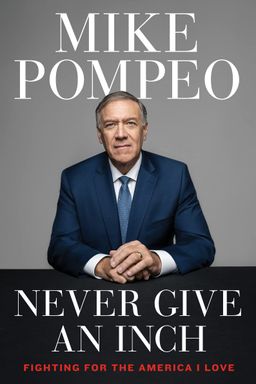
Never Give an Inch: Leadership, Risk, and Moral Clarity
Mike Pompeo’s Never Give an Inch is both a memoir and a manual for statecraft under pressure. Across roles as CIA director and Secretary of State, he argues that effective leadership demands moral clarity, disciplined risk-taking, and a refusal to concede ground—politically, operationally, or ethically. The book’s throughline is captured in its title: national security and leadership depend on the courage to draw firm lines and defend them with action, not rhetoric.
The narrative moves from clandestine missions to Pyongyang to moral debates about faith and religious freedom, building a composite picture of how power, principle, and prudence intersect. It blends battlefield pragmatism with managerial strategy, showing how leadership culture, risk appetite, and moral vision align to shape American influence abroad. Pompeo’s lesson is direct: if you want to protect freedom, you must lead from conviction, not consensus.
Leadership as calculated risk
At the heart of Pompeo’s view is risk. As CIA director, his clandestine 2018 Easter mission to Pyongyang illustrated how leadership demands entering the danger zone to reset failing paradigms. Avoiding risk, he writes, often magnifies threats. A mission can succeed only when leaders analyze odds, protect teams, and still have the courage to launch. He contrasts his approach with the previous “strategic patience” toward North Korea, which he saw as drift. For Pompeo, small, trusted teams and delegated authority turned risk into leverage.
That same mindset applies to everyday leadership: cutting bureaucracy, hiring bold performers (“pipehitters”), and empowering staff to act. It’s a culture of competence over caution. Risk-taking, when disciplined and bound by mission, becomes a multiplier of strategic advantage.
Pivoting and accountability
Pompeo extends risk-thinking to failure. When policies fail, leaders must pivot quickly—“fix, cut losses, move.” He applies this to major foreign policy shifts: abandoning the Iran nuclear deal, intensifying the fight against ISIS, and engaging North Korea from a new angle. Delayed pivots, he argues, bleed power and credibility. Leaders must identify sunk costs, reallocate resources fast, and build coalitions that support decisive change.
This pivoting mindset depends on accountability—the willingness to face outcomes directly, whether during the COVID-19 crisis, in bureaucratic clashes, or in international deals. Pompeo treats accountability as moral and strategic architecture: without it, deception flourishes, as seen in his account of China’s initial COVID cover-up and the WHO’s failure to act decisively.
People and culture as force multipliers
Pompeo’s organizational chapters explore culture-building. His signature reform at CIA was to replace paralysis with purpose, cutting approval layers and hiring operationally minded lieutenants like Brian Bulatao and Gina Haspel. At State, he sought to translate that culture into a diplomatic ethos of integrity and ownership. “Pipehitters” became a metaphor for results-oriented professionals who combine patriotism with quiet competence. He contrasts this with bureaucrats who value process over mission and moral posturing over execution.
Whether in intelligence operations or embassy management, Pompeo insists that vision without execution is just theater. To lead effectively, you must put the right people in place, remove choke points, and reward measurable outcomes. Culture, not rhetoric, determines whether institutions act with clarity or drift into self-protection.
Drawing lines and moral foundations
Pompeo links his operational worldview to deeper moral conviction. Throughout the book he argues that peace through strength and faith-centered morality are not incompatible—they reinforce each other. Lines must be drawn clearly: on Iran’s aggression, Russian expansionism, or China’s authoritarian overreach. When nations blur those lines, deterrence collapses. By contrast, transparent boundaries backed by credible action preserve peace.
His moral philosophy is anchored in faith and the idea of inalienable human dignity. He elevates religious freedom to a core diplomatic principle, supporting global ministerials and condemning abuses like China’s persecution of Uyghurs. To him, moral leadership isn’t sentimental—it’s strategic, because nations that defend conscience become more stable and trustworthy partners.
America First and prudent engagement
Pompeo frames “America First” as disciplined realism, not isolationism. Sovereignty and selective alliances define his foreign policy architecture. Allies who share burdens—like NATO partners pressed to raise defense spending, Indo-Pacific democracies aligned in the Quad, and Middle Eastern states joining the Abraham Accords—enhance U.S. leverage. Conversely, institutions that erode accountability (UN agencies, the WHO, or ICC overreach) should be challenged or reformed.
Prudence also means restraint. Pompeo advises against open-ended interventions in Afghanistan or Syria while affirming retaliatory strength (as in the Soleimani strike). American policy must pair hard power with wisdom: act where vital interests are at stake, but never promise transformation where conditions don’t allow it.
Truth-telling and presence as statecraft
Pompeo’s “hard truth” theme summarizes his China strategy: leaders must see reality as it is, not as diplomacy wishes it to be. He distinguishes the Chinese Communist Party from the Chinese people and argues that moral clarity begins with naming the adversary precisely. His Clean Network initiative, allied cooperation with Australia, India, and Japan, and bans on Huawei reflect this doctrine of truth-based action.
Lastly, he underscores the simplest diplomatic tool: show up. Physical presence—whether in Pyongyang, the Arctic, or a tiny Pacific island—signals solidarity and deterrence. Presence changes perception and shapes outcomes. To lead globally, you must be seen where stakes are highest.
In sum, Never Give an Inch is a philosophy of leadership that unites disciplined risk-taking, relentless accountability, decisive moral clarity, and visible engagement. Whether you read it as defense of America First realism or a manual on moral foreign policy, Pompeo’s argument is unmistakable: power without principle erodes freedom, but principle without courage achieves nothing.