
Idea 1
Why You Should Never Get a Real Job
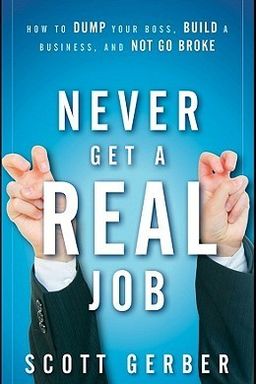
Have you ever looked around your cubicle and thought, “Is this really it?” Scott Gerber’s Never Get a ‘Real’ Job begins exactly there—with that uneasy feeling that traditional employment might not be the life you want. He argues that the 9-to-5 system, long upheld as the path to security, has become a trap that kills creativity, autonomy, and purpose. Instead of working to make other people rich, Gerber wants you to take ownership of your career—by becoming self-employed on your own terms.
According to Gerber, today’s economy no longer rewards loyalty or credentials. Globalization, corporate downsizing, and a broken education-to-employment pipeline have erased the old promise: work hard, get good grades, and a good job will follow. Millions of talented young people now find themselves unemployed or underemployed. His point? Stop waiting for an opportunity to be handed to you. Make one instead.
Rethinking the “Real Job” Myth
Gerber opens by describing his own post-college conflict with a loving but skeptical mother who couldn’t understand why her son refused to get a steady paycheck. Like most parents, she believed a “real job” meant stability. But Gerber shows that this illusion has crumbled—industries collapse, pensions vanish, and even the hardest workers can be laid off overnight. Entrepreneurship, though uncertain, now offers more control and potential than dependence on someone else’s company.
He dismantles the belief that a job is safer than entrepreneurship. Real jobs give you a “false sense of security.” You depend on one employer’s success and whims, while true entrepreneurs depend on their own decisions and adaptability. In this new economy, the only job security is self-created security.
The System That Coddled You
Gerber’s blunt, hilarious tone masks a sharp diagnosis: our generation has been coddled. Parents, teachers, and media have told us we’re special and destined for greatness, but few have taught us how to survive failure. This “everyone gets a trophy” upbringing leaves young people disillusioned when reality hits. College degrees promise dream jobs that no longer exist; debt piles up, and graduates move back home. In this environment, the entrepreneurial mindset—failure-tolerant, resourceful, proactive—is the essential survival skill.
As he quips, “Everyone poops. Yours isn’t special.” The message: entitlement is poison. You must win attention, earn trust, and prove your worth—not assume the world cares simply because you show up.
The Three-Part Journey
The book unfolds in three major sections. Part I, “The Breakdown,” smashes illusions about the job market and self-importance. Part II, “Building a Foundation,” helps you design a practical, sustainable business from scratch—even with no money. Part III, “From the Ground Up,” walks through daily survival skills: productivity, sales, marketing, partnerships, and mindset.
This isn’t a motivational anecdote collection like The 4-Hour Workweek (Tim Ferriss) or a feel-good startup fairy tale. Gerber’s manual is gritty and confrontational. He tells you entrepreneurship isn’t glamorous; it’s difficult, tiring, and sometimes humiliating—but it’s also the only way to build a life of true independence.
Learning to Think Like an Entrepreneur
Gerber’s philosophy relies on execution over ideas. Great ideas are worthless without action, and most successful companies are based on unoriginal, well-executed concepts rather than brilliant novelties. He insists that you “copy, paste, and repeat”—find what works, systemize it, and improve it. You don’t need investors, an MBA, or a Silicon Valley zip code. You need hustle, clarity, and cash flow.
Ultimately, Never Get a ‘Real’ Job is more than a business book—it’s a manifesto for the frustrated and ambitious. It teaches you how to ditch excuses, face reality, and begin building a business that sustains you. The world doesn’t owe you anything. But if you’re resourceful, relentless, and ready to work harder for yourself than you ever did for “the man,” you can design a life that pays you in freedom as well as income.