
Idea 1
The Infinite Cycle of Addiction
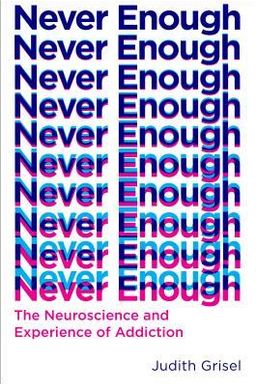
Why do we keep chasing highs that inevitably bring pain? In Never Enough: The Neuroscience and Experience of Addiction, behavioral neuroscientist Judith Grisel explores this question with the precision of a scientist and the vulnerability of a recovering addict. She argues that addiction is not simply a moral failing or a matter of weak will—it’s a predictable outcome of how the brain learns, adapts, and strives to maintain equilibrium. The tragic irony, she shows, is that the same neural plasticity that allows us to grow and learn also fuels compulsive self-destruction.
Grisel contends that the brain’s incredible ability to adapt—its homeostasis—means we cannot ever achieve a lasting high. Every surge of pleasure creates an opposing response. Each rush of dopamine, every drop of fear or pain, is followed by the brain’s countermeasure. Over time, these adaptations become permanent, making addicts need their drug just to feel normal. “There will never be enough,” her friend Steve said after a binge—and that is the law of the brain itself.
The Core Argument: Addiction as a Natural Brain Process
The book’s central claim is revolutionary in its simplicity: addiction arises from normal brain functioning gone awry. The same systems that let us learn patterns, pursue rewards, and adapt to our environment are hijacked by substances that overactivate “pleasure circuits.” When these neural pathways are continually flooded with drugs, the brain recalibrates, suppressing sensitivity and creating a state of painful deprivation in their absence. The addict’s “need” is not imagined but rooted in altered physiology.
What You’ll Learn Inside
In this summary, you’ll explore how Grisel interweaves her life story with neuroscience. You’ll learn how addictive drugs manipulate neurotransmitters, especially dopamine, the molecule of anticipation and motivation; how the brain’s reward system (the mesolimbic pathway) evolved to promote survival but is now exploited by modern chemistry; and how homeostasis, the brain’s balancing act, ensures that emotional highs must breed lows.
Grisel introduces readers to foundational principles—what she calls the Three Laws of Psychopharmacology: all drugs act by changing what’s already happening in the brain; all drugs have side effects; and the brain adapts to every drug by counteracting its effect. These laws frame addiction not as exceptional behavior but as predictable biology.
Why It Matters—The Personal and Social Stakes
Grisel’s scientific explanations are grounded in raw autobiography. She describes being a teenager who felt alienated and restless until alcohol “made life bearable,” and later a twenty-something homeless addict who realized her endless pursuit was futile. These personal moments make the science resonate deeply: addiction isn’t “bad behavior” but the brain’s desperate attempt to restore balance.
The book also challenges how society sees addicts. Neuroscience, Grisel argues, should not strip away moral accountability or human empathy. Understanding the brain’s role gives us compassion, but not excuses—it illuminates the shared vulnerability of every human mind that seeks pleasure and relief from suffering.
From Molecules to Meaning
Grisel isn’t content to just map the damage. She asks what recovery looks like in a brain that forever remembers pleasure. Some substances can be physically removed from the body; the mental circuits, however, persist for decades. Only by creating new forms of reward—through connection, purpose, and compassion—can one rewrite those pathways. “The opposite of addiction isn’t sobriety,” she writes. “It’s choice.”
The Broader Vision
In her sweeping closing chapters, Grisel turns from neuroscience to philosophy and social critique, arguing that addiction flourishes in modern isolation. Drugs are both symptom and scapegoat of a world obsessed with comfort and avoidance of pain. Our brains, designed for interconnection and meaning, struggle in a culture of consumption—and turn inward toward chemical shortcuts. Fighting this epidemic requires transforming not just individuals but environments: fostering community, compassion, and depth of experience as antidotes to alienation.
“Addiction is a natural consequence of a normal brain doing its job in an abnormal world.”
Grisel’s insight reframes our understanding: the problem isn’t the capacity to seek pleasure, but how modern life floods that capacity without meaning. Her story and science combine to offer a nuanced, hopeful view—one that demands empathy, discipline, and a recognition that freedom lies not in getting high, but in learning to live fully awake.