
Idea 1
Becoming a Person in Midcentury America
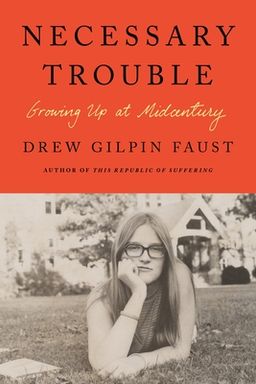
What does it take to become a person when your world keeps telling you to be something smaller? In this memoir of formation, Drew Gilpin Faust argues that making a self in midcentury America means wrestling with powerful structures—gender, race, class, war, and the Cold War—that script who you can be. She contends that you become fully human only by learning to see those scripts, resisting where they harm, and building alternative sources of authority—books, mentors, moral purpose, and solidarity—to live otherwise.
Across this story, you travel from a Virginia childhood policed by pink dresses and parietals to the shock of segregation, from family codes forged by war to summer seminars across the Wall, from local civil rights battles to Selma's long road, from campus debates and teach-ins to the generational rupture of 1968. You don't just witness history; you watch how a girl turns those collisions into conscience and vocation.
Gender: the forfeited self vs. a self in the making
You meet Catharine (Cath) Gilpin, a privileged woman trained for leisure who becomes the book's emblem of what Betty Friedan would call the forfeited self. Her finishing school in Florence (where she even pens a sympathetic essay on Mussolini), thin education, and 1950s domestic ideal shape a life of abnegation. By contrast, Drew is taught "It's a man's world, sweetie" but gradually claims space—first in barns and books, later in schools that trust girls to think and act.
Race: an awakening from the kitchen door
Segregation is everywhere and nowhere: Black household staff like Victoria, Cornelia, and Raphael Johnson feed and ferry the family yet enter from back doors. The shock arrives when a radio announces school segregation; nine-year-old Drew writes President Eisenhower begging inclusion for Black children in 1957. That letter distills a method you can adopt: measure reality against professed ideals (Christian love, American equality), and then act.
War and duty: a family catechism
The men's wars—General Lawrence Tyson losing a son in 1918; Tyson Gilpin decorated in WWII—become a moral grammar at home: stoicism, decisiveness, and guns as instruments of mercy or sovereignty. You watch a father shoot the family dog, Teddy, to end its agony and later a possum that mutilated a duck—gestures that fuse compassion and violence, duty and power. Those codes dignify endurance but can strangle intimacy.
Education and books: building inner scaffolding
With few living models, Drew makes do with paper ones. Nancy Drew offers competence and agency; Anne Frank models moral introspection; Scout Finch teaches how a child can see past a town's lies. Concord Academy under Elizabeth Hall turns reading into responsibility ("Have the courage to be disturbed"), and Bryn Mawr's student governance makes dissent a practice, not a slogan. These institutions become lifelines out of the script that shrank Cath.
Cold War crossings: freedom with complications
An integrated East–West seminar in 1963 confronts you with Checkpoint Charlie, Peter Fechter's cross-marked death, and an East German guide who defends a "freedom to" education and health care (not just a "freedom from" state power). Yugoslavia under Tito adds a nonaligned "third way": youth brigades shovel stones for the Highway of Brotherhood and Unity; camps in Dubrovnik host Egyptians, Ghanaians, Poles, and Americans. Travel dismantles binaries and exposes the costs of each system (a lesson you can apply to today's polarized debates).
Civil rights and proximity: making rights real
In Prince Edward County, white leaders close public schools (1959) rather than integrate, and courts must later force reopenings (Griffin, 1964). Northern students canvass, petition, and live with Black families as bottles fly and knives flash. In Selma after Bloody Sunday, Drew drives all night to join marchers because, as Bryan Stevenson would later say, "You have to get close." Bearing witness is not vanity; it is moral work that helps turn images into policy (the Voting Rights Act of 1965).
A generation turned by war
Vietnam makes conscience urgent and practical: draft boards, deferments, Canada, conscientious objection. Teach-ins, SDS and ERAP, and humanitarian projects (bringing injured Vietnamese children for care) entwine study and service. By 1968—Johnson stepping aside, King and then RFK assassinated—the moral map fractures. Some radicalize, some retreat, and some, like the author, choose public service (HUD) and continue to vote conscience (a Dick Gregory write-in) as hope hardens into responsibility.
Key Idea
The book's through-line is simple and demanding: structures make selves, but selves can push back. You do that by learning to see, getting close, choosing mentors and models, and translating outrage into careful, sustained work.
If you take one thing for your own life, take this: small rules teach compliance and big events tempt despair, but steady practices—reading bravely, questioning assumptions, showing up, and building institutions that trust people—can turn a forfeited self into a person with purpose.