
Idea 1
Alexei Navalny and Russia’s Battle for the Future
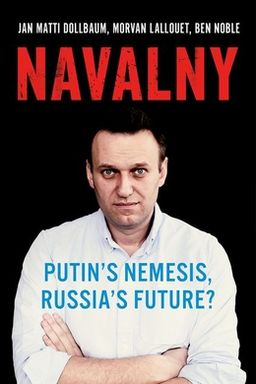
What does courage look like in a nation where speaking truth can cost your freedom—or even your life? In Navalny: Putin’s Nemesis, Russia’s Future?, Jan Matti Dollbaum, Morvan Lallouet, and Ben Noble trace the extraordinary and often harrowing life of Alexei Navalny, the man who has become the face of Russia’s democratic resistance. Through painstaking detail and balanced storytelling, the authors argue that Navalny isn’t merely a symbol of opposition—he’s a mirror reflecting the forces shaping modern Russia: corruption, authoritarianism, and a public torn between fear and hope.
At its heart, the book contends that Navalny’s rise and persecution reveal how deeply political repression, selective justice, and economic inequality define Putin’s Russia. But it also shows something paradoxical: the Kremlin’s hostility toward Navalny has, at times, made him even stronger, by sharpening his image as Russia’s conscience and empowering ordinary citizens who see their own struggles reflected in his defiance.
From Victim to Visionary
Navalny’s poisoning in 2020 and return to Moscow in 2021 could have been the end of the story—but it was, in many ways, the beginning. The authors depict Navalny as both a strategist and a survivor whose choices blur the line between defiance and moral duty. His decision to face imprisonment head-on wasn’t masochism but a deliberate act to affirm that Russia belongs to its citizens, not to its rulers. His courtroom statements, draped in humor and conviction, redefine political courage as an everyday form of truth-telling—simple, dangerous, and revolutionary.
The Book’s Core Argument
Dollbaum, Lallouet, and Noble argue that understanding Navalny means understanding how Russian power functions in practice. They frame their analysis around three intertwined aspects of his life—the activist, the politician, and the protester. Through each, they explore the institutionally closed, corrupt, and yet emotionally charged system Putin has built. Navalny’s story isn’t merely about resistance; it’s about survival within an ecosystem of selective repression, propaganda control, and managed loyalty.
What makes Navalny distinctive isn’t just his bravery, but his ability to evolve—to move from a nationalist agitator to a digital populist who weaponizes truth through technology. His YouTube investigations and crowdsourced anti-corruption projects transformed public outrage into action, a breakthrough that many Western observers interpret as evidence of Russia’s latent civil society. Yet the authors remind us that this same activism unfolds within a regime that adapts fast, tightening laws, manipulating elections, and deploying fear more precisely after every protest wave.
Why It Matters
This book matters because it helps you grasp what’s truly at stake when courageous individuals confront autocracy. Navalny’s trajectory—from liberal dreamer to nationalist experimenter, from anti-corruption crusader to imprisoned icon—embodies the contradictions of Russia itself. Understanding his story clarifies how resistance evolves when the tools of democracy are co-opted by power. It challenges readers to see that Navalny’s struggle isn’t just for Russia’s future—it’s for the very idea that truth and justice can exist inside deeply corrupt systems.
What You’ll Learn
In the pages that follow, you’ll explore how Navalny ignited political engagement through his Anti-Corruption Foundation, blending citizen journalism with data-driven activism. You’ll see how he crafted political campaigns in an authoritarian context—sometimes succeeding, often imprisoned—and how his protests redefined Russia’s civic identity. You’ll also examine his tense dance with the Kremlin: a dynamic of escalation, adaptation, and control that reveals as much about Putin’s regime as it does about Navalny’s ingenuity.
Finally, you’ll face the uncomfortable question at the center of this book: Can one man’s truth challenge the architecture of fear that defines modern Russia? If Navalny—poisoned, arrested, condemned—still smiles and says “don’t be afraid,” maybe he offers not an answer but an invitation: to imagine a Russia, and a world, where courage still matters.