
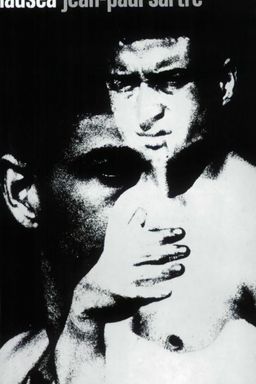
Idea 1
Facing the Absurd: Sartre’s Exploration of Existence
Have you ever looked at something—like a tree, a stone, or even your own hand—and suddenly felt that the world was strangely alien, that you didn’t belong in it at all? That unsettling moment when everything appears meaningless and surreal sits at the very core of Nausea, Jean-Paul Sartre’s groundbreaking existentialist novel. The question Sartre asks is both terrifying and liberating: What happens when you face existence stripped of its comforting illusions?
Sartre contends that human beings are haunted by the absurdity of their condition—that “existence precedes essence.” In other words, there is no predetermined meaning or cosmic order; we simply are, and only later do we create meaning through our choices. Nausea dramatizes this idea through the diary of Antoine Roquentin, a lonely historian who gradually discovers that reality itself is nauseatingly arbitrary. His revelation—that things exist without reason—becomes the perfect embodiment of Sartre’s philosophy.
Sartre’s Radical Context: Existentialism After Crisis
Written in 1938, at the edge of war and despair, Nausea reflects a Europe shaken by meaninglessness and moral collapse. In the introduction by Hayden Carruth, we’re reminded that existentialism entered the modern consciousness as both scandal and salvation. Thinkers like Kierkegaard, Nietzsche, Heidegger, and Sartre himself were united by the realization that traditional systems—religion, reason, and political order—no longer explained human life. In their place arose a frightening truth: meaning was not found but made, and could evaporate in an instant.
Sartre’s protagonist, Roquentin, embodies this modern crisis. He has traveled widely, studied history, and settled in the provincial town of Bouville to write a biography of the Marquis de Rollebon. Yet his research, his daily routines, even his memories begin to rot from within. One by one, familiar comforts—love, work, culture—lose their substance. He begins to feel that all objects “touch him,” that they exist in a way so intense and meaningless it makes him sick. The title’s “nausea” is not mere disgust but the sensation that the world is slipping free of human interpretation.
Existence Over Essence: Discovering the Raw Real
Roquentin’s moment of revelation happens one ordinary day in a park, looking at the root of a chestnut tree. At first trivial, the encounter becomes a philosophical earthquake. He realizes that the tree doesn’t “mean” anything—it simply is. Its existence is overwhelming, absurd, and utterly without justification. For Sartre, this awareness captures the essence of human consciousness: we are condemned to recognize “nothingness.” There is no design behind the world, no essence waiting to be discovered. The nausea represents not sickness but metaphysical awakening.
“Existence is what I am afraid of.”
Roquentin’s notes become the record of this transformation—from seeking meaning in history to confronting pure being. He sees that every human project, even his biography of Rollebon, was an attempt to avoid looking directly at existence. But once the veil drops, the absurdity becomes complete—and irreversible.
Why This Matters For You
Sartre’s insight is not purely bleak. Facing the absurd opens the door to freedom. If nothing has fixed meaning, you alone can choose what you become. Roquentin’s despair leads him toward creation itself: perhaps art—music, writing, imagination—can transform experience without hiding its absurdity. In the final pages, he hears a scratched jazz record. Its melody, briefly transcending decay and contingency, offers a clue. “Behind these errors, behind these decomposing sounds, the melody stays the same, young and firm, like a pitiless witness,” he writes. This art becomes a model for survival—an honest way to exist without illusion.
Throughout Nausea, Sartre delivers a psychological map for anyone who’s felt alienated, uncertain, or hollow. You’ll encounter philosophy disguised as feeling: the confrontation between being and nothingness, the falseness of social existence, and the terrifying freedom of choice. You’ll also meet ideas that would later define existentialism—human reality as self-created, the rejection of fixed morality, and the notion that we define our essence through action, not nature.
By the end of the book, Roquentin’s nausea hasn’t disappeared; it has simply evolved into awareness. He imagines writing a novel that “would make people ashamed of their existence” yet also reveal its beauty. For Sartre, to live authentically is not to escape the absurd, but to embrace it and create meaning anyway. This is the difficult courage existentialism demands—and the strange freedom that awaits on the other side of despair.