
Idea 1
Structural Violence and the Making of Bigger Thomas
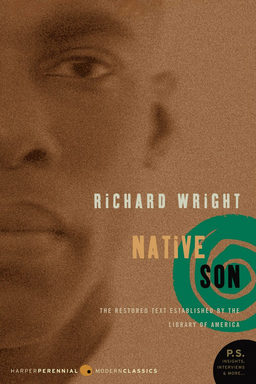
How does a society create the very violence it condemns? In Native Son, Richard Wright argues that Bigger Thomas is not an anomaly but a product — a young man pressed into brutality by segregated space, economic confinement, and cultural denial. The novel asks you to see Bigger’s crimes not simply as moral failures but as responses to an impossible environment that denies him dignity, imagination, and moral mobility.
A social system that manufactures desperation
Wright begins in a single cramped room on Chicago’s South Side: four people, one bed, one skillet, one rat. From this space grows a world of constraint. The city operates as a machine of segregation—its streets, rents, and color lines ensure the Thomas family never escapes the 'Black Belt.' Wright shows how housing policy, economic exploitation, and public ideology fuse into a total environment that shapes habits of thought. Bigger’s choices—whether to take a relief job or risk a robbery—unfold with mathematical predictability under economic and racial pressure.
(Note: Wright’s naturalist technique recalls authors like Émile Zola or Theodore Dreiser, using environmental determinism to expose structural injustice.)
From fear to fury: the inner machinery of oppression
Inside that structure lives a psychology built on fear. Bigger’s fear of white power, failure, and humiliation becomes both his defense and his curse. When he kills the rat in the opening scene, you witness his primal rhythm: violence relieves anxiety but isolates him further. The same reflex rules his later crimes. Fear makes him strike first—to control space, body, and narrative before someone else defines him.
Masculinity, rage, and the performance of power
Wright connects fear to masculinity. In the poolroom scene with Gus, Bigger must act tough to avoid shame; when Gus flinches, Bigger’s bluff escalates into cruelty. Every relationship becomes a contest over dominance. Violence becomes a language that asserts existence when no peaceful expression feels safe. By the time he smothers Mary Dalton, the act fuses panic, desire, and the assertion of selfhood—an existential protest against invisibility.
The symbolic city and its witnesses
Chicago functions like an omnipresent character. The 'Black Belt' and Drexel Boulevard embody the moral geography of racial capitalism. When Bigger crosses into white space—Dalton’s mansion—he feels naked, exposed, as if under surveillance. The YOU CAN’T WIN! poster haunts him, broadcasting the city’s verdict. Wright turns architecture, advertisements, and newspapers into active forces: messages that shape conduct as effectively as law.
A novel of systems, not excuses
Wright’s purpose is not to absolve Bigger but to relocate blame. He asks whether the social order that confines him has moral authority to condemn him. Each institution that could offer meaning—family, religion, philanthropy, law—appears compromised. The Daltons’ charity masks exploitation; the Reverend’s cross becomes both prayer and threat; the courtroom transforms into theatre. Only Max, the defense lawyer, voices the systemic argument: if you destroy the symptom without healing the cause, the cycle repeats.
Wright’s moral vision is harsh and clear: violence does not come from monsters but from social design. Bigger’s existence unmasks the everyday machinery that produces suffering and calls it order.
In sum, Native Son traces how an individual’s panic becomes public catastrophe and how private crimes reveal public conditions. You come to see that Bigger’s tragedy—his brief illusion of freedom through violence, his capture as spectacle, and his death sentence—is the predictable eruption of forces that continue to define American life: race as boundary, poverty as inheritance, and fear as policy.