
Idea 1
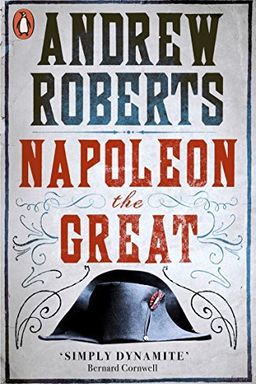
Napoleon: Outsider, Visionary, and Maker of Modern Power
How does a boy from a minor island family rise to shape the world’s most powerful empire? In this sweeping narrative of Napoleon’s life, you watch how geographic isolation, intellectual ambition, and relentless work combine to transform an outsider into Europe’s dominant figure. Napoleon’s story is not only military—it’s political, administrative, and psychological. He learns early to marry imagination to action and to treat personal destiny and national order as the same project.
Corsican roots and early ambition
Napoleon’s outsider position begins in Corsica, where poverty and pride intermingle. The Buonaparte household is small landowners in a society that prizes honor and sententious rivalry. Carlo Buonaparte’s enlightened pragmatism and Letizia Ramolino’s stoic discipline shape Napoleon’s drive; books and isolation deepen it. At Brienne and the École Militaire, his reading of Plutarch and Rousseau, his embrace of mathematics and artillery, and his habit of solitude fuse into both technical skill and romantic sensibility. He becomes self-made through study—an army officer who sees history as a stage for heroes.
That dual identity—Corsican and French, impoverished noble and technical specialist—creates an enduring paradox. It makes him ambitious yet adaptable, cynical about birth but idealistic about merit. (Note: biographers like Roberts and Grant often stress how these early contrasts fuel his obsession with control and legitimacy.)
Revolution and opportunity
When the French Revolution erupts, Napoleon recognizes an opening for outsiders: merit replaces pedigree. His quick allegiance shifts—from Corsican nationalism under Paoli to revolutionary Jacobinism—show his instinct for mobility. Toulon and Vendémiaire prove decisive: first he transforms a failed siege into victory by manufacturing artillery from scrap; then he saves the Republic by turning grapeshot on royalist mobs. Competence becomes capital, and capital becomes political authority. You begin to see his lifelong pattern: military victories fund legitimacy, and legitimacy invites institutional redesign.
Military art and administrative genius
Fast campaigns in Italy display his operational style—speed, concentration, and moral momentum. Logistics and morale matter more than sheer strength. The central position, rapid marches, and charisma yield Rivoli, Mantua, and later Austerlitz, each reinforcing his theory that leadership is both technical and psychological. Yet each triumph also teaches him governance: Italian republics, land reforms, and cultural looting become laboratories for rule. You can trace how the commander becomes the reformer.
As First Consul and later Emperor, Napoleon turns war into government. He builds the Banque de France, the prefectural network, and the Civil Code—institutions that survive him. He micromanages everything from cannon placements to ministers' theater schedules, proving that empire, for him, is management elevated to art.
Human depth and contradictions
Behind the general stands a passionate private man: his turbulent marriage to Josephine shows his emotional volatility and compartmentalization. He writes love letters while ordering battles, proving how reason and impulse coexist. His family loyalty becomes a political network—brothers on thrones, sisters as instruments, marriages as diplomacy. His tragic overreach in Spain and Russia later shows how personal ambition and dynastic politics can entangle a visionary’s judgment.
Rise, reform, fall—and legacy
From the Brumaire coup to the coronation spectacle at Notre-Dame, from Egypt’s scientific expedition to the corps system and the Code Napoléon, you watch how ideas turn to institutions and wars turn to lessons in statecraft. But those same talents—his centralization, obsession with control, and refusal to yield—ensure catastrophe at Moscow, Leipzig, and finally Waterloo. Still, exile at St Helena reconverts defeat into narrative: through dictation and reflection, he transforms imprisonment into immortality, crafting the myth that defines him today.
Core understanding
To grasp Napoleon, you must see him as system-builder and storyteller: a mind that binds administration, war, and imagination into one continuous project. He teaches both how leadership can modernize society—and how unchecked brilliance can consume itself.
His legacy outlives empire: the Code, centralized administration, and meritocratic ethos remain pillars of modern Europe. The book lets you feel conquest’s cost, greatness’s vulnerability, and the durable mark of an outsider who remade the world by sheer intellect and will.