
Idea 1
The Mind as the Master Power of Success
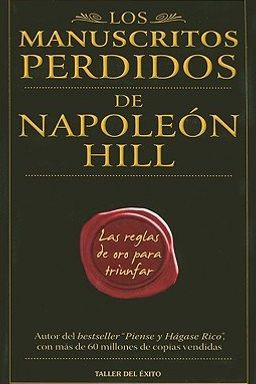
Have you ever wondered why some people seem to rise from obscurity to extraordinary success while others, equally gifted, never quite lift off? In Napoleon Hill’s Golden Rules: The Lost Writings, Hill argues that the secret lies in mastering the mind — specifically, learning to shape your thoughts through deliberate mental discipline. Every great success, he claims, begins with an idea. And every idea must be nourished through belief, desire, and harmonious action.
These early writings, composed long before his masterpiece Think and Grow Rich, contain the seeds of Hill’s entire philosophy. They draw from decades of studying over five hundred successful people, from Andrew Carnegie to Thomas Edison. Through this lens, Hill sketches a psychological blueprint for achievement, emphasizing that your dominant thoughts define your habits, character, and destiny. The same mental laws that govern prosperity, happiness, and health, he insists, are as rigid as the laws of gravity.
Mind Over Circumstance
Hill begins with the conviction that your mind is the ultimate creative agency. You may not control heredity or early environment, but you can control thought. He divides human inheritance into two types: physical heredity (traits from your ancestors) and social heredity (your learned environment). While your physical traits may be fixed, your mental and social conditioning are flexible. In short, you can make yourself what you will, mentally. All personal transformation begins by reshaping mental habits born from social heredity — the beliefs, teachings, and impressions that have molded you since childhood.
This idea echoes the essence of cognitive psychology decades later: to change behavior, change thought. Hill’s message was revolutionary for his time. He assures the reader that by deliberately injecting new, positive impressions into your mind, you can uproot old, limiting beliefs. “You are the sum total of heredity and environment,” he writes. “You can’t help how you were born, but you can change your environment, your thoughts, your purpose, your life aim.”
The Law of Mental Causation
Everything in Hill’s philosophy turns on what might be called the law of mental causation: thoughts are forces, and sustained thoughts take form in action and reality. “Like attracts like,” he repeats throughout these lessons. Your mind operates as a magnet, drawing circumstances, people, and opportunities that harmonize with your dominant mental state. This principle — later repackaged as the “law of attraction” — was not mystical for Hill. He saw it as an observable psychological law: the mind becomes what it dwells upon.
In this sense, success, failure, and even happiness are not accidents. They are the natural outcomes of controlled or uncontrolled thinking. Hill urges readers to think of the mind as a garden. Whatever seeds of thought you plant — confidence or fear, desire or doubt — will grow inevitably into results. If you cultivate weeds (worry, negativity, resentment), they will choke out constructive growth.
The Blueprint of Transformation
Across twelve major lessons, Hill lays out a blueprint for mental mastery. He begins with the dual forces that shape personality (heredity and environment), then moves into the practical tools for reshaping the mind: autosuggestion and suggestion. He demonstrates how to implant clear, definite goals into your subconscious and use repetition and emotion to transform them into reality. Later lessons explore persuasion, habit, memory, environment, and the Golden Rule as universal laws governing human progress. Each idea builds upon the last, forming a comprehensive psychology of achievement.
Hill’s central argument is inwardly democratic: no one is excluded from greatness. Whether you’re born in the mountains of Virginia (as Hill was) or in the halls of privilege, success obeys exact mental principles available to all. He weaves stories from history, ancient philosophy, and his mentors — from Socrates and Emerson to contemporary industrial giants — to illustrate that mastery over mind equals mastery over life.
Why It Matters Today
Hill wrote these essays in the early 1920s, when the modern self-help movement scarcely existed. Yet the psychological tools he proposed — visualization, affirmation, and belief-driven performance — would later be validated by research in positive psychology and behavioral science (notably by figures like Albert Bandura and Carol Dweck). The central message remains urgent: you cannot control the world, but you can control how you think about it, and thus alter your outcomes.
“You can change your environment, your thoughts, your purpose, your life aim. It’s up to you — do you want to? Then you can.” — Napoleon Hill
The abiding relevance of Napoleon Hill’s Golden Rules lies in its simplicity. Through the disciplined use of thought, feeling, and action, you can reprogram your own mind for achievement. The mind is not passive; it is the original creative force. And once you harness it — through desire, confidence, organization, and service to others — it becomes, as Hill called it, “the master weaver of both the inner garment of character and the outer garment of circumstance.”