
Idea 1
Becoming Nana: Love Without Control
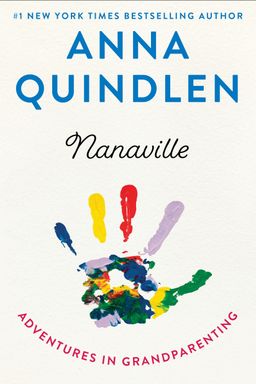
How do you love deeply without trying to control? In Nanaville, Pulitzer Prize–winning author Anna Quindlen explores precisely that question. The book is less about babies and bibs, and more about transformation—how becoming a grandmother reawakens parts of you long thought dormant while forcing you to surrender old habits of authority. Quindlen argues that grandparenting is not simply another phase of parenting—it’s a reinvention of love itself, an apprenticeship in humility, patience, and connection.
At its heart, Nanaville chronicles Quindlen’s experience as “Nana” to her grandson Arthur, who is half-Chinese, curious, fearless, and utterly himself. Through vivid storytelling—sleepless nights, language lessons, small disasters at the pool—she shows that becoming a grandparent means learning to stand back, listen, and love in a new dialect. You’re no longer the protagonist of the family story. You’re now a supporting character, a witness, a gentle guide.
The Shift from Parent to Grandparent
Quindlen begins with the moment she meets Arthur in the hospital—tiny, wrapped, and utterly vulnerable. For her, the joy is mixed with a learned restraint. As she jokes, “Arthur is not exactly my job but a good deal more than a hobby.” This sets the tone for the book's central argument: when your child becomes a parent, your role must evolve from doing to supporting, from commanding to suggesting. The lessons she learns—when to speak and when to stay quiet—become the backbone of the memoir. “Did they ask you?” a friend asks after she offers unsolicited childcare advice. That single sentence becomes her mantra. In Nanaville, Quindlen discovers that grandparenting is about showing up rather than stepping in.
Love Without Ownership
A mother’s love is fierce and directive—it tries to shape and protect. A grandparent’s love, by contrast, must be freer, unconditional, and less possessive. Quindlen writes candidly about how difficult this shift can be. You’ve spent decades being the decision-maker, the fixer, the one in charge. Now, she says, “You need to learn to follow.” This idea is echoed in every chapter—from the gentle rocking of Arthur at bedtime to the moment she dives into a pool to save him after a toddler misstep. Grandparenting, she realizes, is about being fully present but rarely in control. You watch, listen, and intervene only when truly needed.
The New Village
Quindlen also situates her reflections within the changing culture of family. Parenting has evolved dramatically since her mother’s generation, when advice came from Dr. Spock rather than thousands of online voices. Modern parents are pressured by blogs, experts, and Instagram critics; what they don’t need, she argues, is a grandparent adding to the noise. In her view, today's grandparent’s task is to provide steadiness, not more advice—quiet wisdom instead of overreach. This is part of her broader narrative on how generations coexist and redefine the family landscape.
Books, Language, and Connection
Throughout Nanaville, Quindlen returns to books as a metaphor for connection. Reading to Arthur—the same stories she once read to her sons—becomes a way to transcend time. She revisits Goodnight Moon and The Story of Ferdinand, finding in their continuity the thread of family across decades. Language itself, especially when she begins learning Mandarin to speak her grandson’s other tongue, becomes a form of devotion. “Learning Chinese was the linguistic equivalent of getting down on the floor to play with him at his own level,” she writes. Through effort and awkward pronunciation, she models love as curiosity and participation rather than instruction.
Why It Matters
Ultimately, Quindlen delivers a message about acceptance and renewal. To be a grandparent is not to relive motherhood but to reinvent it. You gain perspective: how families shift, how culture changes, how love deepens without possessing. The value of Nanaville lies in its emotional honesty. It speaks to anyone learning to let go while staying close—to every parent transitioning into a gentler kind of guidance, and to every reader seeking meaning in connection across generations. Quindlen’s world of Nanaville is intimate yet universal, a place where wisdom is less about knowing, and more about understanding that love, at its best, evolves with time.