
Idea 1
Love, Action, and Your Next Breath
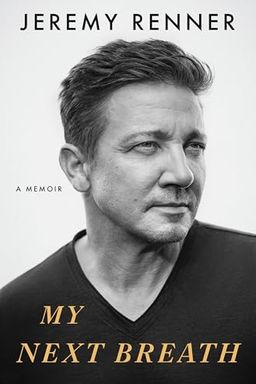
When life blindsides you, what is the one thing you can control in the next ten seconds? In My Next Breath, Jeremy Renner argues that your survival—physical, emotional, spiritual—begins with one deliberate act: claim your next breath, then the next. He contends that action, anchored in love, beats anxiety and abstraction every time. Feelings matter, he says, but only to the extent they move you to do something right now. The book is both a breath-by-breath survival manual and a field guide for turning trauma into a stronger, simpler life.
The Core Claim
Renner’s central argument is deceptively simple: love + action + breath = the only real leverage you have when everything collapses. On New Year’s Day 2023, when his 14,000‑pound PistenBully snowcat slid toward his nephew Alex, Renner leapt—not as Hawkeye, but as an uncle. He missed. The machine rolled over him, shattering more than thirty‑eight bones, collapsing his chest, and ejecting his left eye from its socket. He did not die there because he decided to manually breathe—groaning out each exhale, dragging in each inhale—while others bought him time. From that driveway to rehab to re-entry into life and work, he repeats the same pattern: choose action over rumination, and use love as fuel.
What You’ll Learn
This summary walks you through seven big ideas. You’ll start with the incident itself—how a missed parking brake became a life-altering crucible—and why a single phrase (“Not today, motherf—”) carried a whole ethic of responsibility. You’ll learn how Renner built a survival protocol from earlier life lessons—Lamaze breathing alongside his mom as a kid, years of deliberately facing daily fears, and a working actor’s “body awareness” honed on set. Then we’ll explore what he calls his “cheat codes” (“The only obstacle in your way is you,” “Milestones over tombstones,” “I’ll never have a bad day again”) and how neighbors, first responders, and family co-authored his survival.
Why It Matters (For You)
You may never face a snowcat, but you will face ruptures. A diagnosis. A layoff. A shattered plan. Renner offers a repeatable stack: inventory your body and situation, reduce panic with breath, act on the smallest winnable next step, and reframe pain as data—not destiny. He also shows how to transform a private crisis into collective healing: his daughter Ava’s promise to “wait for me,” a neighbor’s towel pressed to his skull, a community’s love that later becomes Camp Rennervation for foster youth. It’s a playbook for recovering together.
The Shape of the Journey
We’ll see Renner’s near-death experience (“taillights” of electric serenity) and what it changed: he’s not afraid of dying; he is committed to living. We’ll follow the stubborn, sometimes comic grind of healing—trying to bust out of the ICU, getting jaw screws removed with an actual Phillips head, going cold turkey off opioids—and the craft of building a new relationship with pain (he literally negotiates with his leg). Finally, we’ll land where he does: turning off “white noise,” simplifying work and time, choosing service over spectacle, and standing again—first on a driveway run, then atop the very snowcat that almost killed him.
Key Idea
“The only thing I can control in my life is my perspective. Life is simply my next step, my next breath.”
If you want a survival story, you’ll get one. If you want a method for living with more courage, clarity, and contribution, you’ll get that too. The page-by-page theme is never grandiose: do the smallest helpful thing you can do right now—with love—and let everything else cascade from that. (Think Viktor Frankl’s “last freedom” of choosing one’s attitude meets Ryan Holiday’s “the obstacle is the way,” except rendered in bone, titanium, and family.)