
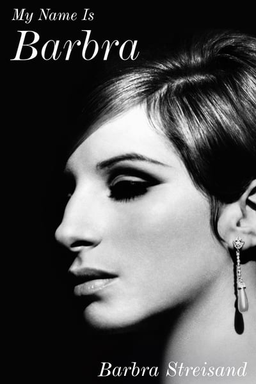
My Name Is Barbra cover

My Name Is Barbra

by Barbra Streisand

My Name Is Barbra is an intimate memoir by Barbra Streisand, chronicling her transformation from a Brooklyn girl to a cultural icon. With candid insights into her personal and professional life, the book reveals her relentless pursuit of truth, love, and artistic excellence, inspiring readers with her journey of resilience and activism.

Becoming Barbra: Identity, Art, and Control

What happens when a person grows up in loss and becomes a global figure whose every breath is public property? In her memoir, Barbra Streisand reveals that her life’s journey is not only an ascent but also a negotiation between vulnerability and power. Her story teaches you that fame doesn’t merely amplify talent—it reconfigures identity, rewrites family history, and demands a disciplined fight for truth in how you’re seen and how you create.

Childhood and the Will to Survive

Barbra’s father died when she was a year old, leaving her mother emotionally depleted and pragmatic, more concerned with bills than hugs. That sense of absence—what she calls the ache of something missing—becomes the core engine of her independence. You can see the psychology: insecurity becomes will, and silence becomes observation. She develops habits of witnessing—listening at doors, reading faces—that later serve her craft as an actor and director. (Note: psychologists often call this adaptive empathy, the transformation of vigilance into creative perception.)

Art as Self-Invention

From Berghof Studio experiments to singing in Greenwich Village’s Bon Soir, Barbra learns that artistic power comes from disciplined honesty. The Method training—Stanislavsky, Allan Miller, and a yearning for the Actors Studio—taught her that truth in performance lies in restraint and listening, not theatrical fireworks. That insight later defines her style on stage and camera: the held breath, the unforced glance, the something in nothing that magnetizes an audience. She turns self-consciousness into authenticity.

The Battle for Image and Autonomy

Public life magnifies distortion. Barbra describes early reviews calling her an "amiable anteater" and then a "Babylonian queen"—absurd extremes that show how fame both razes and idealizes identity. Her response is decisive: she drops an "a" from Barbara to become Barbra, a declaration of autonomy in name and image. She learns not to read articles about herself, keeps journals to counter gossip, and insists on creative control clauses in her Columbia contract so she can select her own material. That battle for authorship—as woman, artist, and public figure—threads through every chapter, culminating in her later fights over editing rights, lighting, and film restoration.

From Private Feeling to Public Form

Through nightclubs, Broadway, and recording studios, Barbra transforms private emotion into art. Her nightclub sets are miniature plays, built to surprise and to make audiences lean in. Funny Girl becomes a crucible of self-definition: a role that mirrors her own identity struggle as a woman both mocked and adored for being different. Even television—My Name Is Barbra—becomes a cinematic essay on selfhood, memory, and metamorphosis. All these mediums teach her that art can be autobiography disguised as entertainment.

The Feminist and the Filmmaker

Later, directing and producing let her reclaim power from traditionally male industries. Funny Girl’s film adaptation under William Wyler, Yentl’s theological and feminist reinterpretation, and The Prince of Tides’ trauma-filled emotional landscape all show her steady evolution from performer to authorial voice. Hollywood’s sexism—visible in her Best Director snub for Yentl—becomes a catalyst for activism. She articulates a philosophy: women must share power rather than imitate male competition, turning private injury into collective insight. (Compare to Joan Didion’s reflections on gender and control in film writing.)

Legacy and Purpose

By later life, Barbra fuses art and civic engagement. She raises millions through One Voice concerts, fights for women’s heart health, and builds the Barbra Streisand Institute to study truth in the public sphere. Her evolution—from anxious child to commanding director and philanthropist—teaches you the core thesis of the book: mastery is psychological healing turned outward. Fame, creativity, and activism only work when they reconnect you to what was lost—family, honesty, and a sense of human fairness.

A Core Realization

Barbra’s story insists that you must turn scrutiny into clarity and loss into art. The public may distort you, institutions may resist you, but integrity—creative and personal—remains the only lasting form of control.


Childhood and the Formation of Will

Barbra’s early years in Brooklyn create the blueprint for her lifelong resilience. After losing her father, Emanuel Streisand, before she could form memories, she grows up under emotional scarcity—her mother Diana’s practicality, her stepfather’s harshness, and the chilly home atmosphere shape a child who learns self-reliance early. You can relate to how absence teaches you strength but also breeds mistrust.

Observation as Survival

Her childhood habit of watching adults talk and seeing how words rarely match feelings becomes emotional education. Barbra studies tone and silence—and later uses that sensitivity to read directors, audience reaction, and character truth. This observational intelligence foreshadows her artistic craft.

Trauma and Adaptation

The secrecy around her father’s death creates a lifelong aversion to lies. Her tinnitus—both literal and metaphorical—represents the inner noise that comes from repressed fear. Facing a doctor alone at age sixteen cures a psychosomatic ailment, teaching her that confrontation heals. The same principle applies to art: face fear, and it transforms into performance truth.

Mentors as Surrogate Family

Tobey Borookow, Muriel Choy, Louis Rosen, Allan Miller, and Cis Corman all act as substitute parents. They teach her craft and empathy. These mentors explain her adulthood pattern—seeking wisdom and stability in older friends, in men like William Wyler or Michel Legrand, and in an ethical framework built through connection.

Emotional Lesson

If you grow up with loss, independence becomes armor—but the deep longing for unconditional care drives creative empathy. Barbra’s childhood pain becomes emotional vocabulary for every role she plays.


Mastering Performance and Creative Control

Barbra’s training, recording career, and Broadway work show her decisive evolution from student to master. She treats every stage—from The Lion to Funny Girl to Columbia Studios—as a laboratory for authenticity. Her secret is discipline in freedom: prepare thoroughly, then listen for the emotional truth inside the moment.

Nightclubs to Stage

The Bon Soir acts were her real education. She discovered how humor mixed with vulnerability could mesmerize audiences, and how timing—the held note, the improvised gesture—creates intimacy. When Marty Erlichman spotted her, he became the business guardian who amplified her artistic control.

Recording Autonomy

Her Columbia contract, negotiated to prioritize creative freedom over upfront pay, changed industry precedent. Working with Peter Matz and Harold Arlen, she recorded albums that sounded like theatrical performances rather than pop commodities. When Arthur Laurents criticized her debut album, Barbra listened but remained loyal to her instincts. Integrity mattered more than consensus.

Funny Girl’s Crucible

Broadway rehearsals under Jerome Robbins tested her ability to hold ground against directors and egos. She learned that a performer’s power lies in truth, not ornament. Robbins protected her spontaneity; Sydney Chaplin’s backstage hostility taught her about emotional safety on set. Out of chaos she found craft and courage.

Artistic Principle

Her motto—control the emotion, don’t let it control you—became a lifelong guide. From live TV specials to the restoration of The Way We Were, she proves that creative control safeguards authenticity even when critics misread it. Each risk, from improvising lines to re-editing films decades later, stems from one conviction: truth in art is an act of self-definition.


Transition to Film and Authorship

Moving from Broadway to Hollywood tested Barbra’s capacity to translate stage truth into cinematic intimacy. William Wyler’s mentorship during Funny Girl guided her into this new language: the camera as emotional listener. Cinematographer Harry Stradling developed the “Streilight” to carve her face in light, helping her merge theatrical and cinematic presence.

Learning Film Language

She learned pacing, lens awareness, and framing—skills later critical to her own directing. When she insisted on re-shooting “My Man” live, Wyler trusted her instinct. That courage established her core rule: an authentic moment justifies logistical cost. Through that scene, you see the transition from actress to auteur.

Yentl and Feminist Authorship

With Yentl, Barbra directs, writes, produces, and stars—a landmark of female authorship. She transforms Isaac Bashevis Singer’s moral fable into a modern spiritual odyssey, one where a woman’s hunger for learning symbolizes equality itself. The songs replace dialogue as inner monologue, integrating Michel Legrand’s score with theological narrative. Her scholarship on Hebrew texts and her collaboration with rabbis build the film’s moral texture. When critics questioned her right to direct, Barbra used bias as evidence: institutional sexism was the final frontier she meant to expose.

Film Restoration and Editorial Justice

Her later fight to restore The Way We Were proves the importance of authorial integrity. She reinserted political scenes removed after studio fear, wrote letters, gathered memos, and eventually convinced Sony to include her cut. That act—fifty years later—illustrates how persistence reclaims narrative truth. Editing, she learned, is moral choice as much as craft.


Art, Activism, and Public Voice

Barbra grows from artist to citizen. Her concert One Voice after Chernobyl raised funds that flipped Senate seats; her Ellsberg fundraiser helped preserve democracy. Through advocacy she converts performance into political tool, blending empathy with strategy.

Activism Through Art

Producing Serving in Silence dramatizes injustice in policy and turns entertainment into civic education. Her belief that storytelling changes hearts before laws becomes her activism’s foundation. Whether fighting for LGBT rights, climate reform, or women’s health, she aligns artistry with accountability.

Philanthropy and Institutional Legacy

She funds Cedars-Sinai’s Women’s Heart Center to correct scientific bias—calling it the Yentl Syndrome—and builds the Streisand Institute at UCLA to study truth in public life, gender equity, and climate change. These projects show that philanthropy at scale requires strategic focus, not just charity sentiment. (Compare this structured approach to the activism models of Bono or Jane Fonda.)

Artist as Citizen

Her Harvard speech, “The Artist as Citizen,” crystallizes her philosophy: art carries civic duty. The artist is a mirror to society’s conscience. Whether she’s writing letters to Bill Clinton about public policy or funding research, Barbra demonstrates how empathy can influence institutions.

Key Understanding

Fame is leverage for change. What you sing or film can raise funds, shift laws, and alter perception—proof that celebrity can have civic function when guided by consciousness rather than vanity.


Private Life, Partnership, and Emotional Growth

Barbra’s private relationships illuminate her psychology as vividly as her art. Her turbulent bond with her mother Diana explains her perpetual hunger for unconditional approval, while her partnership with Virginia Clinton and marriage to Jim Brolin show healing and maturity. These later relationships transform her life from scaled ambition to grounded affection.

Mother and Daughter Tensions

Childhood wounds—Diana’s jealousy and dismissive remarks—create Barbra’s lifelong sensitivity to criticism. Episodes like Diana leaving her opening night hurt deeply but ultimately teach forgiveness. Through therapy and taped conversations, Barbra learns acceptance without idealization: you can love without erasing the pain.

Chosen Family

Virginia Clinton becomes her surrogate mother, embodying warmth she never had. Virginia’s encouragement during concerts and simple kindness reshape Barbra’s concept of love, inspiring her album Higher Ground. This friendship validates the psychological truth that attachment can be repaired later in life.

Love and Partnership with Jim Brolin

Meeting Jim becomes a study in emotional evolution. Marriage teaches her to listen rather than win arguments, to speak truth without cruelty. Joint therapy, patience, and humor allow balance between two strong identities. For Barbra, partnership offers what fame never did: consistency and humility in love.

Emotional Takeaway

Healing relationships—not awards—complete the narrative. When you learn to forgive, listen, and share vulnerability, you reclaim the peace fame alone cannot supply.

Dig Deeper

Get personalized prompts to apply these lessons to your life and deepen your understanding.

Go Deeper

Get the Full Experience

Download Insight Books for AI-powered reflections, quizzes, and more.