
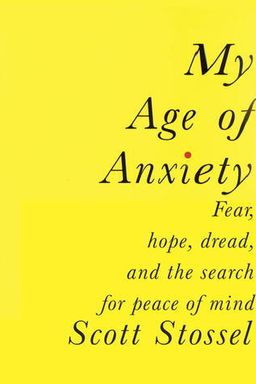
My Age of Anxiety cover

My Age of Anxiety

by Scott Stossel

In ''My Age of Anxiety,'' Scott Stossel bravely navigates his personal struggles with clinical anxiety, intertwining his journey with scientific, philosophical, and literary perspectives. This revealing exploration provides insight into anxiety''s pervasive nature and offers hope through various treatment avenues, from medication to therapy.

The Book as a Gateway: Finding the Next Great Read

How do you decide what to read next when there are millions of titles competing for your attention? This book—more a digital artifact and toolkit than a traditional narrative—invites you to think about your reading life as a journey of discovery rather than a checklist of literary accomplishments. It serves as a bridge between readers and stories, advocating for the use of technology and personalization to help you find books that truly resonate with your personal interests, moods, and life goals.

At its core, this text from Penguin Random House suggests that reading is not simply about accumulating knowledge or entertainment—it’s about connection. The platform encourages readers to shape their experience actively, using algorithms, newsletters, and digital tools to match books to their emotional and intellectual profile. The simple imperative to "discover your next great read" conceals a much deeper challenge: rethinking how we engage with stories in an era of digital abundance and personalized media.

The Modern Reader’s Challenge

We live in a world where you can open an app and be flooded with thousands of reading options—from timeless classics to the latest releases. The paradox of choice means that while there’s never been more to read, it’s harder than ever to find something that feels meaningful. This book positions discovery itself as an art. Instead of passively selecting from bestseller lists, you’re invited to refine what ‘next’ means for you—what kind of story your life is ready to absorb now.

Curation Over Chaos

Book recommendation platforms have transformed from simple catalogues into curated ecosystems. Penguin Random House’s approach highlights the importance of context and personalization: what you read depends not only on your preferences but on your evolving identity. This aligns with ideas from modern thinkers like Austin Kleon (Show Your Work) who emphasize the interplay between creativity and consumption. The invitation here is to curate your reading life intentionally, to build a library that mirrors your personal evolution.

Technology Meets Taste

Behind the scenes, the mention of CSS and font faces (Shift Light, Fort Book) isn’t just technical notation—it’s symbolic. It reflects the blending of design aesthetics with literary discovery. The digital format that frames the book reminds us that in the twenty-first century, typography, layout, and presentation shape our experience of reading just as much as words do. The book itself is an interface, not just a medium.

A Promise of Connection

The recurring phrase, “Discover your next great read,” functions almost like a mantra. It’s both an invitation and a promise—that the next book could be transformative, revelatory, or simply comforting. The text encourages you to sign up, to engage, to become part of a larger conversation about books. This isn’t passive marketing; it’s participatory culture. Much like a friend recommending a favorite novel, the system seeks to recreate the intimate, human experience of book discovery—digitally.

Why This Matters

In an era where algorithms decide much of what we watch, read, and listen to, reclaiming agency over your reading journey becomes an act of self-definition. The act of signing up to “discover your next great read” isn’t just about receiving newsletters—it represents a commitment to continuous learning and curiosity. It’s asking you to consider what kind of reader you want to be and how stories can serve as guideposts in your personal development.

“In a world of infinite choice, discovering the right book isn’t about more information—it’s about better connection.”

Ultimately, the message is simple but profound: your next book could change the way you think, work, or love. But you have to find it—and that process of discovery is one of the most joyful parts of being human.


Personalization as Empowerment

The idea of personalization runs throughout the text. Penguin Random House encourages readers to sign up for tailored recommendations, suggesting that the future of reading lies in individualized discovery. You’re not simply browsing—you’re building a unique reading identity that evolves with each book you choose.

Reading as Identity Formation

Your bookshelf reflects who you are. The platform’s promise—that you’ll get personal book picks—acknowledges this: if someone knows what you’ve read and loved, they might predict what stories you’ll connect with next. This mirrors approaches in psychology and marketing where personalization fosters trust and long-term engagement. (Note: Netflix and Spotify use similar systems—recommendations based on past behavior.)

From Passive Reader to Active Curator

The book reframes you from a passive recipient of bestseller lists to an active co-creator of your reading experience. Signing up isn’t about subscribing to advertisements—it’s about joining a conversation that reshapes how literature reaches people. You become part of a feedback loop where each choice helps refine future suggestions.

“Personalization empowers readers to craft not just a reading list—but a literary identity.”

Through personalization, the reader reclaims agency. In a sea of content, this idea stands as a reminder that your next great read shouldn’t be random—it should be chosen with intention, relevance, and resonance.


Design as Reading Experience

The detailed references to web design—fonts, colors, divs, and margins—illustrate a crucial concept: the visual experience matters as much as the written one. The design of digital books now influences how we emotionally connect with the material.

Typography and Emotion

Choosing fonts like Shift Light and Fort Book isn’t arbitrary. Each carries a specific emotional tone: Shift Light conveys modern elegance, while Fort Book evokes tradition and richness. For readers browsing online, typography subconsciously signals whether a book feels approachable, intellectual, or timeless. (This concept parallels the work of Oliver Reichenstein of Information Architects, who argues design fundamentally shapes comprehension.)

Interface as Narrative Space

By presenting book discovery through a carefully designed interface, publishers transform digital browsing into narrative experience. Every button, margin, and typeface becomes part of a storytelling ecosystem that mirrors the tactile intimacy of physical books.

“Design doesn’t decorate the reading experience—it defines it.”

Ultimately, design in this context serves as both metaphor and medium—helping readers feel connected, invited, and emotionally ready to discover something new.


Community and Connection

The book emphasizes signing up to get updates and news, transforming reading into a social act. Discovering your next great read becomes a shared journey rather than a solitary one.

Books as Social Bonds

Readers crave connection—not only with stories but with others who love them. By inviting people to join a community via newsletters and recommendations, Penguin Random House positions itself as a facilitator of literary camaraderie. You aren’t just consuming content—you’re participating in a network that celebrates ideas and imagination.

Collective Intelligence

The more people engage with the recommendation system, the smarter it becomes. Each sign-up represents not just another reader but another data point refining recommendations for everyone. The result is collective learning—an ecosystem that evolves alongside its audience.

“Reading together—even digitally—reminds us that discovery is a shared experience.”

The act of joining the community underscores a timeless truth: books thrive when people share them, discuss them, and find meaning together.


Curated Discovery

Curated discovery forms the philosophical backbone of the text. The idea isn’t merely to help you find a book—it’s to find the right book, at the right time.

Intentional Exploration

In an age of digital overload, curation is mercy. The book’s invitation to sign up is a call toward intentionality—toward making deliberate choices about what to read rather than scrolling endlessly through lists. Curators (or algorithms designed by humans with literary judgment) filter chaos into clarity.

Literary Minimalism

This approach echoes the philosophy of minimalism. Just as you declutter your home to prioritize what matters, curated reading declutters your mind. Fewer choices, better matches. It’s the literary equivalent of a well-organized playlist.

“Curation turns endless possibility into meaningful discovery.”

The core message: you deserve the right story at the right moment—a reminder that discovering your next great read is as much about timing as taste.


The Future of Reading

Finally, beneath all the technical language and promotional tone lies a vision for the future of reading—interactive, personalized, beautifully designed, and community-driven. This book foreshadows what digital publishing is becoming.

Adaptive Literacy

As you interact with platforms that learn from your interests, your reading experience adapts, helping you discover areas of curiosity you didn’t even know you had. The goal isn’t to limit choice but to refine it so each recommendation feels relevant and exciting.

Continuous Discovery

Reading will increasingly become a dynamic process—books leading you to other books organically through shared ideas, themes, and reader insights. Much like social media algorithms suggest friends, future literature ecosystems will suggest ideas that complement your intellectual journey.

“The future of reading isn’t passive consumption—it’s active exploration.”

Through this lens, the book’s technical elements become more than metadata—they become markers of transformation, indicating how storytelling continues to evolve in the digital age.

Dig Deeper

Get personalized prompts to apply these lessons to your life and deepen your understanding.

Go Deeper

Get the Full Experience

Download Insight Books for AI-powered reflections, quizzes, and more.