
Idea 1
Lawfare to Muzzle Truth
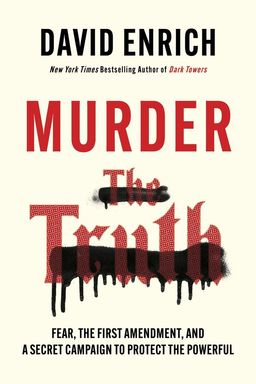
How do you protect a free press when law itself becomes a weapon? In Murder the Truth, the author argues that America’s information ecosystem faces a coordinated, well-funded campaign to weaken the First Amendment protections that enable adversarial journalism—chiefly New York Times v. Sullivan’s “actual malice” standard—and to replace them with a litigation-first regime that scares reporters silent. The project isn’t merely legal nitpicking. It blends judicial signals, political rhetoric, billionaire bankrolls, aggressive law firms, and transnational venue-shopping to raise the price of speaking truth to power.
Sullivan once insulated civil-rights reporting from retaliatory libel suits by requiring public officials (and later, many public figures) to prove a publisher knew a statement was false or recklessly disregarded truth. The book shows how determined actors now portray that standard as runaway immunity, not democratic necessity. You watch a multipronged playbook unfold: judges invite “reconsideration,” think tanks package talking points, lawyers engineer test cases, funders back long wars, and politicians turn “fake news” into policy fuel.
The coordinated legal campaign
On the bench, Justice Clarence Thomas’s concurrence in McKee (2019) and Justice Neil Gorsuch’s dissent from denial in Berisha v. Lawson offer doctrinal openings to revisit Sullivan. Judge Larry Silberman’s fiery dissent in Tah v. Global Witness goes further, branding the press a “one‑party” system and urging Sullivan’s demise. Outside the courts, the Heritage Foundation, the Federalist Society, and the Claremont Institute amplify these signals. They host panels, circulate white papers (e.g., by Carson Holloway and David Logan), and encourage state-level bills (like Florida proposals floated under Governor Ron DeSantis) that could provoke conflicts primed for Supreme Court review.
Litigation entrepreneurs and funders
You meet a cadre of lawyers—Charles Harder, Libby Locke, Tom Clare—who turned defamation into a growth business. Their method is not just winning in court; it’s imposing costs through demand letters, punishing discovery, and targeted forum choice. Peter Thiel’s stealth financing of Hulk Hogan’s case against Gawker shows how a single billionaire can bankrupt an outlet via proxy. Internationally, oligarchs like Oleg Deripaska and figures like Walter Soriano deploy elite counsel and foreign fora to suppress reporting (note: these suits often dovetail with PR offensives, extending the chilling effect far beyond the courtroom).
Rhetoric, culture, and copycat pressure
Donald Trump’s “enemy of the people” line and his promise to “open up” libel laws transformed scorn for the press into a political norm. That shift emboldened public figures—Don Blankenship, Joe Arpaio, and others—to file or threaten suits that often fail on the merits but succeed in burdening targets. The cultural delegitimization feeds the legal project; when the public doubts the press’s legitimacy, it grows easier to sell reforms that curtail its protections.
Local news as the first casualty
The book’s most wrenching scenes come from small newsrooms absorbing six-figure legal hits and advertiser flight. The Carroll Times Herald’s investigation into a local officer invited a libel suit that, even when dismissed under Sullivan, left the paper financially hobbled. The Colorado Springs Gazette’s Gold Hill Mesa coverage drew legal threats that stalled public-safety reporting. In Wisconsin, the Wausau Pilot & Review faced a costly suit and struggled to obtain libel insurance (an underappreciated pressure point). The lesson is blunt: erode Sullivan and you don’t just tweak doctrine; you gut the watchdogs closest to home.
Counter-moves and their limits
Lawmakers have pushed back on foreign venue-shopping with Rachel’s Law in New York and the federal SPEECH Act, which blocks enforcement of overseas libel judgments lacking First Amendment equivalents. Yet plaintiffs adapt, pivoting to privacy, data-protection, or malicious-falsehood claims in UK courts (the Soriano litigation against Forensic News is emblematic). Inside the U.S., uneven anti-SLAPP laws leave many outlets exposed to drawn-out suits with little chance of fee recovery, a feature—not a bug—for intimidation campaigns.
An unexpected twist: using libel to fight lies
The story isn’t one-note. The same system can hold purveyors of disinformation to account. Dominion Voting Systems’ suits—run by Clare Locke and Susman Godfrey—exposed internal Fox messages and “Brainroom” memos labeling election-fraud claims “100% false,” culminating in a $787.5 million settlement. Public-interest groups like Protect Democracy see targeted defamation litigation as a way to document, deter, and sanction mass falsehoods (compare: the Sandy Hook families’ wins against Alex Jones). The irony is intentional: current doctrine can reach egregious lies without demolishing Sullivan’s core.
(Note: The book situates this campaign alongside other coordinated constitutional projects—like those reshaping abortion or administrative law—but underscores a distinctive ingredient here: secrecy and money flows that let a few actors shift the press’s risk calculus at scale.)
Key Idea
To “murder the truth,” you don’t need censorship; you need costs—procedural, financial, reputational—high enough that watchdogs decline to bark.