
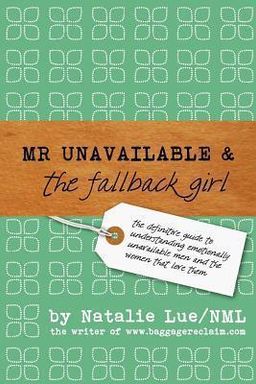
Mr Unavailable & the Fallback Girl cover

Mr Unavailable & the Fallback Girl

by Natalie Lue

Mr Unavailable & the Fallback Girl is your essential guide to understanding and escaping the cycle of emotionally unavailable relationships. With humor and tough love, Natalie Lue empowers you to break patterns and embrace love that truly fulfills.

Emotional Unavailability and the Fallback Cycle

Natalie Lue’s Mr Unavailable and the Fallback Girl explores why some people chronically fall for emotionally unavailable partners and how they can break the cycle. It’s both self-help and reality check—a manual for identifying unavailable men and confronting the patterns in yourself that keep you tethered to them. The book’s premise is simple but striking: emotionally unavailable partners can only thrive when met by emotionally unavailable seekers. Understanding that equation turns pain into power.

The Anatomy of Unavailability

Mr Unavailable is not just a man who “doesn’t want commitment.” He is emotionally, physically, or spiritually limited—someone who enjoys the perks of intimacy without its accountability. You’ll know him by the ambiguity: the on-and-off contact, vague promises, and manipulation through timing or sympathy. As Lue puts it, he sells the image of a loaf while feeding you crumbs. Recognizing the signs—hot-and-cold communication, excuses, or future faking—helps you stop mistaking intensity for intimacy.

The Making of a Fallback Girl

The Fallback Girl is the woman who waits, forgives, rationalizes, and bets on potential. She’s often shaped by parental dynamics: an absent or critical father, a self-sacrificing mother, or inherited beliefs that love must be earned. These early scripts translate into adult choices—chasing unavailable men, staying for drama, and equating attention with worth. The Fallback Girl fears being alone, so she accepts crumbs rather than risk rejection. Lue calls this “relationship crack”: the emotional highs of chaos that obscure long-term emptiness.

Recognizing the Emotional Grammar

Unavailable relationships follow a predictable rhythm—hot pursuit followed by withdrawal, the illusory reset, and dependence on drama to feel alive. You end up chasing validation instead of shared commitment. The problem isn’t just the man’s inconsistency; it’s your own participation in the pattern. Lue invites readers to see how low self-esteem and fear of abandonment keep the door open for repetitive pain. Your connection to Mr Unavailable reflects that you’re unavailable to yourself—your truth, needs, and boundaries.

How the Cycle Persists

There are several fallback roles—Yo-Yo Girl who takes an ex back repeatedly, The Other Woman chasing secrecy, the Buffer cushioning a man’s breakup, or the Renovator who tries to fix him. Each role offers temporary identity but no real intimacy. Sex, excuses, and time management all become tools of control: through timing delays (“it’s bad timing for commitment”) or keeping footholds (“let’s stay friends”). When you tolerate ambiguity, you escape the loneliness of being single but not the loneliness of being with someone absent.

The Path to Recovery

Breaking free requires turning your focus inward. Lue’s process starts with awareness—understanding your emotional inheritance—and moves through boundaries, self-esteem repair, and No Contact. Her practical steps are blunt: stop accepting “crumbs,” measure people by actions not promises, and redirect energy from fixing others to building your life. As you rebuild self-worth, you become less drawn to the dysfunctional dynamic. Healing isn’t about finding the right man; it’s about becoming emotionally available yourself.

Mr Unavailable plus Fallback Girl equals one commitment-resistant disaster. But recognizing your part isn’t self-blame—it’s your liberation. You stop chasing mirages and start valuing reality.


Spotting Unavailable Patterns

Identifying emotional unavailability early protects you from emotional drain. Natalie Lue divides unavailability into temporary and habitual. Temporary unavailability follows trauma or loss—grief, divorce, illness—and generally resolves within a few years. Habitual unavailability is a lifestyle; such partners repeat avoidance patterns, rationalize detachment, and often attract partners willing to enable them.

Common Signs and Behaviors

Unavailable men usually show contradiction: they act affectionate or discuss future plans, then disappear or backtrack. They avoid clarity, deliver mixed signals, and pull the “Bad Timing” card when commitment looms. Lue calls this the Hot and Cold Dynamic: alternating intensity with withdrawal to maintain control. These temperature shifts keep you anxious, craving the next hot phase, and mistaking chaos for chemistry.

Actions vs Words

Unavailable partners often use verbal projection—promises of shared futures—to elicit present rewards. Lue calls this Future Faking, when someone talks about marriage or moving in not to commit, but to secure short-term comfort. Fast Forwarding is the accelerated version: early intensity and physical intimacy that distract you from red flags. The cure is to slow down, observe evidence, and ensure words translate into consistent action. As she reminds readers: “No action means no relationship.”

Timing Games and Footholds

Unavailable men manipulate time—remaining perpetually “busy” or using timing as justification for avoidance. If a man insists the timing isn’t right yet maintains casual access, he’s not confused, he’s controlling availability. Others use footholds by requesting friendship post-breakup to preserve access. The healthiest counter is a No Contact rule, which functions as boundary, not punishment. When you close the door completely, you reclaim personal space and stop serving as someone’s backup plan.

Disappearing is not independence; it’s evasion. Patterns of hot-and-cold attention are signs of commitment resistance, not individuality.


Origins: Family and Early Scripts

Lue grounds her insights in early family dynamics. Emotional unavailability is often inherited, learned through the bond—or absence—between you and your parents. If your caregivers were inconsistent, critical, or self-absorbed, you learned to see love as conditional. Adult attraction becomes a replay of childhood emotional choreography, where you seek to fix or prove yourself worthy of affection.

The Father Template

Many women engage in what Lue calls Daddy Hunting—chasing emotionally distant men who mirror an unavailable father. You pursue what feels familiar: distance, ambiguity, and moments of attention you must earn. This father-fantasy mix—part real, part imagined perfection—fuels attachment to men who replicate old wounds. Whether your father was absent, critical, or emotionally disengaged, the adult pattern repeats until confronted.

Mother’s Influence

Your mother shapes the internal voice and relational expectations. A critical mother might train hypervigilant perfectionism; an overinvolved one might blur emotional boundaries. If she tolerated abusive partners or equated self-worth with male approval, you inherit those standards unconsciously. Many Fallback Girls were taught they must earn love, fix men, or fear being single. Awareness turns empathy for parents into accountability for yourself.

Mapping the Legacy

To break inherited scripts, Lue proposes the Relationship Crime Scene exercise—reviewing early memories (for instance, her own hospital abandonment at five) and tracing how those moments shaped adult attraction. Seeing the emotional repetition exposes why you’re drawn to chaos; it isn’t random but reenactment. Once mapped, you can replace reactive patterns with deliberate boundaries and choose relationships defined by maturity, not mimicry of early pain.


Roles, Fixing, and False Identity

Fallback Girls often assume recurring roles that disguise dependency as love. Every role serves a purpose—control, validation, or avoidance—but perpetuates unavailability. Recognizing these behavioral archetypes reveals how you stay trapped through repetition rather than change.

Retracing the Roles

Lue identifies multiple personas: Yo-Yo Girl, who keeps taking back the same man; The Other Woman, who accepts secrecy; Buffer, the rebound caretaker; Renovator or Florence, the fixer; Flogger, who talks relationships to death; and Miss Independent, who hides fear under self-sufficiency. These personas arise from learned coping—for example, controlling chaos after a tumultuous childhood.

The Fixer Trap

Fixers bet on potential. You fall for a man’s promise, not his performance, turning yourself into project manager of his emotions or life. Lue distinguishes types like Project Manager (planning his transformation), Sugar Mama (buying loyalty), and Rescuer (romanticizing wounded men). The “Bingo Moment”—the satisfaction of diagnosing someone’s problem—becomes addictive because it mirrors childhood attempts to fix emotionally absent parents. Recovery begins when you redirect that energy toward yourself.

Exiting the Roles

Dropping these roles requires reframing ROI—what are you actually getting back? See your caregiving impulse not as love but as lost investment when unreciprocated. Apply the Assumption Diet (stop assuming mutual intent), one-strike rules (cut ties after repeated deceit), and the No Contact boundary. The transformation comes from allocating energy to purposeful causes—work, creativity, community—where results reward effort rather than drain it.


Boundaries and Emotional Availability

Emotional availability isn’t luck—it’s deliberate structure. Lue argues that to attract an available partner, you must build internal boundaries, clarify values, and rewrite limiting beliefs. Becoming available to yourself ensures you no longer interpret disrespect as passion.

Boundaries as Protection

Boundaries are your invisible fence—rules that define acceptable treatment. Make a non-negotiable list: honesty, exclusivity, respect, no attachment ambiguity. When breached, act instead of rationalizing. Lue emphasizes that enforcement, not declaration, maintains strength. Every ignored red flag corrodes self-esteem; every enforced limit rebuilds it.

Values and Beliefs

List your core values (love, trust, growth) and check whether your dating choices align. If you value mutual respect but keep choosing evasive partners, it’s evidence of inner contradiction. Rework beliefs through written exercises—state your limiting idea (“I’m not lovable”), refute it, and write a viable alternative (“I deserve consistency”). When behavior aligns with values, emotional availability becomes natural rather than forced.

Discovery Phase

Treat dating as discovery, not assumed commitment. By three to six months you should define terms and evaluate consistency. Apply the Debit and Credit Trust System: trust adds credit when corroborated by action and loses it when contradicted. Emotional availability is measured through patterns, not promises. If it feels bad more than good, it isn’t love—it’s trauma repetition.

“Good things don’t feel bad.” That simple test is the litmus of availability. If peace feels unfamiliar, you were trained for chaos—but you can retrain yourself for calm.


Breaking Patterns and Reclaiming Power

The book’s final chapters merge reflection with action: you escape the cycle not through hope but through strategy. Lue’s transformative program—The Get Out Plan, No Contact, and Emotional Rebuild—shifts focus from them to you. Relationships are mirrors; healing requires changing your reflection.

Strategic Exit

If you’re entangled with Mr Unavailable, Lue suggests a timed exit plan (1–3 months). You gradually disengage—reduce response times, decline last-minute meetups, and stop rescuing. When ready, execute full No Contact: no calls, texts, or social stalking. Backsliding is human; each restart reinforces your resolve.

Decluttering and Safety

Detach physically and digitally: block numbers, delete emails, box reminders. If danger or manipulation appears, treat it as Code Red—opt out immediately. Code Amber warns but doesn’t condemn—use evidence and verify behavior change (3–6 months minimum). Abuse, addiction, or deception remain non-negotiable opt-outs. Emotional safety is self-preservation, not cruelty.

Power, Forgiveness, and Renewal

Lue’s closing principles center on choice: Own your power by acting, not waiting. Go on the Bullshit Diet—stop excusing toxicity. Build a fulfilling life through hobbies, friendships, and self-care. Forgive to release energy from resentment, using tools like the Unsent Letter. Healing evolves when you transform pain into independence and activity. Her mantra—“You can’t change him, but you can change you”—anchors the path forward.

When you stop tolerating the crumbs, you no longer crave the loaf from someone else—you bake your own. That’s what emotional availability truly feels like.

Dig Deeper

Get personalized prompts to apply these lessons to your life and deepen your understanding.

Go Deeper

Get the Full Experience

Download Insight Books for AI-powered reflections, quizzes, and more.