
Idea 1
Moving Strategy into Action: The Core of MOVE
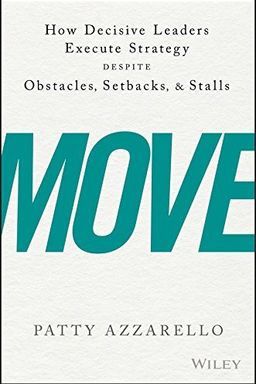
How many times has your organization launched an exciting new initiative—only for it to fade a few months later? In MOVE: How Decisive Leaders Execute Strategy Despite Obstacles, Setbacks, and Stalls, business leader Patty Azzarello tackles this all-too-common leadership failure head-on. She argues that the real problem with execution isn’t weak strategy—it’s the inability to sustain momentum through what she calls the Middle, that long, messy stretch between the thrill of planning and the triumph of results.
Azzarello draws from her own experience leading billion-dollar companies and transforming dysfunctional teams to offer a clear, practical model for leaders who want to make strategy stick. Her essential premise: you can craft an inspiring vision and declare bold goals, but until you execute relentlessly through the Middle, you haven’t achieved anything. The gap between intention and outcome, between talking and doing, is where most transformations die.
The MOVE Model
At the heart of Azzarello’s book lies the MOVE model—a four-part framework for securing lasting business transformation: M for Middle, O for Organization, V for Valor, and E for Everyone. Each element defines a distinct leadership challenge and mindset you must cultivate to make strategy real:
- M: The Middle—Define concrete outcomes, metrics, and timelines so you can sustain progress beyond the initial launch.
- O: Organization—Build the right team and structure to carry your ambitious strategy forward.
- V: Valor—Lead with persistence, courage, and integrity, especially when resistance and setbacks hit.
- E: Everyone—Shift from top-down command to organization-wide conversation, so that belief, motivation, and peer accountability keep the initiative alive.
This progression captures a universal truth: vision and strategy depend on executional discipline and cultural ownership. Azzarello repeatedly reminds readers, “You can lead a transformation from the top, but you can’t do a transformation from the top.” Sustainable change requires everyone’s understanding, belief, and daily action.
Why the Middle Is the Danger Zone
Leaders love big ideas and fresh beginnings. But in the long slog of execution—what Azzarello calls the Middle—motivation wanes, priorities blur, and the day-to-day grind takes over. Azzarello likens it to signing up for a gym membership full of enthusiasm, then never showing up after the first week. The Middle is the abyss between excitement and exhaustion. This is where good intentions stall, and where most strategies die of neglect rather than bad design.
The antidote is to make the Middle visible and measurable. Leaders must avoid dumping aspirational goals (“become the market leader”) on their teams and instead define specific milestones, control points, and timelines. For example, one of her clients broke a vague goal like “sell higher in the organization” into actions: identify target accounts within one month, train reps within two months, and secure ten new executive relationships by quarter’s end. By turning intentions into concrete checkpoints, you give the organization visible signs of progress and restore belief.
Execution Is a Leadership Act
Azzarello’s central argument challenges a pervasive myth: that “execution is beneath leaders.” Too many executives think their job ends once they announce direction. She insists that if you’re not actively managing execution—clarifying outcomes, enforcing consequences, moving resources—you’re not leading at all. Execution is not micromanagement; it’s leadership by focus and follow-through. This echoes Peter Drucker’s belief that “what gets measured gets managed,” though Azzarello adds a crucial dimension: what gets discussed gets done.
The Stakes: Strategy Without Execution = Talking
Throughout the book, Azzarello hammers home her opening line: strategic failure often comes down to the gap between decision and delivery. Transformations stall when leaders avoid conflict, skip resource reallocations, or fail to maintain accountability once deadlines slip. In one story, she describes executives who missed key dates and then acted like nothing happened—an error she calls “not addressing the miss.” The cost of silence is cultural: when nothing happens after a failure, everyone learns that deadlines don’t matter, and motivation collapses.
Her cure is a blend of systems and psychology. Build habits of visible tracking, regular check-ins, and consequences that restore credibility. Develop “ruthless priorities” so that routine fires don’t derail strategic work. And cultivate Valor—the steadiness to keep steering through the long Middle without yielding to fear, fatigue, or doubt. By embedding discipline into conversation and culture, leaders shift from strategic tourism (“we talked about that once”) to organizational movement.
Beyond the Model: Culture and Human Connection
Later chapters expand the model’s human side. Azzarello’s message is not about spreadsheets or checklists—it’s about people. She shows that transformation thrives on trust, consistency, and meaning. In chapters like “Getting People to Actually Care,” “Listen on Purpose,” and “Power and Trust,” she ties execution back to emotion: people move mountains when they feel respected, included, and confident that their contributions matter. Drawing from psychology and her own leadership stories, Azzarello positions communication, recognition, and integrity as strategic tools. The result is a deeply practical handbook for leaders who want to replace empty talk with lasting movement.