
Idea 1
Rethinking Education for the Innovation Age
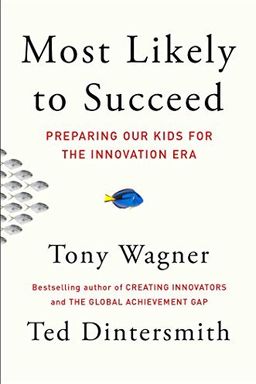
You live in a world where education holds incredible promise yet delivers uncertain results. Despite record spending and universal belief in schooling’s value, employers, parents, and students all sense that something’s broken. In The Global Achievement Gap and its successors, Tony Wagner and Ted Dintersmith make a provocative argument: the systems built for the industrial era—schools, colleges, and credentialing structures—no longer fit the demands of the innovation age. They train you to repeat knowledge, not to create it. They certify attendance, not competence.
The book’s central claim is that you’ve mistaken credentials for capability. As families chase test scores and degrees, true learning—curiosity, creativity, collaboration, and civic responsibility—atrophies. The resulting education pipeline filters for compliance rather than mastery, and that has profound economic and democratic consequences.
From Apprenticeship to Standardization
Wagner and Dintersmith trace education’s roots back to apprenticeship, where learning by doing defined competence. You learned from a master craftsman—like Paul Revere under John Coney or Claude Monet apprenticing to Eugène Boudin—until you could demonstrate mastery yourself. The Industrial Revolution and Horace Mann’s importation of the Prussian model reshaped that organic approach. Age-graded classrooms, fixed curricula, and standardized examinations replaced mentorship.
The result was scalable but rigid. Schools became assembly lines optimized for producing compliant workers, not innovators. That legacy—reinforced by the 19th-century Committee of Ten—still dominates your child’s classroom: subjects sliced into silos, learning measured by recall, and success equated with seat time.
The Credential Illusion
Modern education, the authors argue, swapped the apprenticeship’s authenticity for a credentialing arms race. From the SAT’s artificially normal bell curve (the College Board admits it engineered the symmetry for appearance’s sake) to the college ranking system that prizes selectivity over learning, the system amplifies inequity. Families pay for tutoring and private advising, believing, as 94 percent of adults still do, that a degree is critical for success—even though only 11 percent of business leaders think college graduates are well-prepared.
Stories like Jacob’s—an honors finance graduate from the University of Washington who could only find unpaid internships before delivering mail for a talent agency—and Jaime’s—who drowned in student debt despite altruistic ambitions—show how the credential promise falters. A diploma, they conclude, “is too often a very expensive coaster.”
Testing and the Learning Void
Standardized tests distort priorities. The book’s satirical “Bicycle Aptitude Test” shows how absurd it is to gauge competence via trivia about bike parts instead of actual riding skill. Schools optimize for what’s cheap to measure—multiple-choice recall—rather than for what matters: problem-solving and creativity. The Lawrenceville School’s experiment, in which average exam scores dropped from 87 to 58 after summer break, demonstrates how test-driven memorization evaporates quickly. Students “learn” for the test, then forget.
As technology automates routine work and knowledge retrieval, those outdated tests ironically train students to compete with computers instead of learning to use them. Conrad Wolfram calls this “sheer lunacy.”
The College Crisis and Beyond
College, once the great equalizer, has become a bottleneck. Tuition rises faster than inflation, debt burdens destroy freedom, and evidence from Academically Adrift shows little growth in critical thinking or writing skills. Meanwhile, universities reward research prestige more than teaching excellence, and rankings like U.S. News amplify perverse incentives. Students now graduate less capable of problem-solving than their degree suggests.
Employers have noticed. Companies from IBM to Google now hire for demonstrated capability—portfolios, project results—not pedigree. Apprenticeships, bootcamps, and hybrid models (like P-TECH or Northeastern’s co-ops) demonstrate how learning-by-doing revives the link between study and skill.
A New Purpose and Direction
To fix the system, Wagner and Dintersmith propose redefining education’s purpose: help learners discover passions, master critical skills, and develop purpose. Content coverage—what old curricula optimize—matters less than engagement and agency. Drawing on Tony Wagner’s “Seven Survival Skills,” they urge educators to pivot toward critical thinking, collaboration, adaptability, initiative, communication, information analysis, and imagination. Examples like NBA Math Hoops (which teaches math through basketball) and The Future Project’s mentorships at Malcolm X Shabazz High reveal the power of relevance and passion.
These changes are not optional. In an economy where routine jobs vanish and civic discourse collapses under polarization, education must cultivate creativity and civic literacy—the twin pillars of both economic competitiveness and democracy.
Core message
The future belongs to people who can think critically, work collaboratively, and keep learning beyond credentials. To educate for that future, you must reinvent schools as centers of curiosity, not compliance.