
Idea 1
The Morning After: When Utopia Met Reality
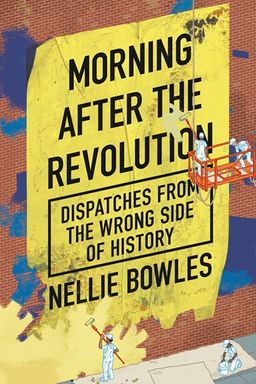
Have you ever looked around your workplace, school, or city and felt like the rules changed overnight—and no one told you how to live by them? In Morning After the Revolution, Nellie Bowles argues that the post-2020 progressive wave didn’t just tug American life leftward; it attempted a sweeping moral and institutional renovation—policing, education, race, gender, media, philanthropy—guided by a faith in human goodness and the promise that “we can start over now.” Bowles contends that this vision delivered some real insights and poetic hope, but, when installed at scale and speed, it often ran aground on reality, producing unaccountable movements, bizarre incentives, civic decay, and a new social ritual of public shaming. To understand what changed, you have to see how it felt to live inside the revolution—and what it looked like the morning after.
What the revolution believed
Bowles captures a worldview you probably recognize from your inboxes and sidewalks circa 2020–2021: people are essentially good but denatured by oppressive systems (capitalism, policing, whiteness, heteronormativity). Abolish or defund those systems and communities will self-govern peacefully; children “know themselves” better than parents and experts ever did; feelings outrank facts; and language can heal the world if you get it right (folks becomes folx; Latina becomes Latinx; lesbian becomes “a non-man attracted to non-men”). Brands, schools, and media all joined in—sometimes earnestly, sometimes as theater—creating a sense that progress demanded total alignment. (Compare: Jonathan Haidt’s The Righteous Mind on how moral communities enforce order through shared sacred values.)
Three theaters of change
Bowles reports in three vivid arenas. First, the streets: Seattle’s Capitol Hill Autonomous Zone (CHAZ) and Portland’s direct-action scenes tried to model police-free utopias. For a few festival-like weeks, CHAZ built gardens, mutual aid, and community safety squads—until shootings, delayed ambulances, and unresolved murders collapsed the experiment. Second, the seminar room: a booming industry of “atonement” reshaped workplaces and universities with frameworks like Tema Okun’s “white supremacy culture,” Robin DiAngelo’s “white fragility,” and somatic workshops where white participants chanted “I am racist,” rocked their spines, and hummed shame out of their bodies. Third, the home front: the gender vanguard moved from pronouns to medicalization, with pediatric clinics promoting early social transition, puberty blockers, and surgeries; the new “asexual spectrum” expanded the LGBTQIA+ tent; and high theory recast “femaleness” as self-negation (à la Andrea Long Chu), challenging legacy feminism from within.
Follow the money, measure the harm
When enthusiasms meet cash flows, you get Abolitionist Entertainment LLC-level stories. Bowles digs into the tsunami of funds pledged to Black Lives Matter and adjacent groups (The Washington Post estimated $50 billion pledged in one year), then traces how local activists in Minneapolis watched flashy newcomers raise millions for “police abolition,” while incrementalists quietly won reforms like 911 mental-health dispatch (Travis’ Law) and limits on no-knock warrants. Meanwhile, leaders at the marquee BLM entity bought mansions, launched influencer houses, and framed basic nonprofit transparency (Form 990s) as a tool of white supremacy. (For contrast, see Anand Giridharadas’s Winners Take All on elite philanthropy’s performative drift.)
Why it matters to your city (and your sanity)
Bowles’s hometown, San Francisco, becomes the movement’s stress test: soft-on-street-crime policies, open-air drug scenes, and baroque housing vetoes collide with romantic self-image. The outcome isn’t a Nordic social democracy; it’s a city of boarded-up shops, shrinking public-school attendance, and record overdoses—leading liberals (especially Asian American parents) to recall school board members and DA Chesa Boudin. The lesson: institutions are fragile; rhetoric without guardrails can turn compassion into tolerated cruelty; and civic life degrades when leaders outsource reality-testing to vibes.
Core tension
“There’s poetry in police abolition,” Bowles writes, but you still need someone to show up when the alarm goes off. The revolution promised safety without power, community without accountability, and identity without limits. The morning after demanded tradeoffs.
What you’ll take away
You’ll see how utopian experiments falter when facing violence and human frailty; how anti-racism workshops turned confession into a corporate sacrament; how homelessness got instrumentalized by activists; how “defund” ran into a homicide spike and a practical turn back to policing; how the gender frontier moved faster than evidence and consent; and how one city’s voters signaled they want both justice and order. If you felt tribeless or tongue-tied in recent years, Bowles offers a map: stay curious, insist on results over vibes, and beware any movement that forbids you from noticing what you see.