
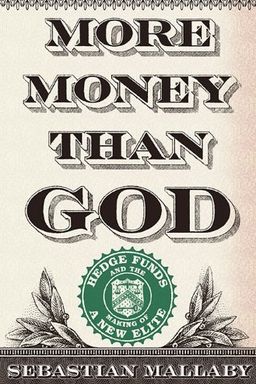
Idea 1
The Evolution and Purpose of Hedge Funds
Why do hedge funds matter, and what explains their enduring influence? The story begins with a paradox: small private funds, often run by contrarian thinkers, end up reshaping the entire global financial system. In tracing their origins and evolution, you learn that hedge funds aren’t just about high-risk bets—they are experimental laboratories where structure, incentives, psychology, and regulation collide to define how capital works in the modern world.
From Structure to Strategy
Alfred Winslow Jones set the template in 1949, combining long/short equity investing, performance-based pay, and private partnerships that avoided regulatory limits. That combination created what you can think of as finance’s equivalent of an innovation lab. Jones shifted focus from market timing to stock-picking skill (alpha), while using hedges to neutralize market swings (beta). He aligned incentives by taking a 20% performance fee, rewarding excellence rather than scale—a model every future fund would mirror in some form.
From this foundation, each subsequent figure pushed the frontier: Michael Steinhardt exploited market-structure inefficiencies in block trading; Commodities Corporation institutionalized disciplined risk management and trend-following; Soros expanded hedge funds into philosophy and macro politics, showing that perception and policy intertwine. As capital and credibility grew, hedge funds evolved from niche experiments to macro actors capable of moving currencies, toppling pegs, and forcing governments to face economic reality.
The Expanding Frontier of Strategy
Each decade reshaped what hedge funds could be. In the 1980s and 1990s, funds like Tiger Management proved that culture, mentorship, and intellectual intensity could produce financial innovation as powerful as any algorithm. Paul Tudor Jones merged behavioral psychology with trading theatrics, showing how manipulating crowd sentiment could be a form of edge. Renaissance Technologies, decades later, turned pattern-hunting into machine learning before the term existed—an early forebear of modern quantitative finance.
The 1990s and 2000s saw institutional money—especially endowments like Yale’s—validate hedge funds as core portfolio allocations. This legitimacy transformed the sector: once opaque boutiques became the dominant “shadow banking” layer of the global system. Yet every stage came with risks: leverage that worked in boom times became a hazard in downturns. The 1994 bond crash, the 1998 LTCM meltdown, the 2006 Amaranth implosion, and the 2008 financial crisis all showed that the same tools that enable brilliance can also magnify fragility.
Philosophy, Psychology, and Policy
At their best, hedge funds reveal how people, systems, and incentives interact under pressure. Soros’s reflexivity theory explains why markets are self-reinforcing feedback machines; Jones’s incentive engineering shows why structure drives behavior; and Robertson’s Tiger culture reminds you that social intensity and mentorship can substitute for algorithmic precision. Each narrative blends finance with human psychology. The investors’ deepest edge often lies not in forecasting but in understanding the behavior of others—what Jones, Tudor, and Soros embodied in practice.
The policy consequences follow naturally. Hedge funds absorb risk privately, fail without bailouts, and therefore contribute to systemic resilience by keeping losses inside private capital pools—what the author calls “small enough to fail.” But when scale or leverage breaches certain thresholds, they become shadow banks, requiring oversight. Hence the book’s pragmatic argument: regulate selectively, not universally. Oversight should match size, leverage, and liquidity risk—not ideology.
Core takeaway
Hedge funds are not just speculative tools; they are laboratories of capitalism’s evolution—experimenting with incentives, psychology, and technology to refine how risk and return are balanced. Their history mirrors the broader tension between freedom and control, innovation and regulation, private profit and public stability.
When you finish tracing the arc—from Jones’s leather notebook to Simons’s algorithms—you see finance as an ecosystem where ideas evolve like organisms: incentive structures mutate, selective pressure from markets kills the unfit, and surviving models propagate. That evolutionary logic, more than any single personality, defines the moral and intellectual heart of the hedge-fund revolution.