
Idea 1
Wanting More In Marriage
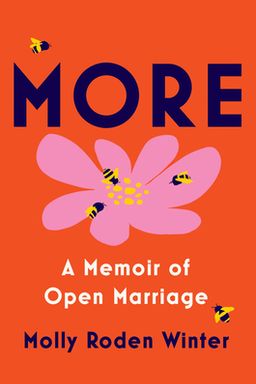
What happens when the part of you that still wants—for sex, for freedom, for attention—won’t quiet down just because you put on a ring or had kids? In More, Molly Roden Winter argues that desire isn’t a problem to be solved but a compass to be learned—a source of knowledge that can expand love rather than threaten it (echoing Audre Lorde’s epigraph: “The erotic is the nurturer…of all our deepest knowledge”). She contends that opening a marriage does not magically fix anything; it intensifies everything—communication, jealousy, pleasure, and the unfinished business of your past. If you can tolerate that heat, you can forge a truer self and, paradoxically, a sturdier partnership.
You follow Molly from a single kiss in a South Slope kitchen to years of experiments—some liberating, some seedy, some exquisitely tender—as she and her husband, Stewart, grope toward a workable form of consensual non-monogamy. Along the way, she grapples with her migraines (somatic alarms for what she’s not saying), her people-pleasing alter ego (“Straight‑A Molly”), and the ways her mother’s own open marriage and spiritual seeking shaped what she thinks she’s allowed to want. You also meet her lovers—Matt, Leo, Laurent, Karl, and Scott—and her teachers: a wise therapist (Mitchell), a pragmatic couples counselor (Evelyn), a polyamory guide (The Ethical Slut), and even her teenage son, Daniel, whose accidental discovery of her husband’s OkCupid profile forces radical honesty at home.
What the book argues
Molly’s core argument cuts against both rom-com fantasy and doom-filled cautionary tales: non-monogamy is not a thrill ride or a marital death wish; it’s a mirror. It reflects back what you’re avoiding—shame, scarcity, control—and asks you to metabolize those feelings into agreements, boundaries, and, crucially, self-care. Underneath the sex story, More is a story about voice and agency. The work is not to find the “right” set of rules, but to find the truer self that can name needs, negotiate fairly, and stay present when jealousy and fear arrive. If you do that, love can multiply rather than divide.
What you’ll learn in this summary
First, you’ll see how Molly and Stewart move from fantasy (“tell me everything”) to framework (negotiated rules and, later, one governing principle: radical honesty and mutual processing). Second, you’ll learn a practical emotional toolkit—tracking triggers, decoding migraines, naming parts (“Straight‑A Molly” versus “True Molly”), and crafting a personal “Freedoms” list—to turn desire into data rather than danger. Third, you’ll get a clear-eyed tour of jealousy, compersion, and metamour dynamics through vivid scenes: the hotel keycard in Stew’s jeans, a ban from a Breather room, a tearful fight after a sushi delivery notification, and a surprisingly tender night singing Sheryl Crow in a private karaoke room. You’ll also see how community and language shift everything—from Ashley Madison hookups to OkCupid’s “non‑monogamous” checkbox, from secret trysts to Poly Cocktails and solo poly mentors (like Liam).
Why this matters
Even if you never intend to open your relationship, Molly’s story reads like an x‑ray of modern marriage under pressure—kids, work, hunger for aliveness. Esther Perel calls it “mating in captivity”; Molly shows how captivity often comes from inside—rigid identities, unspoken resentments, and the belief that love is a pie with too few slices. The book makes a bracing case for two ideas that apply in any partnership: honesty must evolve from confession to collaboration, and your body will protest when your mouth won’t speak. When Molly starts listening (to migraines, to shame, to delight), she stops outsourcing her self-worth to lovers and rules, and starts building a self that can love and be loved more.
A line that captures the arc
“There will be more.” Molly first hears this from her mother and finally understands it not as a promise of more partners but as a recognition that love begets love. Scarcity shrinks you; abundance lets you become yourself.
By the end, the memoir resists tidy resolution. Partners change (Scott leaves), rules soften (one rule: honesty + processing), and the marriage endures—not because non‑monogamy “worked” like a hack, but because both partners did the deeper work. If you’re wondering whether you can ask for more without losing everything you have, this is a field guide—messy, moving, and unusually practical—to trying.